

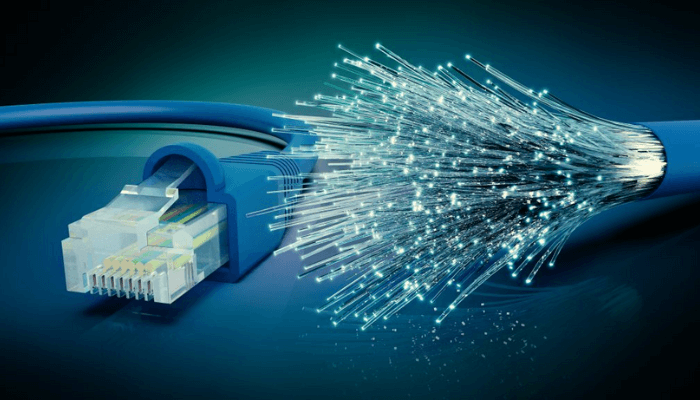
The International Telecommunication Union (ITU) has approved a global report aimed at strengthening the resilience of submarine telecommunications cables, warning that disruptions to the undersea infrastructure could threaten the global economy, financial systems and access to critical digital services.
The report, adopted on Friday by the International Advisory Body on Submarine Cable Resilience, sets out recommendations to help governments, regulators and industry operators better protect the fibre-optic cables that carry more than 99 percent of international internet and data traffic.
Submarine cables form the backbone of the world’s digital infrastructure, enabling international communications, cloud computing, financial transactions and digital services.
Damage to the cables whether caused by natural disasters, fishing activities, ship anchors or sabotage can lead to widespread internet outages, disrupt banking systems and interrupt government and business operations.
The advisory body identified several growing threats to the resilience of the global cable network, including increasing physical risks, lengthy repair times, the concentration of cable routes in a few geographic locations and the dependence of many countries on only one or two international cable systems.
The report noted that the risks are particularly acute for Small Island Developing States (SIDS), Least Developed Countries (LDCs) and underserved regions, where a single cable failure can isolate entire countries from the global internet.
“The world relies on connectivity, and thanks to the International Advisory Body on Submarine Cable Resilience, we now have a practical roadmap to keep undersea networks reliable,” said Doreen Bogdan-Martin, Secretary-General of the ITU.
According to her, the recommendations reflect a shared commitment among governments, industry, academia and international organisations to safeguard one of the world’s most critical pieces of digital infrastructure.
The report outlines several priority actions, including improving coordination between governments and private cable operators, streamlining permitting and repair processes, enhancing risk monitoring, increasing route diversity, strengthening emergency response capabilities and incorporating climate resilience into future submarine cable projects.
Sandra Maximiano, Chairwoman of Portugal’s communications regulator ANACOM and co-chair of the advisory body, described the report as the culmination of two years of international collaboration.
“What began two years ago as a debate has grown into a global movement,” she said. “Our task now is to turn cooperation into lasting resilience for the infrastructure that keeps the world connected.”
Nigeria played a leading role in the initiative through Bosun Tijani, Minister of Communications, Innovation and Digital Economy, who served as co-chair of the advisory body.
Tijani said submarine cables remain the invisible infrastructure underpinning the digital economy, carrying the overwhelming majority of global data traffic while supporting financial services, healthcare, education, e-commerce and public services.
“The recommendations adopted by the International Advisory Body represent an important milestone in strengthening the resilience of this critical infrastructure through greater international cooperation, practical policy guidance and shared responsibility,” he said.
The advisory body was established in 2024 by the ITU and the International Cable Protection Committee (ICPC) following growing concerns over repeated cable disruptions and the increasing geopolitical importance of undersea communications infrastructure.
Its work included consultations with governments, telecommunications companies, international organisations and academic institutions, culminating in meetings held in Abuja, Nigeria, in 2025 and Porto, Portugal, earlier this year.
The report comes as global dependence on digital infrastructure continues to grow amid rapid expansion in artificial intelligence, cloud computing, hyperscale data centres and cross-border digital commerce.
The resilience of submarine cable networks has become important as countries digitise essential public services and businesses rely more heavily on uninterrupted international connectivity.
Recent cable outages in Africa, Europe and Asia have demonstrated how vulnerable undersea networks remain.
Multiple cable cuts off the coast of West Africa in 2024 disrupted internet connectivity and financial services across several countries, highlighting the economic consequences of failures in critical digital infrastructure.
The advisory body’s final report was adopted during the World Summit on the Information Society (WSIS) Forum 2026 in Geneva, marking the completion of its two-year mandate and laying the foundation for continued international cooperation on submarine cable resilience.
Get Newsletter Updates
Enjoying our column?
Subscribe to our specialised **Tech Pulse** feed to receive fresh reports and analyses directly in your inbox.

