

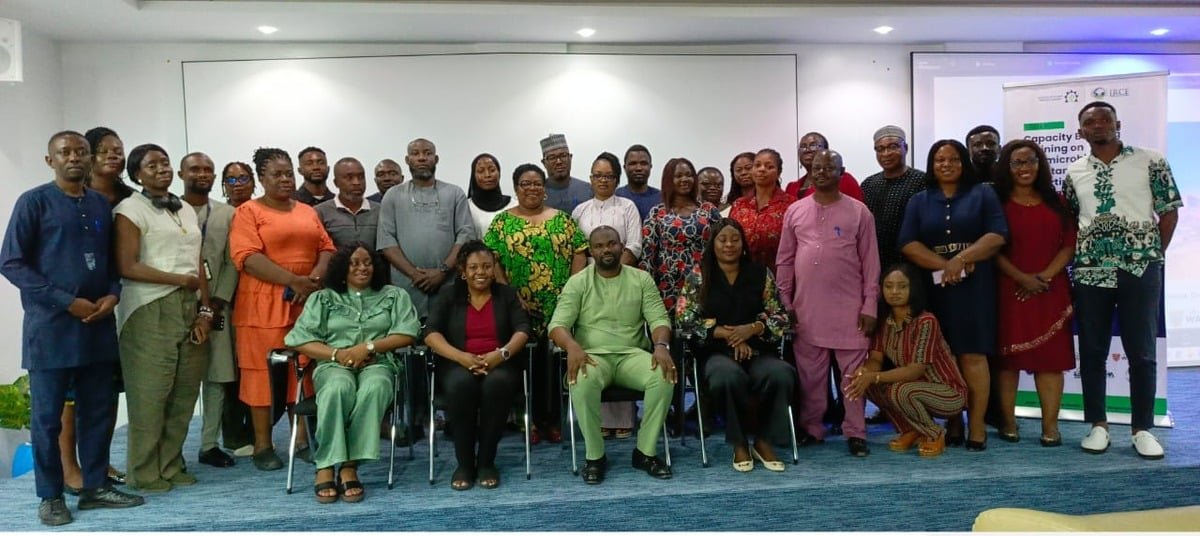
The Institute of Human Virology, Nigeria (IHVN) has commenced a two-day capacity-building programme for journalists to strengthen the fight against antimicrobial resistance (AMR), saying the media has a critical role in raising public awareness, promoting the responsible use of antibiotics and other antimicrobial medicines, and translating scientific evidence into information that can drive behavioural change.
Speaking at the opening of the training in Abuja, the Chief Executive Officer of IHVN, Dr. Patrick Dakum, represented by Dr. Eriobu Nnakelu, Principal Investigator at the International Research Centre of Excellence (IRCE), IHVN, and Senior Manager, Research and Evaluation, said antimicrobial resistance has become a major public health concern because medicines used to treat infections are increasingly becoming ineffective.
“We can have all the science, but if journalists do not communicate it to the public, then the science becomes useless. That is why we are supporting this training to ensure Nigerians understand that antimicrobial resistance is a real and growing problem,” he said.
Dakum explained that antimicrobial resistance occurs when antimicrobial medicines, including antibiotics, no longer work effectively against infections.
“It simply means that a patient keeps taking medication without getting better and, in some cases, the illness even worsens. Many Nigerians do not realise this is happening because AMR is a silent problem,” he said.
However, he noted that the consequences of AMR extend beyond the health sector, affecting household incomes, productivity and the nation’s economy as patients spend scarce resources on ineffective treatment while remaining unable to work.
According to him, addressing AMR requires coordinated action involving healthcare professionals, pharmacists, patent medicine vendors, environmental health practitioners, livestock producers, policymakers and the media.
“Lack of public knowledge is one of the biggest drivers, which is why journalists are critical partners in translating scientific information into messages that ordinary Nigerians can understand,” he added.
The training is being conducted under IHVN’s Antimicrobial Stewardship Education Program (A-STEP) project in collaboration with the Nigeria AMR Media Alliance (NAMA).
The A-STEP (Antimicrobial Stewardship Education Program) project is a pre- and post-interventional study designed to tackle antimicrobial resistance by evaluating educational interventions aimed at improving over-the-counter antibiotic dispensing practices among pharmacists and patent medicine vendors.
ALSO READ:IHVN calls for enhanced adverse events monitoring following immunisation
Also speaking, Dr. Charity Oga-Omenka, Principal Investigator of the A-STEP Project at the International Research Centre of Excellence (IRCE), IHVN, said available studies indicate that nearly 70 per cent of Nigerians obtain antibiotics without a prescription despite existing regulations restricting their sale.
She described the practice as one of the leading drivers of antimicrobial resistance, stressing that tackling the challenge requires the active participation of healthcare providers, regulators, researchers, journalists and the public.
“The misuse of antibiotics is harming people more than helping them. Everyone has a responsibility in addressing this challenge because no single group can solve it alone,” she said.
Oga-Omenka explained that laboratory diagnosis remains the only reliable way to determine whether an infection has become resistant to antibiotics and to identify the most effective treatment.
“You cannot diagnose yourself based on symptoms alone. Several diseases present similar symptoms, so proper medical consultation and laboratory testing are necessary before treatment begins,” she said.
While acknowledging the financial burden associated with medical consultations and laboratory investigations, she warned that self-medication often results in treatment failure, prolonged illness and increased healthcare costs.
She also called for stricter enforcement of regulations prohibiting over-the-counter sales of antibiotics, noting that weak compliance continues to fuel inappropriate use of antimicrobial medicines.
Commenting on traditional medicine, Oga-Omenka said although some herbal remedies may possess therapeutic value, the absence of standardisation and regulated dosage remains a major concern.
The Nigerian Principal Investigator of the A-STEP study, Dr. Aderonke Agbaje, described the training as a strategic effort to improve public understanding of antimicrobial resistance through accurate and accessible reporting.
“The training is a pivotal effort to increase the awareness of the growing impact of AMR by educating journalists who are best placed to communicate this issue to ordinary Nigerians in simple and effective ways,” she said.
In her remarks, Founder of the Nigeria AMR Media Alliance (NAMA), Ojoma Akor, urged journalists to champion evidence-based reporting capable of driving behavioural change, strengthening accountability and influencing public health policies on antimicrobial resistance.
According to her, the establishment of NAMA reflects a commitment to building a network of journalists equipped to report antimicrobial resistance from a One Health perspective that recognises the interconnectedness of human, animal and environmental health.
She challenged participants to use the training as a platform for stronger collaboration with researchers, clinicians and policymakers to ensure antimicrobial resistance receives the national attention it deserves.
“Together, we can ensure that antimicrobial resistance is no longer treated as a silent crisis but becomes a national priority requiring urgent and sustained action,” Akor said.
WATCH TOP VIDEOS FROM NIGERIAN TRIBUNE TV