

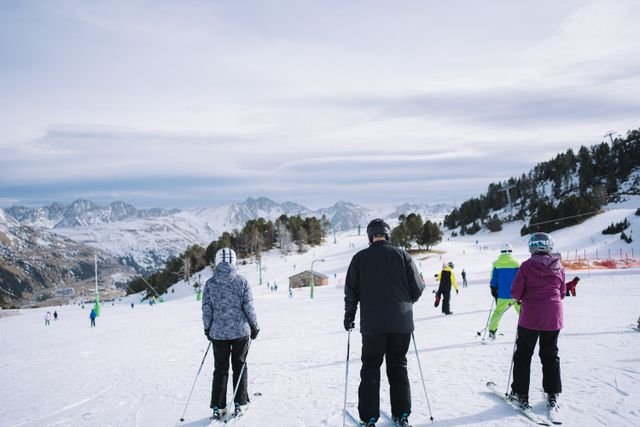
While an exciting holiday, skiing asks for quite a bit of strength, balance, mobility, stamina and the confidence to learn a completely new movement skill. Six weeks won’t make anyone invincible, but it is enough time to build useful foundations without panic-training. Adjust every session to your current fitness and leave recovery days between harder efforts. If you have an injury, medical condition or concerns about starting exercise, seek advice from a GP, physiotherapist or appropriately qualified professional first.
Know Your Mountain Before You Train
Physical preparation becomes more useful when you understand where you are going. Nursery-slope access, altitude, piste length and the size of the wider area can all shape the demands of your week. For example, Grandvalira, a wonderful ski resort in Andorra, covers 210km and combines gentle beginner slopes with green, blue, red and black runs, giving new skiers plenty of room to progress. Les Deux Alpes in France is larger and higher, with 220km of pistes extending from roughly 1,280m to 3,523m; 143km are classified as easy, but the scale and altitude make pacing particularly important. Austria’s Obertauern offers a more compact 100km between 1,630m and 2,313m, including 61km of easier terrain and a smaller selection of steeper runs. Lavarone in Italy is smaller again: its 30km area sits between 1,174m and 1,600m, with 22km of easy pistes and only 2km rated difficult.
“Beginner-friendly” can mean anything from a manageable mountain to a vast high-altitude network, so check the routes, then decide whether your preparation should emphasise longer-day stamina, balance and confidence, or simply enough general fitness to learn comfortably.
Week 1: Establish Your Starting Point
Begin with an honest baseline rather than an ambitious boot camp. Take a brisk 20-minute walk or easy cycle and notice whether you can still talk comfortably. Try eight controlled sit-to-stands from a firm chair, ten calf raises, and a supported single-leg stand on each side. Add gentle ankle, hip and upper-back mobility, then decide where two strength sessions and two cardio sessions can realistically fit into your week. If you already exercise regularly, continue your usual training but pay attention to movement quality rather than chasing personal bests.
The NHS physical activity guidelines recommend 150 minutes of moderate activity or 75 minutes of vigorous activity each week, alongside strength work on at least two days. However, less-active beginners should build towards this instead of forcing the full amount immediately.
Week 2: Build Lower-Body And Core Strength
Start to develop the muscles that help you hold a stable position and control your body: the quads, glutes, hamstrings, calves and core. Twice this week, perform two sets of eight to twelve chair squats, reverse lunges or supported split squats, glute bridges, calf raises and a short front or side plank. Newer exercisers can use a wall or chair for support and work through a smaller, comfortable range. If you already train, add a manageable dumbbell, a third set or a slower lowering phase, but change only one element at a time. Finish with a few minutes of easy walking and allow at least one lighter day before repeating the session.
Week 3: Add Balance And Lateral Control
Skiing requires you to shift weight from side to side while keeping the rest of your body organised, so introduce controlled single-leg and lateral movements. Practise supported single-leg stands, low step-ups and small side steps, using a resistance band if appropriate. You can progress to a shallow lateral lunge when the movement feels comfortable. Complete two strength-and-balance sessions alongside two easy cardio sessions. Beginners should keep a hand close to a stable surface; active exercisers might add a light single-leg deadlift or slow skater step without jumping.
Keep movements smooth and controlled. Wobbling is useful feedback, not failure!
Week 4: Develop Stamina For Stop-Start Effort
This week blends cardiovascular endurance with muscular stamina. After warming up, alternate two minutes of brisk walking, cycling or cross-training with one minute at a stronger (but still controlled!) pace for six rounds. Someone building from average everyday fitness can complete this once or twice during the week. A regular exerciser can perform eight rounds or increase the quicker intervals slightly, provided their technique and breathing remain controlled.
On another day, create a circuit of ten squats, eight step-ups per side, ten glute bridges, twenty seconds of lateral stepping and a short plank. Repeat it two or three times, resting as needed. You should finish feeling worked rather than flattened.
Week 5: Combine The Pieces And Strengthen Confidence
Complete two mixed sessions combining squats, lunges, step-ups, calf raises, lateral movement, balance work and short cardio intervals. Maintain good form while slightly tired, but stop before it begins to deteriorate. Beginners might work for 30 seconds and rest for 45, while fitter beginners could work for 40 seconds and rest for 30. Add one longer, comfortable walk or cycle, then schedule a genuine recovery day.
Week 6: Taper Instead Of Cramming
Reduce your training volume so that you travel feeling fresh. Complete two short, easy sessions early in the week: one light full-body strength circuit and one relaxed cardio session with a few brief, comfortable increases in pace. Keep ankle, calf, hip and upper-back mobility gentle, and avoid unfamiliar workouts or heavy leg training.
As this guide to why recovery is part of healthy living explains, sleep, food, hydration and gentle movement all contribute to a sustainable fitness routine. Eat familiar, balanced meals, drink regularly and organise your travel essentials without sacrificing sleep for last-minute packing. Confidence this week comes from knowing you prepared consistently, not from testing yourself one final time.
Six sensible weeks cannot guarantee an injury-free ski holiday, but they can help you feel better prepared – and fresh legs will be far more useful on your first morning than a final punishing workout.