

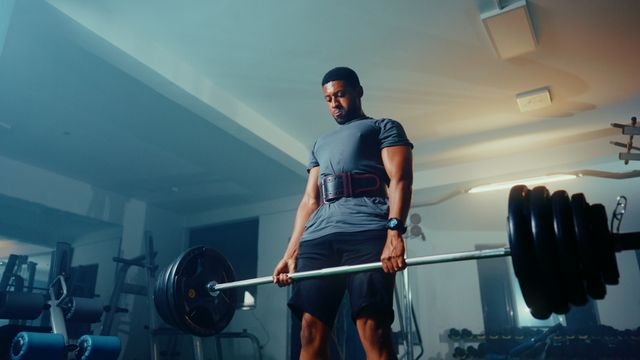
Walk into any gym and you will find two camps. One insists a lifting belt is cheating. The other will not touch a barbell without one cinched around their waist.
Both camps are usually arguing from vibes rather than evidence. The research on lifting belts is actually fairly clear, and it says something more interesting than either side tends to claim.
Here is what a belt genuinely does, when it earns its place in your kit bag and when it is doing nothing but taking up space.
Key Takeaways
- A belt does not hold your spine up like a brace, it gives your abdominal muscles something to press against.
- Research consistently shows belts raise intra-abdominal pressure, which is linked to greater trunk stiffness and spinal stability.
- Belts appear to help you move heavy loads faster, though evidence that they prevent injury is much weaker.
- Thickness, width and fastening type matter far more than brand or colour.
- Belts raise blood pressure during lifts, so anyone with cardiovascular concerns should speak to a doctor first.
The Myth That Refuses To Die
Most people assume a belt works like scaffolding. Something rigid wrapped around the weak bit, holding everything in place while you strain.
That is not how it works at all. The belt is not supporting your spine directly, it is giving your abdominal wall a firm surface to push outwards against.
When you take a big breath, brace hard and press your midsection into the belt, the pressure inside your abdomen rises sharply. That pressurised cavity is what stiffens your trunk.
Think of it less like a back brace and more like inflating a tyre. The belt provides the sidewall, your breathing and bracing provide the air.
What The Research Actually Shows
This is not gym folklore. Harman and colleagues measured intra-abdominal pressure during deadlifts at 90% of maximum and found it rose significantly earlier when subjects wore a belt.
Lander and colleagues later reported that belted squats raised intra-abdominal pressure by somewhere between 25% and 40%. Cholewicki and colleagues found that both raised abdominal pressure and an abdominal belt independently increased lumbar spine stability.
There is also a performance angle. Studies have found belted squats were completed noticeably faster than unbelted ones, with the upward phase in particular showing a meaningful speed improvement.
What the evidence does not clearly show is injury prevention. Stability is not the same thing as safety, and no belt will rescue a rounded back under a heavy bar.
That distinction matters most on the lifts where people are tempted to cut corners. If you have ever read anything on the importance of squats, you will already know the movement punishes lazy technique long before it rewards extra kit.
When A Belt Actually Earns Its Place
Belts make sense on heavy compound lifts where spinal loading is high. Squats, deadlifts, overhead presses and heavy rows are the obvious candidates.
They make far less sense on your accessory work. Wearing one for lateral raises or leg extensions is not helping anything and is mostly just delaying your set.
There is also a threshold question. Most coaches suggest saving the belt for your top sets, roughly the heaviest 10% to 20% of your working weight, rather than strapping in from your first warm-up.
The reason is straightforward. Your bracing muscles need to do the job unassisted often enough that they keep getting stronger.
Choosing One That Suits The Job
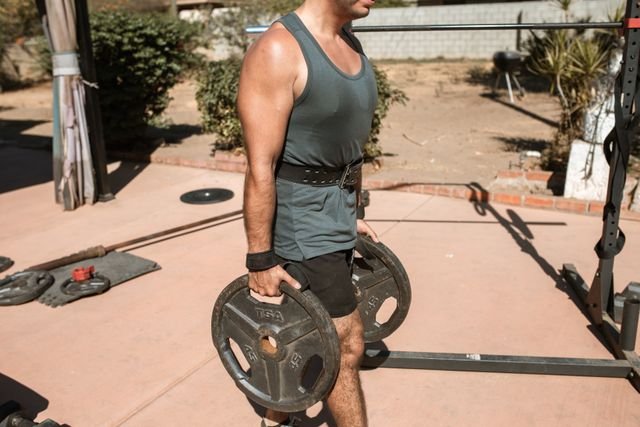
Not all belts are built for the same purpose, which is where most first-time buyers go wrong. A powerlifting belt and a bodybuilding belt are answering different questions.
Stiff leather belts of uniform width are the standard for maximal work. Australian retailer Kinta Fitness, for example, offers weight belts that include a premium cowhide model layered to 10mm thick and 100mm tall with a heavy-duty single-prong steel buckle.
That 10mm by 100mm specification is not arbitrary. It reflects the dimensions commonly permitted in competitive powerlifting, and it gives you a consistent surface to brace into all the way around your torso.
Softer nylon and neoprene options serve a different purpose. They give you support through the midsection without the bulk, which suits higher-rep bodybuilding work or anyone who finds a rigid leather belt uncomfortable across the hips.
The same range includes a friction lock option built around a plush four-inch body with a two-inch nylon strap and quick-release velcro. Prices there run from around fifty Australian dollars for the velcro model up to one hundred and fifty for the single prong leather belt.
Prong, Lever Or Velcro
The fastening is the part people underestimate, and it is the thing you will interact with dozens of times per session.
Single prong buckles are simple and durable. They take a moment to thread but they hold reliably and give you fine control over tightness.
Lever belts are the fastest to remove, which matters if you are in and out of the belt between every set. Kinta’s lever model uses three layers of leather with a felt layer for comfort and offers ten sizing holes, though changing the size means unscrewing and repositioning the lever.
Velcro is the most forgiving and the easiest to adjust on the fly. It will not match leather for rigidity under maximal loads, but for most gym-goers that is not the deciding factor.
How To Actually Use One
Position it over your midsection, not down on your hip bones. Most people wear their belt too low and too tight.
Tight enough that it does not slide, loose enough that you can still expand your stomach into it. If you cannot take a full breath before your set, it is over-tightened.
Then breathe in properly. Fill your belly rather than your chest, push outwards in every direction and hold that pressure for the duration of the rep.
Release the tension between reps if the set is long. Holding maximal intra-abdominal pressure for extended periods is genuinely uncomfortable and not particularly useful.
One Caution Worth Taking Seriously
Raising intra-abdominal pressure raises blood pressure too. Research has found significant increases in diastolic blood pressure when abdominal belts are worn during exertion.
For most healthy lifters this is not a concern. If you have any history of cardiovascular issues, high blood pressure or you are pregnant, this is a conversation to have with a doctor before you buy anything.
The Honest Answer
A belt is a tool for expressing strength you already have, not a substitute for building it. It helps you brace harder on your heaviest work and it makes those lifts feel more solid.
It will not fix bad technique, it will not make your core lazy if you use it sensibly and it will not prevent an injury you were heading towards anyway.
Learn to brace without one first. Then buy a lifting belt that matches the lifting you actually do, wear it for the sets that warrant it and leave it on the hook for everything else.
Frequently Asked Questions
Should beginners use a lifting belt?
Most coaches suggest learning to brace and lift with solid technique first. Building that foundation unassisted means the belt becomes a genuine addition later rather than a crutch you cannot train without.
Does a lifting belt weaken your core?
Not if you use it selectively. The concern applies to lifters who wear a belt for every single set, including warm-ups and accessory work, which removes the demand from the bracing muscles.
How tight should a lifting belt be?
Snug enough that it stays put, loose enough that you can still expand your abdomen into it. A common guide is being able to fit a flat hand between the belt and your stomach before you brace.
What thickness should I look for?
Ten millimetres is the common standard for serious strength work and is widely used in powerlifting. Thinner belts are more comfortable and better suited to general training or higher-rep sessions.
Do belts actually prevent back injuries?
The evidence for injury prevention is weak. Belts reliably increase abdominal pressure and trunk stiffness, but that has not translated into clear proof of fewer injuries, so technique remains your primary protection.
Can I use a lifting belt for exercises other than squats and deadlifts?
You can, and overhead pressing and heavy rowing are reasonable candidates. For isolation work and lighter accessory movements there is little benefit to wearing one.