

After more than a decade of expanding financial inclusion through digital payments, mobile money and fintech innovation, industry leaders and regulators have said the next stage of digital finance will be defined by trust and not just access.
They made these submissions at the public launch of ‘Trust Architecture in Platform-Led Finance’, a new policy framework report that brought together central bankers, fintech founders, academics and consumer advocates to examine how trust should be embedded into digital and platform-driven financial systems.
In Nigeria, where digital banking penetration has surged to 45 percent, the trust architecture framework addresses a critical gap which are systems that work but customers don’t fully believe in them.
Experts noted that while payment infrastructure has matured, digital identity has expanded and millions of people have joined the formal financial system across Africa and other emerging markets.
They also stated that maintaining public confidence is becoming the defining challenge as financial services become more interconnected and powered by artificial intelligence.
Trust underpins economic growth
Delivering the keynote address, Fundi Tshazibana, deputy governor of the South African Reserve Bank/CEO of the Prudential Authority, said trust is not an abstract concept in finance but a fundamental requirement for economic development.
According to her, virtually every commercial transaction depends on trust, making it even more critical within the financial sector.
“Almost every commercial transaction contains an element of trust, and in finance it is even more important,” Tshazibana said.
She explained that businesses invest when they have confidence in the future, households save when they trust that money will preserve its value, and financial markets function effectively only when participants believe systems are predictable, transparent and resilient.
Tshazibana noted that trust is not created by technology alone but by strong institutions, effective regulation, sound legal frameworks and stable financial systems.
“The stability of the financial system is the foundation upon which economic growth is built,” she said.
She also observed that global forces including artificial intelligence, climate change and shifting labour markets are fundamentally reshaping production, investment patterns and infrastructure decisions, making resilient financial systems more important than ever.
Trust as an operational challenge.
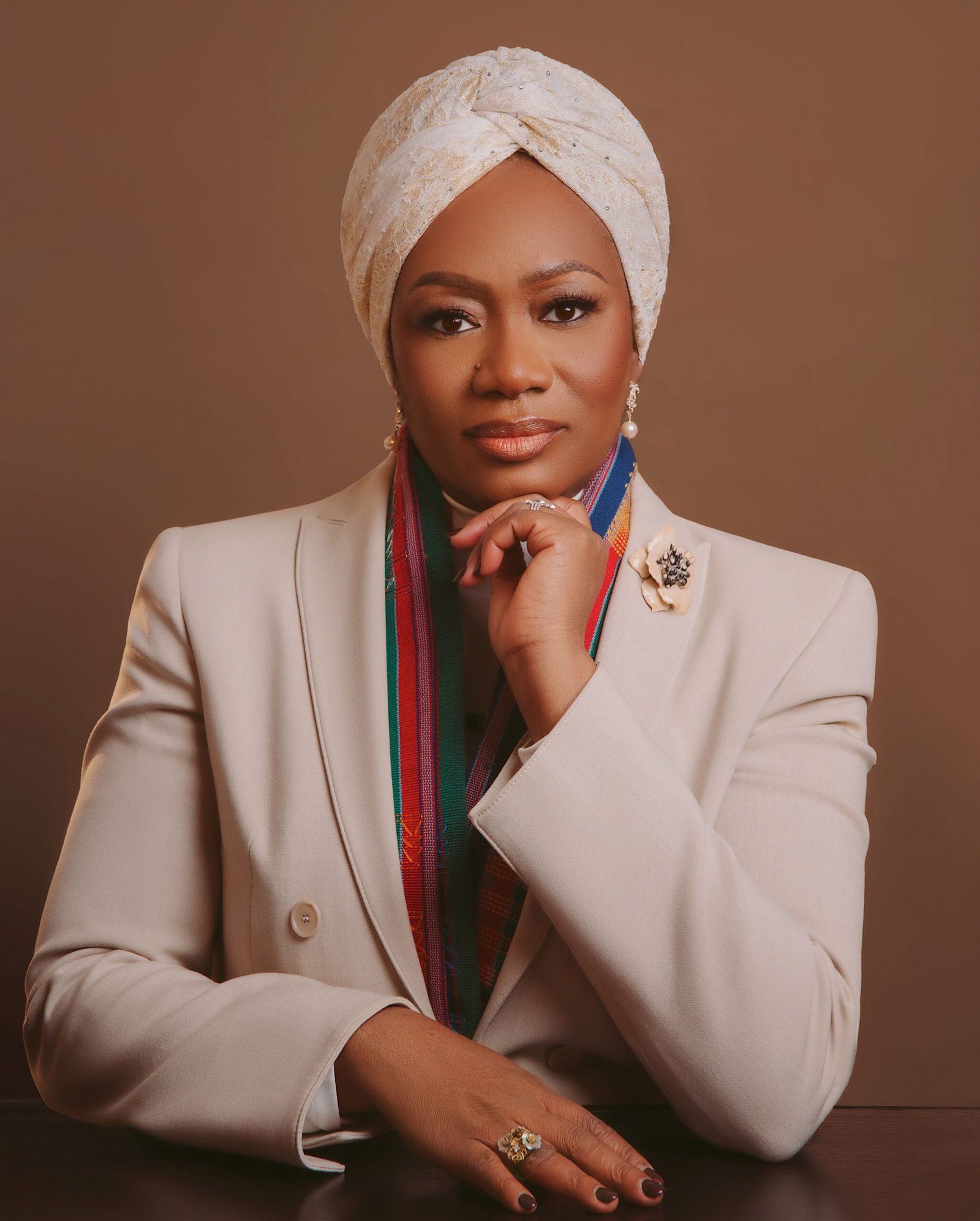
Aishah Ahmad, founder of Bridgforte Centre for Global Impact, while speaking in a panel session during the launch, argued that trust should be viewed primarily as an operational issue rather than merely a technological one.
She stated that consumers often judge financial systems less by what they can do than by how they respond when things go wrong.
“Identity is becoming one of the building blocks for establishing trust across digital financial ecosystems,” she said.
Modupe Ladipo, managing director of Prosperar Consulting, said trust is ultimately determined by collective public confidence, stressing that financial systems either produce trust through consistent performance or undermine it through repeated failures.
Identity before financial inclusion
Uzoma Dozie, CEO of Sparkle, said discussions around financial inclusion should begin with digital identity and foundational infrastructure.
“The fundamentals of banking are about trust,” he said, adding that reliable identity systems and robust infrastructure must exist before financial inclusion initiatives can achieve long-term success.
Dozie underscored the centrality of identity to the entire financial system architecture. “Without identity, forget any forms of inclusion. Before you get to financial inclusion, you need identity. You need to know the people. You need to know that they are part of the system.”
He criticised the systemic coordination failures, saying, “The real organised sector today is the cybercriminals, because they share information. Banks don’t share information, and because we don’t share information, we haven’t been able to scale trust.”
On regulation’s role, Dozie reframed the licensing requirement as a trust mechanism. “The licence is a trust licence. It says I trust that you will look after people’s money, and that when things go wrong you have the capital to make things right.”
He stressed that understanding human psychology must precede technology deployment. “Before you apply the technology, you have to understand the psychology. You must understand the context in which you are trying to build that trust infrastructure.”
Looking forward, Dozie positioned fintech’s moment, saying “This is the most exciting time to be in banking, because we can democratise the trust services that were the preserve of big corporates, to the masses and the micro small businesses that are the bedrock of society.”
There have been broader industry discussions that secure identity verification remains one of the most important enabler of digital banking, fraud prevention and cross-platform interoperability.
Trust extends beyond technology
Olayinka David-West, dean of Lagos Business School, described trust as a multidimensional construct that extends well beyond operational efficiency or technological capability.
She noted that organisations must recognise trust as a strategic asset that influences customer behaviour, institutional credibility and long-term economic development.
The panel was moderated by Lehlé Baldé, founding managing editor of BusinessDay Weekender and financial inclusion advocate, alongside Ugo Dre, also a financial inclusion advocate. Their framing positioned trust not as an afterthought but as the central governance architecture upon which platform-led finance must be built.
Chiso Ndukwe-Okafor, executive director of the Consumer Advocacy and Empowerment Foundation, said organisations should stop treating trust as simply a customer experience issue and instead recognise it as economic infrastructure.
She urged financial institutions to deliberately invest in consumer protection, transparency and accountability to strengthen confidence in digital financial services.
Collaboration over competition
Diane Karusisi, CEO, Bank of Kigali, stated that building trust also requires greater collaboration across the financial ecosystem.
She observed that traditional banks have often viewed fintech companies as competitors, when both can serve the same customers by addressing different financial needs.
Rather than competing for ownership of customers, she urged banks and fintech firms to work together to create more inclusive and efficient financial services.
Protection and trust are inseparable
Odunayo Eweniyi, co-founder of Piggyvest, said trust and consumer protection cannot be separated.
She stated that protection mechanisms, which include regulation, cybersecurity, data privacy and consumer safeguards, are what make trust sustainable.
“Trust breaks operationally before it breaks technologically,” she said, noting that organisations may build sophisticated technology, but ultimately people, governance and institutional behaviour determine if customers remain confident in digital financial services.
She stated that regulation, security and consumer protection must evolve alongside innovation to ensure digital finance continues to grow safely.
Public trust at midpoint—a mandate for action
A live poll of 853 participants showed that Nigeria’s public assessed trust in the financial ecosystem at 5.7 out of 10. Senior leaders surveyed in February had independently scored it at 5.4—a striking alignment that reveals both builders and users see the same gap.
The Bridgforte Centre announced the launch of the Trust Lab, a research and measurement body designed to make trust a standing item of strategic governance alongside stability and inclusion. The Lab will track implementation of the framework across African financial systems and establish measurable benchmarks for trust infrastructure design.

Get Newsletter Updates
Enjoying our column?
Subscribe to our specialised **Tech Pulse** feed to receive fresh reports and analyses directly in your inbox.

