

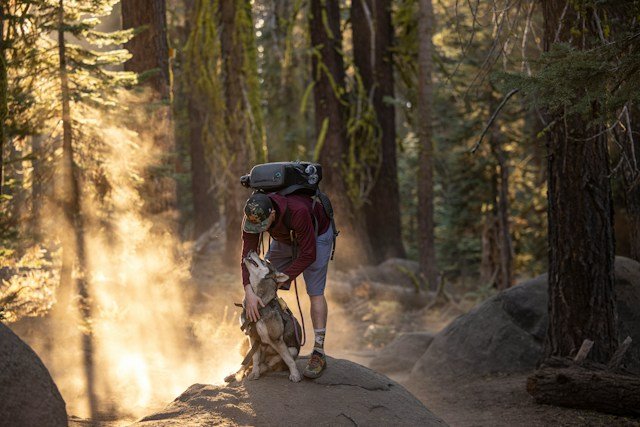
Four miles of sidewalk and four miles of trail are very different from one another. The trail version adds elevation, uneven footing, and a surface that grabs at the paws in a way concrete never does. But for those that way to get out there and enjoy the best conditions of the year with their dogs, with cooler air and ground that has firmed up since spring, you’ll just need a few tips to make the most of that window.
In this post, we’ll explore how to build your dog up to the distance, being mindful of their paws, which supplies to bring, and knowing the hazards that arrive with autumn.
Why Trail Miles Cost More
Dogs who walk three miles of pavement daily are aerobically fit and mechanically unprepared. Trail surfaces shift underfoot and recruit stabilizing muscles that flat ground leaves alone, while elevation turns an easy distance into real work.
Ascent is harder on the lungs and descent is harder on the joints, particularly the shoulders and wrists absorbing impact on the way down. A dog who bounces through the first two miles of a climb will often struggle on the return, and the trip back is where owners end up carrying a sixty-pound retriever.
Building Up To The Big Days
Add distance gradually across a few weekends rather than attempting the eight-mile loop on the first outing. A dog conditioned over a month handles the same trail with energy left over.
For dogs putting in trail miles weekend after weekend through peak season, daily joint support is worth raising with your veterinarian. Glucosamine and omega-3 fatty acids are common options, or you may consider CBD chews combined with glucosamine for working and senior dogs.
Nail length matters more on trail than anywhere else. Long nails change how a paw meets uneven rock, and a nail that catches on a root can tear at the base. Trim a week before a big hike, not the night before.
What The Terrain Does To Paws
Pads conditioned on pavement still abrade on granite and scree. Check between the toes after every hike, where grit collects and where grass awns bury themselves.
Foxtails deserve particular attention in September, once the seed heads have dried and sharpened. They travel in one direction only, migrating deeper into the skin, and one lodged between the toes or up a nostril may warrant a vet visit.
Booties help on rough rock and hot surfaces, though they need fitting and practice at home before a dog will hike in them. A dog with well-conditioned pads can manage without them, as long as you inspect the feet afterward.
How Much Water To Carry
Dogs cool themselves by panting, which uses water faster than sweating does for you. Bring at least a liter for a medium dog on a half-day hike, more if the forecast runs warm, and offer it at every stop rather than waiting for obvious thirst.
Avoid standing water, especially in late summer and early fall, which can bring blue-green algae blooms to ponds and slow-moving water, and the toxins can have serious consequences within hours after a few mouthfuls. Giardia and leptospirosis come from the same places with slower consequences. If the water looks like pea soup or has a scum on the surface, keep your dog out of it entirely.
Hazards That Arrive With Autumn
Hunting seasons open across much of the country in September, and a blaze orange vest for your dog costs very little. Check what’s open in the specific area you’re hiking, since regulations vary by state and by unit. In addition, ticks have a second annual peak in fall, and adult deer ticks stay active until the ground freezes. Snakes are still out, often moving during daylight hours as nights cool off.
Knowing When To Turn Around
Dogs push past their limits to stay with their people, so the decision has to be yours. If your dog lags behind or lies down at stops, it’s time to call it.
Turn around at the halfway point of your dog’s capacity rather than your own. Whatever they have left has to cover the return trip, and a dog who is finished three miles from the car has left you with a problem no amount of encouragement solves.
Get Out While The Getting Is Good
The window runs about six weeks in most of the country before the weather turns and the good trails ice over. A dog who spends those weekends on trail arrives at winter fitter and considerably easier to live with through the dark months.
Pick a short trail this weekend and see how your dog handles it. What you learn about their fitness and their feet will tell you what the rest of the season can look like.