

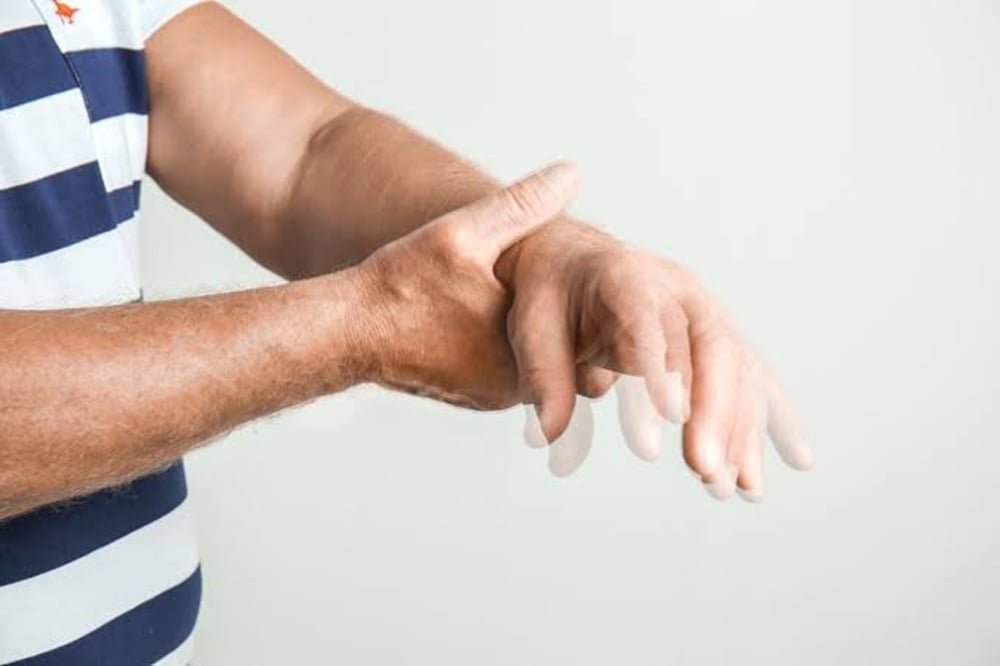
Researchers have developed a wearable robotic system that could help people with hand paralysis regain movement and even the sense of touch.
The device, called SensoExo, was created by scientists from the Medical University of Vienna in collaboration with ETH Zurich, the Technical University of Munich, and the Medical Faculty Belgrade. It combines a hand exoskeleton with electrical nerve stimulation to support both movement and sensory feedback.
The study, published in Science Advances, tested the technology on 14 patients with hand impairments caused by brain or spinal cord injuries. Results showed improvements in finger movement, grip strength, and the ability to feel touch during tasks.
ALSO READ: Recreational drugs, including cannabis, can cause stroke — Study
Many patients with neurological injuries struggle with everyday activities such as eating, dressing, or holding objects, as both movement and sensation are affected. Traditional rehabilitation can help, but often does not fully restore hand function.
The SensoExo system works by detecting pressure on the fingers and converting it into small electrical signals that stimulate nerves in the forearm, creating artificial touch feedback. In some patients, electrical stimulation also helped open and close the hand.
Lead researcher Prof. Stanisa Raspopovic said the aim was to restore both movement and sensation.
“Without feedback on how firmly an object is being held, hand function remains significantly limited in everyday life,” he said.
In the trial, researchers compared no support, exoskeleton-only support, and the combined system. The best results came when robotic assistance was paired with nerve stimulation.
Patients using the full system were better able to handle both heavy and fragile objects, with sensory feedback helping them avoid applying too much force.
The device was also adjustable, with patients receiving different levels of support depending on whether their main challenge was movement or loss of sensation.
Researchers say the system is still a prototype, but it shows strong potential for future personalised rehabilitation tools that combine robotics and neurotechnology.
Further studies with larger patient groups are now planned to test how the technology can be used in everyday care and long-term rehabilitation.
WATCH TOP VIDEOS FROM NIGERIAN TRIBUNE TV