

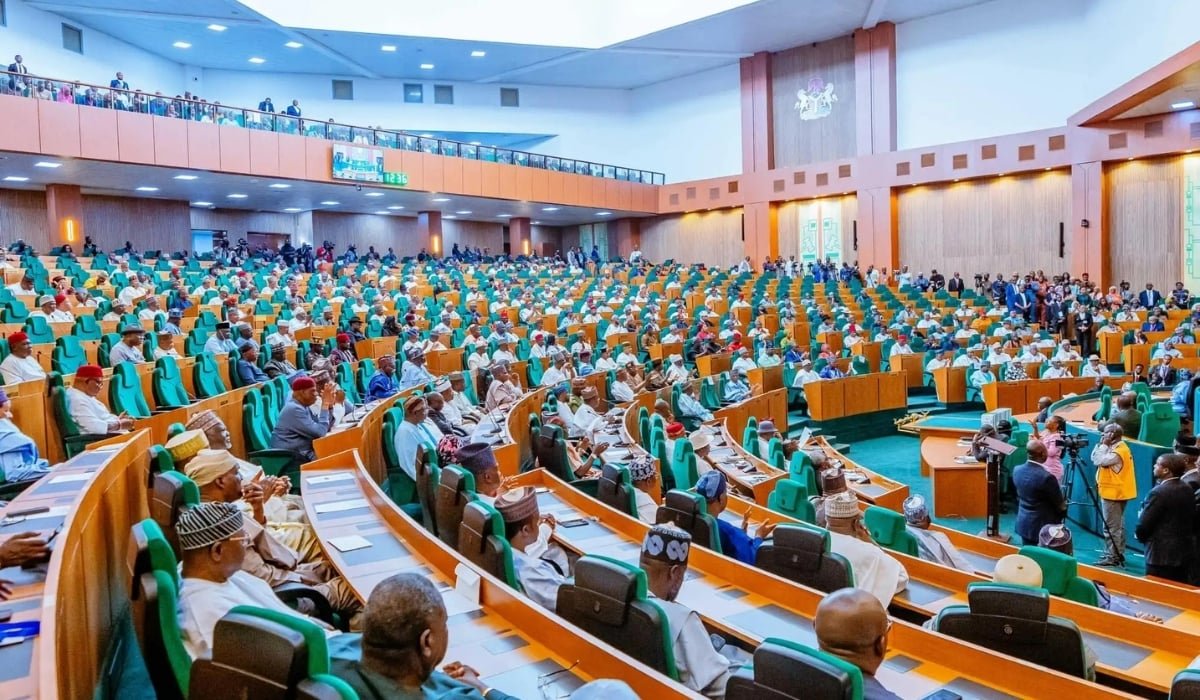
Over $4.6 billion in international health grants received by Nigeria from the Global Fund and the United States Agency for International Development (USAID) between 2021 and 2025 came under renewed legislative scrutiny as the House of Representatives, during Wednesday’s plenary, adopted the report on the investigation into the utilisation of the grants received by Principal and Sub-Recipients of Global Fund grants through CCM Nigeria.
The 9-page report was adopted after the clause-by-clause consideration of the recommendations made by the Committee on Infectious Diseases at the Committee of the Whole, chaired by Speaker Abbas Tajudeen.
According to the adopted report, the grants comprised $2.8 billion from the Global Fund and $1.8 billion from USAID, intended to support Nigeria’s response to HIV/AIDS, tuberculosis (TB), and malaria, as well as the strengthening of resilient and sustainable health systems.
The investigation also sought to strengthen legislative oversight and ensure that donor-funded interventions deliver measurable benefits to Nigerians.
The Committee explained that Nigeria’s engagement with the Country Coordinating Mechanism covered the Global Fund to Fight AIDS, Tuberculosis and Malaria (GFATM) for the 2021–2025 period. Nigeria is classified by the Global Fund as a core portfolio country and a High Impact 1 country in Africa because of its significant burden of HIV, tuberculosis, and malaria.
The lawmakers further noted that the Federal Government, through the Federal Ministry of Health, facilitated the establishment of CCM Nigeria in March 2002—which brings together representatives of government, the private sector, civil society, and religious organisations—as the recognised national coordinating platform for accessing Global Fund grants.
While noting that CCM Nigeria does not directly manage or execute the grants but provides governance, strategic direction, and oversight, the House affirmed that its responsibilities include: identifying priority programmes, developing and submitting funding requests on behalf of Nigeria, and providing technical and managerial guidance to ensure effective implementation.
The Committee further disclosed that between 2002 and 2020, CCM Nigeria mobilised more than $4.8 billion from the Global Fund for interventions targeting HIV, TB, malaria, and the strengthening of Nigeria’s health systems, particularly among underserved communities and vulnerable populations.
For the 2021–2023 funding period, the Global Fund approved $1.214 billion, including resources for COVID-19 response, HIV, tuberculosis, malaria, and resilient and sustainable systems for health. The allocation was subsequently extended to December 31, 2025. The report also stated that the 2023–2025 allocation for HIV, TB, and malaria, initially put at approximately $962.7 million, was reduced to $867.2 million in 2025 due to constraints in the global funding environment.
While acknowledging the contributions of Global Fund investments to Nigeria’s health sector—including improved diagnostic capacity, continuity of essential health services during the COVID-19 pandemic, and reductions in disease-related morbidity and mortality—the Committee identified significant accountability and governance deficiencies in the implementation of the grants.
Among its major findings was the failure of Principal Recipients and Sub-Recipients to submit annual implementation plans to the National Assembly for review and approval before commencing grant-funded activities.
The Committee also found that quarterly programme and financial reports were not being submitted to the legislature, limiting its ability to monitor expenditure, assess performance, and track results.
The lawmakers further observed that the National Assembly was excluded from the Country Coordinating Mechanism Nigeria and the approval of implementation plans, effectively shutting out elected representatives from key decisions concerning the deployment of substantial international health resources.
The House report also identified delays in counterpart funding, concerns over the diversion of insecticide-treated mosquito nets after distribution, inequities in state selection, and an excessive number of Sub-Recipients.
Other concerns raised included the location of some tuberculosis clinics, which the Committee said could contribute to stigma among patients, as well as the absence of effective collaboration between grant implementers and anti-corruption agencies, particularly the Economic and Financial Crimes Commission (EFCC) and the Independent Corrupt Practices and Other Related Offences Commission (ICPC).
On procurement, the lawmakers observed that Principal Recipients were not using Nigeria’s national procurement systems for all commodities.
The Committee, however, noted explanations by the CCM and implementing partners that Global Fund grant conditions required transparent procurement processes, fiduciary controls, and measurable health outcomes.
For Nigeria’s portfolio, the procurement of health and non-health products was largely undertaken through the Global Fund’s Wambo.org platform, with payments made directly by the Fund.
To address the identified shortcomings, the Committee recommended that all Principal Recipients and Sub-Recipients be compelled to submit annual implementation plans to the National Assembly for legislative review and approval before the disbursement of grant funds.
The lawmakers also called for the mandatory quarterly submission of programme and financial reports to enable regular monitoring and strengthen accountability.
The report further recommended the establishment of formal collaboration between implementing partners and anti-corruption agencies, particularly the EFCC and ICPC, to promote transparency, investigate possible financial irregularities, and ensure compliance with established standards.
The lawmakers also urged that future grants be structured to empower Nigerian institutions to manage funds while aligning implementation with the country’s national health priorities.
On domestic financing, the House called for stronger government commitments to counterpart funding, urging that the National Assembly should appropriate the country’s pledged contributions.
It also recommended an increased budgetary allocation to the health sector, including dedicated funding lines for HIV, tuberculosis, and malaria, to reduce Nigeria’s dependence on external donors and guarantee the sustainability of critical health programmes.
The Committee also urged the Federal Ministry of Health and Social Welfare to provide adequate budgetary support for the operations of CCM Nigeria, including permanent office accommodation and improved working conditions for the mechanism and National Health Programmes.
Subsequently, the House called on the Ministry of Health and Social Welfare to pursue the full fulfilment of Nigeria’s pledges towards the replenishment of Global Fund grant cycles.
WATCH TOP VIDEOS FROM NIGERIAN TRIBUNE TV