

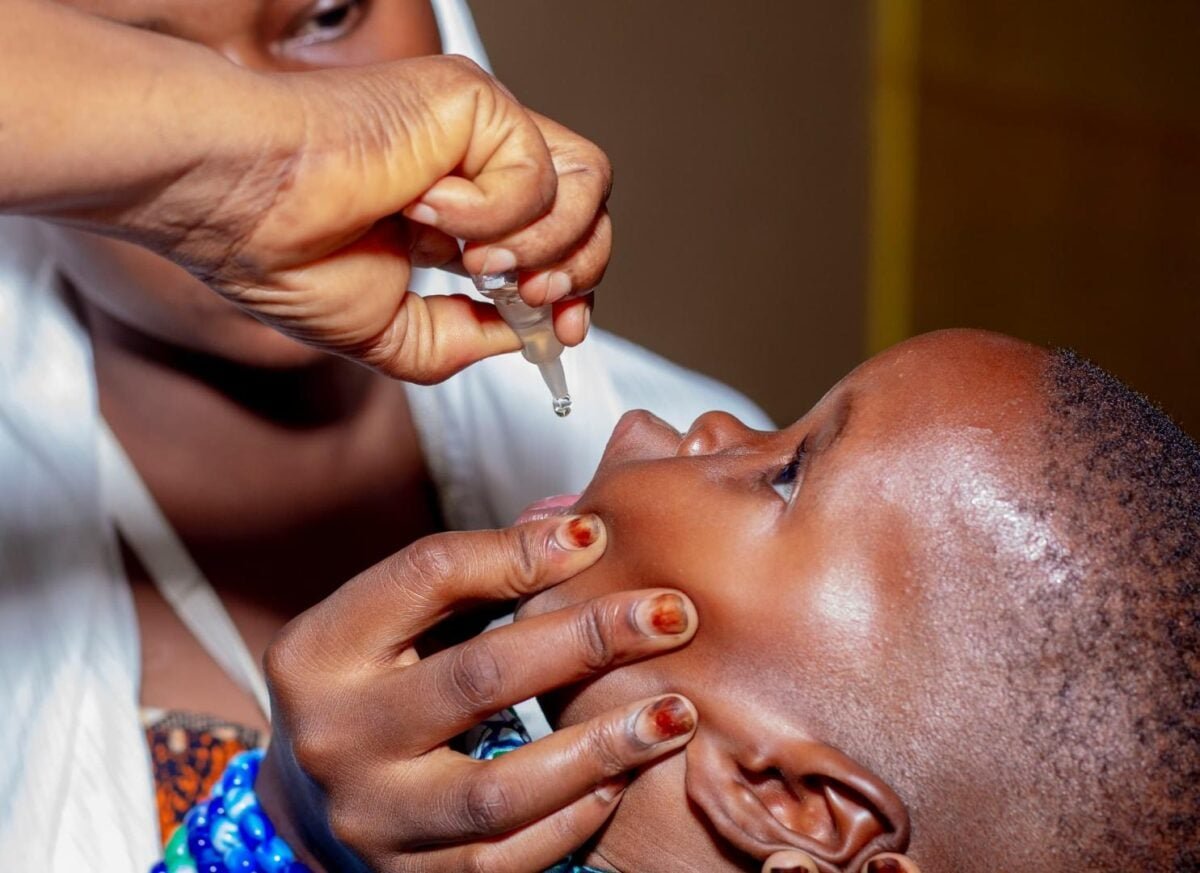
The detection of poliovirus in Ibadan North and Ogbomoso North Local Government Areas has prompted a targeted immunisation campaign by the Oyo State Government to further prevent the spread of the virus and protect children.
The Executive Secretary of the Oyo State Primary Health Care Board, Dr Muideen Olatunji, represented by the State Health Educator, Mr Olaoye Olarinde, disclosed the information at a State Social Mobilisation Committee meeting ahead of the November 7–12 vaccination exercise.
Olarinde said the detections informed the selection of the two local government areas, stressing the need for sustained vigilance despite Nigeria’s polio-free status. He urged committee members to use their grassroots structures across the state’s 33 local government areas to sensitise residents and encourage parents to present eligible children for vaccination.
ALSO READ: NIMC busts illegal NIN enrolment operators in Gwagwalada, arrests suspects
He added that the exercise would involve house-to-house mobilisation, calling on community leaders, religious institutions and other stakeholders to support the campaign.
Speaking at a stakeholder engagement in Ibadan, the State Immunisation Officer, Mr Oluwakayode Adediran, said the campaign was targeting 240,000 children under five following the detection of circulating poliovirus strains in 14 locations across Nigeria, including Oyo State.
The six-day Subnational Immunisation Days (SNID) campaign will cover 22 wards and 693 settlements in Ibadan North and Ogbomoso North. A second round is scheduled for December 5.
Adediran explained that environmental surveillance identified circulating variant poliovirus strains in 14 locations nationwide, with Oyo among the affected states.
He recalled that poliovirus was detected in Ogbomoso North late last year, while a Type 3 strain was detected in Ibadan North around August.
“Oyo State is part of the current 14 places in Nigeria where the poliovirus has been found. We recorded cases in Ogbomoso North last year, and not quite long ago, around August, type 3 poliovirus was also found in Ibadan North. That is why the National Primary Health Care Development Agency directed us to carry out this targeted response campaign in these two local government areas to interrupt transmission completely,” he said.
He added that health workers would administer the Novel Oral Polio Vaccine (nOPV2) and Bivalent Oral Polio Vaccine (bOPV) in Ibadan North because of the combination of circulating strains detected there, while nOPV2 would be administered in both local government areas.
The state will deploy house-to-house visits, fixed health posts and mobile outreach teams to ensure comprehensive coverage. Security personnel will also support vaccination teams in volatile and security-sensitive communities.
The World Health Organisation (WHO) Coordinator in Oyo State, Dr Philip Zorto, stressed that vaccination was essential to preventing polio-related deaths and permanent paralysis among children.
He urged parents to ensure that all eligible children under five received the oral and injectable polio vaccines, while calling on government agencies, schools, traditional rulers and religious leaders to support the exercise.
Zorto said the 2026 detection of poliovirus in an environmental sample in Oyo State underscored the need for sustained surveillance and intensified immunisation efforts.
He also urged stakeholders to address vaccine refusal and non-compliance in communities, schools and places of worship, stressing that protecting children against polio was a collective responsibility.
He called for concerted efforts to eliminate the virus from Oyo State, Nigeria, Africa and the world.
The Oyo State Lead for the Corona Management System, Mrs Aderonke Sule-Odu, appealed to parents, guardians and traditional leaders to ensure compliance and help address vaccine hesitancy.
“We are pleading with caregivers to allow their children to be vaccinated. It is strictly for their good and protection,” she said.
Sule-Odu noted that some caregivers had rejected vaccination because the campaign was restricted to specific local government areas. She urged traditional rulers, religious institutions and community leaders to help communicate the importance of the exercise at the grassroots.
She also appealed to parents who might be away from home during the campaign to authorise other responsible caregivers to present their children to vaccination teams.
WATCH TOP VIDEOS FROM NIGERIAN TRIBUNE TV