

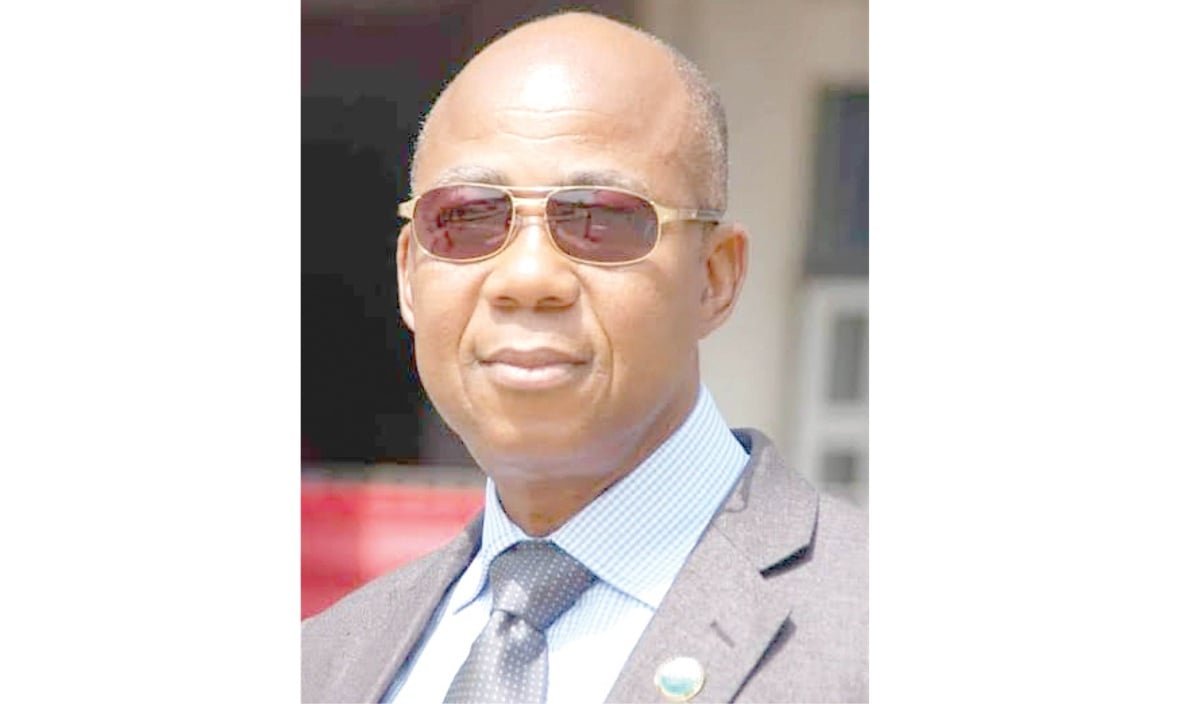
Temitope Alonge is a professor of orthopaedics and trauma and the CEO of the Centre for Osteoporosis and Bone Health, a subsidiary of Foster Dynamics Synergy International Limited. In this interview with SADE OGUNTOLA, he speaks to why it is far better to detect and treat osteoporosis early than to manage the consequences. Excerpts:
What is osteoporosis, and why is there a need for bone scans?
Osteoporosis is a group of bone diseases characterized by reduction in bone mineral content and bone mineral density.
A DEXA—Dual Energy X-ray Absorptiometry—scan is the gold standard in making a diagnosis of osteoporosis. This scan allows us to assess the density of the bone, particularly in areas that are most prone to fragility fractures, such as the distal forearm bone, the humerus, the neck of the femur (hip), and the vertebral spine. These are the areas that experience breakage when osteoporosis sets in.
In Western countries like England and the United States, by the time an individual is 65 years and older, it is expected that they would have undergone a DEXA scan as part of their routine health screening. The reason is simple: as people age, bone mass gradually reduces. If we identify bone loss early, we can intervene before fractures occur.
This becomes particularly important when a patient requires surgery, such as a total knee replacement or a total hip replacement. The type of implant we use depends heavily on the quality of the bone. If a patient has good bone stock, cementless implants may work well because the bone can grow into and secure the implant. However, if the patient has osteoporosis and we use a cementless implant, it may become loose over time because the bone is too soft to hold it firmly.
In such cases, we prefer to use cemented implants. The cement provides additional fixation and stability, compensating for the weakened bone. Looking back at earlier years in England, most cases of total hip replacements were cemented routinely, especially among certain populations, without a clear understanding that osteoporosis was the underlying reason for the need for cement. In hindsight, if we had used cementless implants in those patients without assessing their bone quality, many would likely have failed due to loosening.
ALSO READ: Insecurity may persist if LGAs remain weak — Senator Karimi
That is why bone density assessment is so important before surgery. It allows us to plan appropriately. If osteoporosis is detected, we place the patient on a defined treatment pathway. There is also a pathway for osteopenia, which is an earlier stage of bone thinning. Osteopenia means the bone is losing density but has not yet reached the severe threshold of osteoporosis.
To make it easier to understand, I often use the example of two bottles of water. Imagine two bottles that are exactly the same size. They have the same volume, the same external appearance. However, one bottle is completely full, and the other is only a quarter full. The difference is not in the size of the bottle but in the amount of water inside—the mass. Osteoporosis is similar. The bone may look normal from the outside, but internally, the mass is reduced. The density — which is the relationship between mass and volume — is lower.
Externally, the bone structure may appear beautiful and intact. But if you were to examine the inside, you might see large spaces and thinning of the internal framework. So, you cannot judge bone strength simply by the external appearance. Someone may look tall, muscular, and strong, but without testing their bone density, you cannot determine whether they have osteoporosis.
Bone health is not widely discussed in Nigeria, and that may be due to limited awareness or insufficient attention within the healthcare system. Many people think of bone merely as the basis for our skeletal framework—something that gives shape to the body and allows movement. But bone is much more than that. It is a living organ. It has its own blood vessels, nerves, and specialized cells. It performs critical functions in the body.
For example, bone stores essential minerals such as calcium and phosphate. These minerals are vital for muscle contraction, nerve transmission, and many other physiological processes. Additionally, the bone marrow is responsible for producing the cells in our blood—red blood cells, white blood cells, and platelets. Therefore, if bone health is compromised, several body systems can be affected.
Bone is constantly undergoing a process known as “remodeling.” There are cells called osteoblasts that form new bone, and cells called osteoclasts that remove bone. The osteoblasts transform to osteocytes, which are mature bone cells that help maintain bone tissue. The balance between bone formation and bone resorption (remodeling) is essential for our well being because without this balance, the human body would not grow properly, and fractures would not heal correctly.
As we age, however, this balance begins to shift. Bone loss may start to exceed bone formation. When that happens, the individual first develops osteopenia. If the imbalance becomes more pronounced, it progresses to osteoporosis.
Osteoporosis is often referred to as a “silent thief.” It steals bone mass quietly, without causing pain or obvious symptoms, until a fracture occurs.
What do you mean when you call it a “silent thief”?
I call it a silent thief because the external structure of the bone may look unchanged. The person may not feel any pain unless there is a fracture. The sufferer may continue their normal activities without noticing anything unusual, not knowing that internally, osteoclasts are busy removing more bone than the osteoblasts or osteocytes are forming.
Normally, you build your bone stock with age and achieve peak bone mass between 35 years and 40 years of age, although through the period, the bone-forming cells, osteoblasts, and bone-removing cells, called osteoclasts, work in a complexly regulated manner. For various reasons, when osteoclast activity becomes excessive or osteoblast activity declines, more bone is lost than formed. Over time, the internal framework of the bone becomes thinner and weaker. Yet there are no warning signals. There is no early alarm system. The first sign may be a fracture.
That is why regular screening is important, especially in older adults. By the time a fracture occurs, the disease may already be advanced.
When someone has bone loss—aside from inactivity or poor diet—what does it imply in the long term? And does it affect women more than men?
Both men and women can develop osteoporosis, but women are generally at a higher risk. During their reproductive years, women produce estrogen on a monthly cycle. Oestrogen plays a significant role in maintaining bone density. It supports the activity of osteoblasts and helps regulate bone remodeling. This gives women a protective advantage during their childbearing years.
However, when menopause occurs and estrogen levels decline sharply, that protection is lost. As a result, bone loss accelerates. Many women experience rapid reductions in bone density within the first few years after menopause.
Men also experience bone loss as they age, but the decline is usually more gradual because they do not undergo a sudden hormonal shift like menopause.
Body weight also plays a role. Research has shown that individuals who are extremely underweight are at higher risk of osteoporosis. A moderate amount of body fat may offer some protective benefit due to hormonal influences and mechanical loading—the additional weight places stress on the bones, which can stimulate bone formation. However, this does not mean obesity is encouraged. Balance and moderation are essential.
If bone loss continues unchecked, it can lead to fragility fractures. These fractures occur after minimal trauma — sometimes after a simple fall from standing height. In severe cases, the bone may even crack before a fall occurs.
Common sites for fragility fractures include the spine, wrist, humerus, and hip. Fractures of the vertebrae (spine) can lead to loss of height, back pain, and a stooped posture known as kyphosis. Wrist fractures may impair grip strength. Hip (neck of femur) fractures are particularly serious and often require surgery. Unfortunately, statistics show that about 30% of elderly patients who sustain hip fractures may die within 12 months due to complications such as infections, cardiovascular events, blood clots, or reduced mobility.
When elderly people break bones due to osteoporosis, can they undergo surgery? What is the treatment like, and is recovery possible?
Yes, surgery is possible, but it can be challenging. Osteoporotic bone is soft, and screws or plates may not hold firmly. As orthopedic and trauma surgeons, we use specialized implants and techniques to improve fixation. However, outcomes may not always be as optimal as in patients with strong bone.
This is why prevention is always better than cure. Osteoporosis itself is treatable, but treatment requires careful monitoring.
The primary aim is to reduce the activity of osteoclasts, the cells responsible for bone resorption. By limiting bone breakdown, we allow osteoblasts to form new bone more effectively.
One of the most commonly prescribed medications is alendronic acid, taken once weekly on an empty stomach. The patient must remain upright for at least one hour afterward to reduce the risk of irritation to the esophagus. There are also injectable options, such as denosumab and teriparatide, which may be used in specific cases.
Calcium supplementation is important, especially when combined with vitamin D3 and vitamin K2. Vitamin D3 enhances calcium absorption from the intestine into the bloodstream, while vitamin K2 helps direct calcium from the blood into the bone tissue. Additional minerals such as magnesium, manganese, zinc, and selenium also support bone formation.
Monitoring is essential. After starting treatment, I review patients monthly at first to assess response and detect any side effects. After six to twelve months depending on the severity of the disease, we repeat the DEXA scan. If bone density improves significantly, we may adjust the medication to prevent excessive bone formation, which could make the bone brittle.
Are calcium tablets, milk, and supplements enough protection as we age?
They are helpful, but they are not sufficient on their own. Supplements are meant to complement a foundation that already exists. If the lifestyle is poor — sedentary habits, poor nutrition, little sunlight exposure — supplements alone cannot solve the problem.
Weight-bearing exercise is crucial. Activities such as brisk walking, climbing stairs, resistance training, and other muscle-strengthening exercises stimulate bone formation. When muscles pull on bones during movement, they create mechanical stress, which signals the bone to become stronger.
Nutrition is equally important. Older adults should consume more vegetables and adequate protein while moderating carbohydrate intake. Green vegetables provide calcium and iron. Protein supports muscle strength, which in turn protects bone.
Bone health requires a comprehensive approach — diet, exercise, supplementation, and regular screening.
What are the numbers like in Nigeria? How common is osteoporosis?
In 2014, a study conducted at the University College Hospital screened about 4,000 patients at the Geriatric Center. More than 1,000 were found to have osteoporosis. The condition began to increase noticeably around age 60 and rose sharply after 65. By age 70, a significant proportion of those screened had osteoporosis.
With increasing adoption of sedentary lifestyles in Nigeria, the burden of osteoporosis is likely to rise. However, exercise can be done safely in designated environments such as university campuses, sports fields, or other secured arenas.
Managing osteoporosis requires a multidisciplinary approach involving orthopedic surgeons, endocrinologists, rheumatologists, nutritionists, and physiotherapists working together.
If someone ignores weak bones, what happens?
Ignoring osteoporosis significantly increases the risk of fragility fractures. Spinal fractures may cause deformity and nerve compression. Wrist fractures may impair daily function. Hip fractures often require surgery and carry a high risk of complications and mortality. So, it is better to detect and treat osteoporosis early than to manage the consequences later.
WATCH TOP VIDEOS FROM NIGERIAN TRIBUNE TV