

A Professor of Political Science and Dean of the Faculty of Social Sciences, University of Lagos (UNILAG), Adelaja Odukoya, has warned that Nigeria cannot achieve enduring economic growth by exhausting its workforce.
Odukoya cautioned that any nation neglecting the wellbeing of its workers gradually undermines its own developmental future.
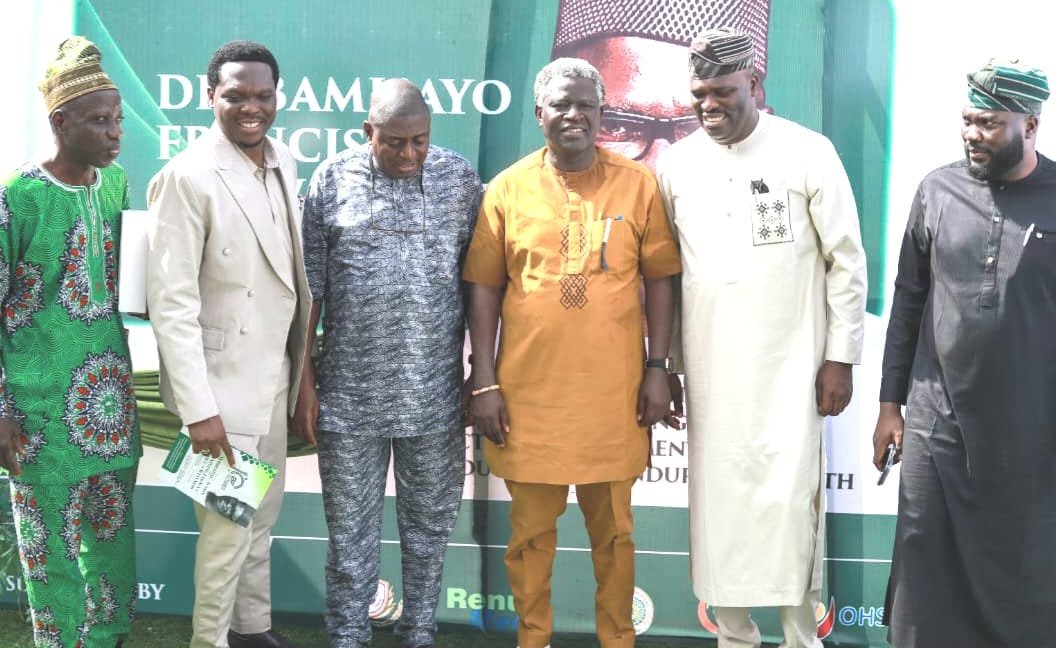
The don delivered this warning while presenting the keynote address at the 10th Dr. Bamisayo Francis Oluwagbemi Annual Colloquium held in Ado Ekiti on Friday, June 12.
He spoke on the theme: “Wellness and Safety in the Nigerian Workplace: Creating a Policy and Practice Environment for Productivity and Enduring Growth.”
Odukoya argued that true productivity relies on human capacity rather than just technological advancements, infrastructure, or capital investment.
He stressed that a society must protect, nurture, and develop the human beings who sustain production to secure its long-term future.
“Wellness and safety are not peripheral concerns,” Odukoya stated. “They are foundational to productivity, organisational effectiveness, social stability, and national development.”
The keynote speaker, who was formerly a Lagos Zone Coordinator of ASUU, noted that workplaces do more than generate economic output; they act as environments where human dignity is either affirmed or violated. Because of this, Odukoya tied the push for workplace safety directly to larger national struggles.
He stated that the campaign for worker wellness cannot be isolated from the broader fight for social justice, accountable governance, strong institutions, and human-centred development.
“To build a productive Nigeria, we must build humane workplaces,” Odukoya emphasised. “And to build humane workplaces, we must build humane institutions. And to build humane institutions, we must recover the moral and developmental purpose of the state itself.”
Odukoya challenged the colloquium attendees to move past diagnosing problems and criticising current systems, urging them instead to take practical action to bring about the desired change.
He called for investments in knowledge, innovation, mentorship, and institutional excellence to create environments that value human life, protect workers, and preserve the environment.
Prof. Odukoya further emphasised that ensuring workplace health and safety does not fall on a single entity.
“It is a shared responsibility requiring collective commitment and continuous vigilance from governments, employers, and workers alike,” he stated, adding, “Only then can wellness and safety become the foundation for productivity, enduring growth, and sustainable national development.”
Quoting safety advocate Eleanor Everet, the don noted that, “Safety is not a gadget but a state of mind.”
ALSO READ: Why Nigerians must join security agencies, govt to fight insecurity — Abdulsalami Abubakar
However, he added that safety must evolve beyond a mindset to become a core culture, an institutional value, and a national commitment across Nigeria.
Concluding his address, Professor Odukoya paid tribute to the late Dr. Bamisayo Francis Oluwagbemi, stating that his life and legacy prove how one committed individual can leave a lasting impact on society.
He praised his contributions to workplace safety, public health advocacy, environmental responsibility, and professional development, expressing hope that the annual colloquium would continue to inspire future generations to uphold strict professional ethics and contribute to national development.
The late Oluwagbemi, a native of Odo-Oro, Ekiti, was known in his lifetime as a safety intellectual and icon.
He obtained his first degree in Occupational Hygiene from South Bank Polytechnic (now London South Bank University) and a Master’s degree in Public Health at the University of Dundee, Scotland, in 1983.
He pioneered the then Institute of Occupational Health under the Oyo State Ministry of Health, Ibadan, and rose to become the Head of the Institute. Until his death, he was the Chairman of the Occupational Health Safety and Empowerment Centre, a non-governmental organisation.
He passed away on June 3, 2016, at the age of 66.
WATCH TOP VIDEOS FROM NIGERIAN TRIBUNE TV