

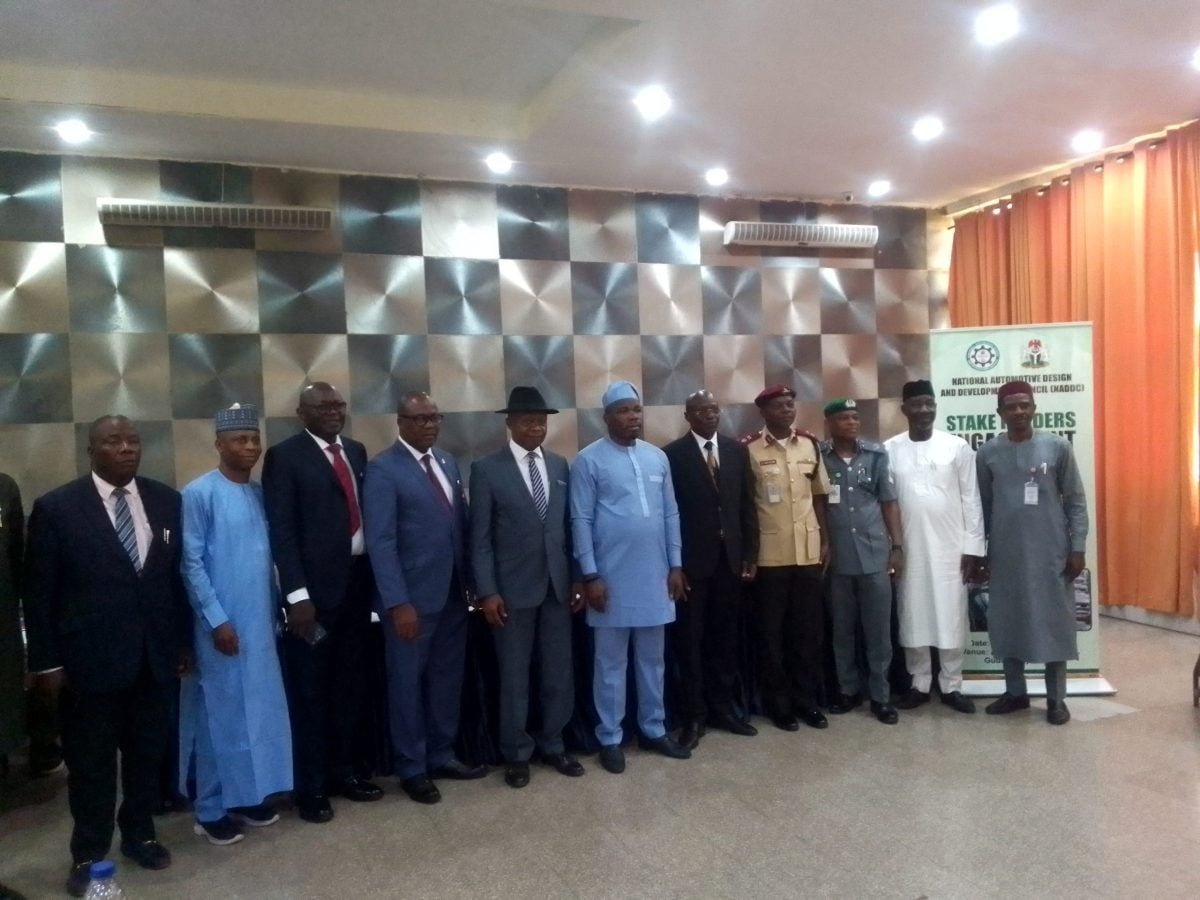
The National Automotive Design and Development Council (NADDC) is targeting the growth and expansion of Nigeria’s automotive industry through a new law that would establish a framework for coordinated and sustainable activities within the sector.
Speaking at a stakeholders’ engagement meeting on the proposed law in Abuja, the Director-General of the NADDC, Otunba Oluwemimo Joseph Osanipin, said the National Automotive Industry Bill, 2026, when passed into law, would align Nigeria’s automotive industry with modern, globally competitive standards.
He explained that “our vision is clear: to transition Nigeria’s automotive industry from fragmented assembly operations into an integrated, self-sustaining industrial value chain.
“We are driven to advance local content integration, accelerate component manufacturing, champion a vehicle circular economy, drive green mobility and electrification, and maximise our strategic positioning under the African Continental Free Trade Area (AfCFTA).”
Osanipin stated that sustainable industrial growth requires a strong legal and institutional foundation.
“For years, policy uncertainty, enforcement bottlenecks and legislative gaps have hindered long-term capital commitment.
“While the National Automotive Design and Development Council Act of 2014 provided a foundational start, the rapid evolution of global manufacturing, emerging green technologies and regional trade dynamics require an upgraded legal architecture.
“The Draft National Automotive Industry Bill, 2026, represents a decisive legislative transformation. By repealing the 2014 Act and establishing the National Automotive Development Commission, this proposed legislation aims to provide a statutory institutional framework by transitioning the Council into a Commission with robust regulatory, oversight and enforcement mandates to streamline ecosystem management.”
The Director-General further explained that legally anchoring fiscal incentives and the implementation structures of the Nigerian Automotive Industry Development Plan (NAIDP) would assure investors of long-term policy stability.
He added that strengthening quality enforcement, anti-smuggling collaboration, environmental compliance and safety standards across relevant public agencies would boost growth in the industry.
“Driving backward integration, raw material utilisation and local component manufacturing will sustainably create jobs for Nigerian youths. As a Council, we firmly believe that effective legislative reform must reflect the voices of those who operate within the ecosystem daily.”
He said that, to ensure the proposed Bill is grounded in operational realities, the Council had recently hosted a comprehensive private-sector stakeholders’ engagement in Lagos.
“During that session, we met extensively with auto assemblers, component manufacturers, plant managers and key industry bodies such as the Nigerian Automotive Manufacturers Association (NAMA), Motorcycle Manufacturers Association (MOMAN), Automotive Local Components Manufacturers Association (ALCMAN) and the Manufacturers Association of Nigeria (MAN).
“We listened attentively to their operational realities, critiques and recommendations, and I am pleased to inform you that their valuable insights and views have been carefully collated and incorporated into the current working draft before us today,” he stated.
The Director-General reaffirmed that a comprehensive national policy could not succeed on private-sector input alone.
“Industrial development intersects directly with fiscal strategy, trade facilitation, customs administration, environmental protection, financial regulation, standards enforcement and legal governance.
“This consultative session has been convened specifically to ensure that the final draft transmitted to the National Assembly reflects complete inter-agency synergy and public-sector alignment.”
The engagement meeting was attended by representatives of the Federal Road Safety Corps (FRSC), the Nigeria Customs Service (NCS), the Bank of Industry (BOI), the Federal Ministry of Transportation, the private sector and other stakeholders.
WATCH TOP VIDEOS FROM NIGERIAN TRIBUNE TV