

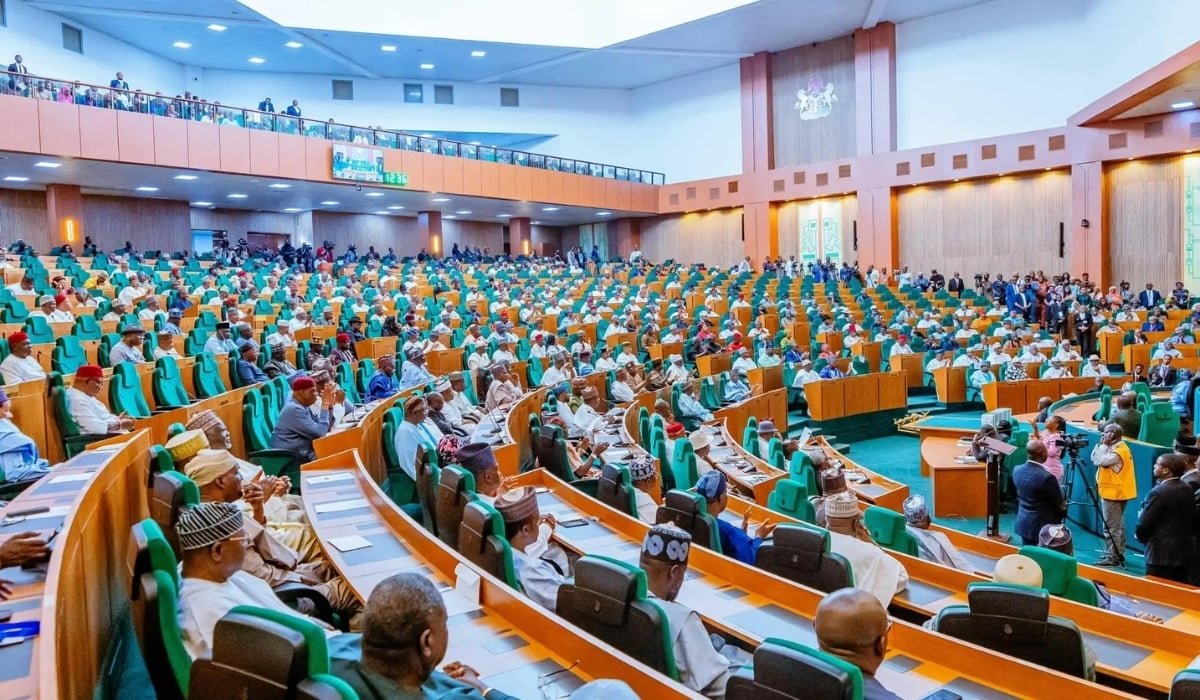
The House of Representatives on Wednesday issued a fresh seven-day ultimatum to the Chief Executive Officers of major telecommunications companies operating in Nigeria, directing them to appear in person before its Ad-hoc Committee on Telecommunications Service Quality or face constitutional sanctions over persistent network failures as preparations intensify for the 2027 general elections.
The Chairman of the Ad-hoc Committee, Hon. Olumide Osoba, issued the warning following the repeated failure of the chief executives of MTN, Globacom, Airtel, and T2 Mobile to honor the panel’s invitation for the second consecutive time. The refusal occurred despite an earlier directive issued barely a week ago, in which the House ordered arrest warrants against the operators and mandated them to appear on November 4.
Presiding over the hearing, the Deputy Chairman of the committee, Hon. Sunday Umeha (LP, Enugu), representing Hon. Osoba, insisted that invitations were served individually on the telecommunications companies as distinct corporate entities. Consequently, the committee ordered representatives of the Association of Licensed Telecommunications Operators of Nigeria (ALTON) out of the hearing room.
Earlier, the ALTON delegation informed the panel that it was appearing on behalf of the association and its corporate members. ALTON noted that while member operators had initiated legal proceedings challenging the legislative summons, they chose to attend the session out of respect for the National Assembly.
Rejecting the representation, Hon. Osoba maintained that each operator functions under separate operating licences and must independently account for its service performance. He queried whether any subsisting court order had barred the committee from continuing its investigation.
Accusing ALTON of meddling in parliamentary proceedings through unsolicited appearances, the committee warned that any further uninvited intervention by the association could lead to the detention of its representatives.
The presiding officer stated: “You are not invited. You are an intruder. This will be the last warning. On no account, except you are invited, should ALTON, under any guise whatsoever, appear before this committee again.”
Following the ejection, the committee held a closed-door executive session with officials of the Nigerian Communications Commission (NCC), who remained after the ALTON representatives departed.
Briefing correspondents on the outcome of the closed session, Hon. Osoba explained that the legislative probe was triggered by persistent public outcry from subscribers over frequent dropped calls, disappearing data, sluggish internet speeds, and recurring network outages, which have systematically shortchanged Nigerian consumers.
He stated that small and medium-scale enterprises (SMEs)—especially businesses reliant on Point of Sale (POS) terminals and digital payment channels—are bearing the brunt of the substandard network quality, noting that the disruptions carry severe adverse consequences for commercial activities and the broader economy.
The lawmaker also highlighted the upcoming 2027 general elections as a critical factor underpinning the inquiry, warning that pervasive network downtime poses a direct threat to public confidence in election management systems that rely heavily on telecommunications infrastructure and electronic transmission gadgets.
“If at the moment the network is in the state it is now, then what becomes the fate and confidence of Nigerians when the general election comes?” he asked.
Hon. Osoba noted that the committee summoned the chief executives and senior management teams of MTN, Globacom, Airtel, and other licensed telcos to explain the root causes of the deteriorating service quality and present enforceable remedial plans. He expressed regret that the operators once again delegated lower-level representatives instead of appearing in person.
Describing the action as an attempt to undermine the authority of the legislature, Osoba dismissed legal arguments suggesting that lawmakers cannot summon operators because the NCC serves as the primary industry regulator.
Citing Sections 88 and 89 of the 1999 Constitution (as amended), the lawmaker affirmed that the National Assembly retains overarching statutory powers to investigate matters within its legislative competence and examine the execution of laws passed by parliament, noting that regulatory oversight by the NCC does not insulate service providers from legislative scrutiny.
“The law under which NCC operates was made by the National Assembly. We enacted that law and gave the agency the power to issue licences. We also have the power of oversight on the agency,” he said.
He added: “Who says we don’t have the powers to do so? Of course, we have the powers. You see, people will always try to evade accountability and transparency. That’s what is going on.”
Assuring subscribers of the parliament’s resolve to enforce standards and safeguard consumer rights, Hon. Osoba announced that the committee has adjourned its hearing until Wednesday next week, when the telecommunications CEOs are expected to appear in person without fail.
He cautioned that non-compliance with the fresh seven-day directive will leave the House with no option but to activate the pending arrest warrants and invoke full constitutional powers against the affected operators and their chief executives.
WATCH TOP VIDEOS FROM NIGERIAN TRIBUNE TV