

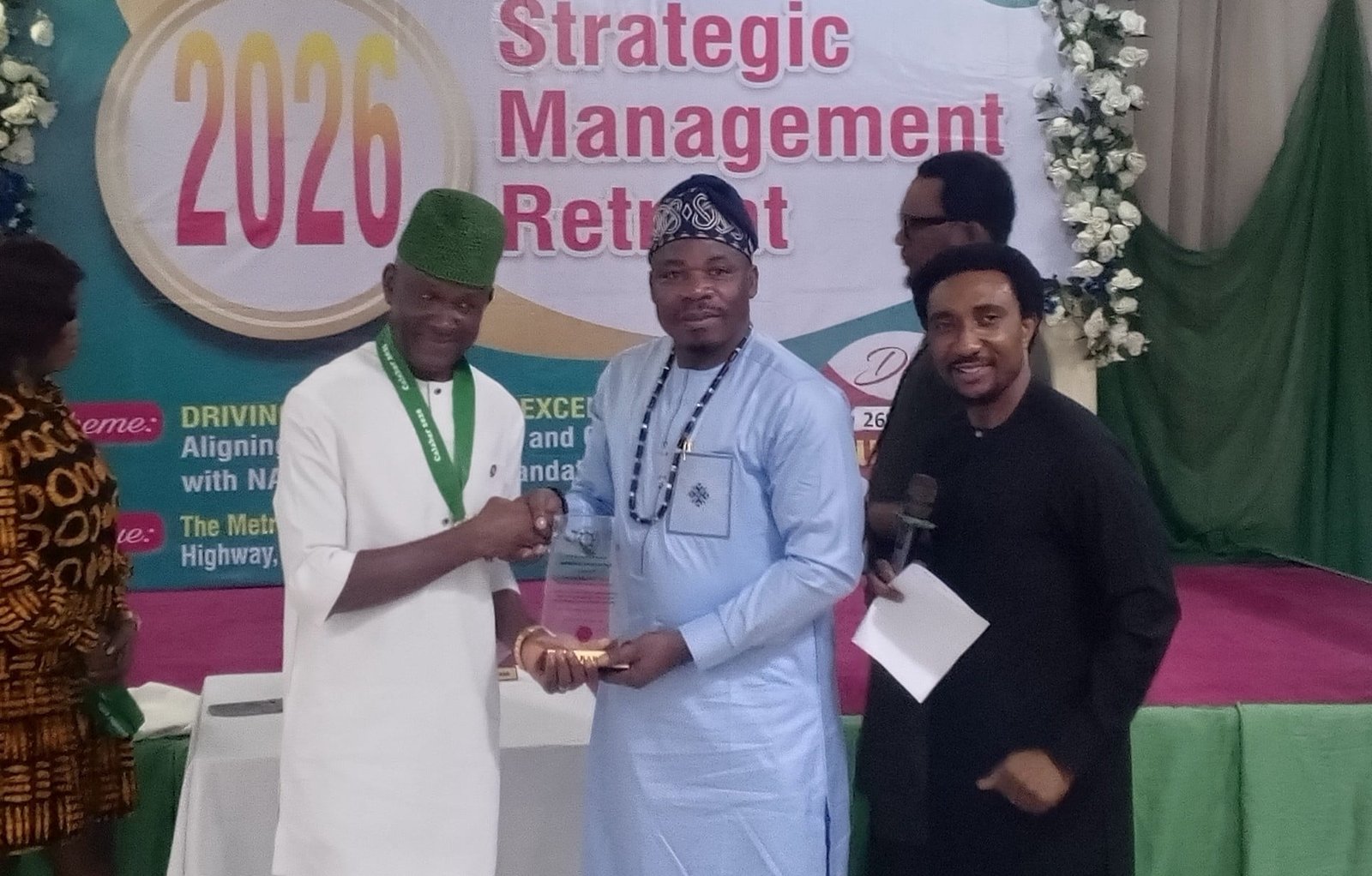
The Minister of State for Industry, Trade and Investment, Senator John Owan Enoh, has challenged the National Automotive Design and Development Council (NADDC) to accelerate the production of locally assembled vehicles, expand electric vehicle (EV) manufacturing and drive down vehicle maintenance costs in Nigeria.
Enoh gave the charge in Calabar, Cross River State, on Friday night at the cultural and retreat night marking the end of the 2026 Strategic Management Retreat of the NADDC.
The minister said the success of the three-day retreat should not be measured by the quality of strategies developed by the council, but by tangible improvements in Nigeria’s automotive industry, including increased locally assembled vehicles on Nigerian roads, reduced maintenance costs and more jobs.
He said the automotive industry remained a major driver of industrialisation globally, stressing that Nigeria could unlock significant economic opportunities by developing local capacity for vehicle production and component manufacturing.
According to him, the Federal Government’s recently unveiled Nigerian Industrial Policy places the National Automotive Industry Development Plan (NAIDP) at its centre, making the work of the NADDC critical to the implementation of the policy.
“In February of this year, we launched for the first time in decades a Nigerian industrial policy. The National Automotive Industry Development Plan is a critical component of that policy,” Enoh said.
He added that the ministry’s 90-day progress reports on the implementation of the industrial policy would continue to give prominence to the activities and achievements of the NADDC.
Enoh said the administration of President Bola Ahmed Tinubu had moved from a reform agenda to one focused on measurable impact, adding that 2026 should be a year when the impact of ongoing reforms becomes more visible to Nigerians.
He cited the recent unveiling and handover of 100 electric buses assembled in Nigeria for federal civil servants as evidence of growing local capacity in the automotive sector.
The minister also disclosed that Cross River State was expected to host an electric vehicle manufacturing plant, following the signing of a Memorandum of Understanding with an Asian development partner and the state’s provision of land for the project.
He said the development, alongside ongoing NADDC projects in the state, demonstrated Cross River’s emerging role in Nigeria’s automotive ecosystem.
According to Enoh, the NADDC is currently supporting the establishment of an Automotive Training Centre at the Cross River University of Technology and Entrepreneurship in Akamkpa, as well as a vehicle conversion centre and charging station at the University of Calabar.
He said about 50 technicians had already been trained, with another batch undergoing training, describing the developments as important steps towards building the manpower required for Nigeria’s transition to cleaner mobility.
Enoh urged the council to translate the resolutions of the retreat into three immediate areas of action: accelerating clean-energy ecosystems; aggressively expanding electric vehicle manufacturing and compressed natural gas vehicle integration; and stimulating domestic demand for locally assembled vehicles.
ALSO READ: 2027: Shina Peller rallies Oyo North APM candidates, top leaders in strategic meeting
He also called for stronger institutional discipline and compliance, particularly through the removal of bureaucratic and regulatory bottlenecks that impede the growth of the automotive sector.
The minister commended the Director-General of the NADDC, Oluwemimo Joseph Osanipin, and his management team for what he described as strong leadership and progress in implementing the council’s mandate.
“You should be very proud of the kind of leadership that you have,” Enoh told NADDC staff, adding that he was also a beneficiary of the council’s achievements because its progress contributed directly to his ministry’s performance.
Earlier, the NADDC Director-General, Oluwemimo Joseph Osanipin, said the essence of the retreat was to translate the council’s corporate mandates into measurable tasks, key performance indicators and responsibilities for departments and individual officers.
Osanipin said the council expected the outcome of the retreat to begin producing results immediately, stressing that institutional efficiency required proper preparation and effective deployment of resources.
He said the theme of the retreat, “Driving Institutional Excellence: Aligning Capacity, Culture and Compliance with NADDC Corporate Mandate,” was designed to enable the council to review its mandates, assess achievements and identify areas requiring improvement in line with current realities.
The DG also commended Cross River State for its hospitality and support for the retreat, saying the state’s collaboration with the council had encouraged NADDC to do more in the state.
He listed the Automotive Training Centre at Akamkpa and the conversion centre and charging station at the University of Calabar among the projects being executed in Cross River.
Osanipin said the council was also committed to continued collaboration with the state government to strengthen the automotive sector and develop technical manpower.
The Director of Human Resources Management, Mrs Silfat Ibironke Amodu, in her opening remarks at the retreat night, said the resolutions of the retreat had been structured into measurable results to guide the council’s activities over the next 12 months.
She described the retreat night as an opportunity to appreciate individuals and institutions that contributed to the success of the retreat, particularly Governor Bassey Otu, Minister John Owan Enoh, the Obong of Calabar and the NADDC management.
She urged staff to adhere strictly to established processes, procedures and protocols, warning that deviations and compromises could weaken the council’s institutional framework, affect team morale and undermine collective performance.
WATCH TOP VIDEOS FROM NIGERIAN TRIBUNE TV