

BY: BODE OPESEITAN
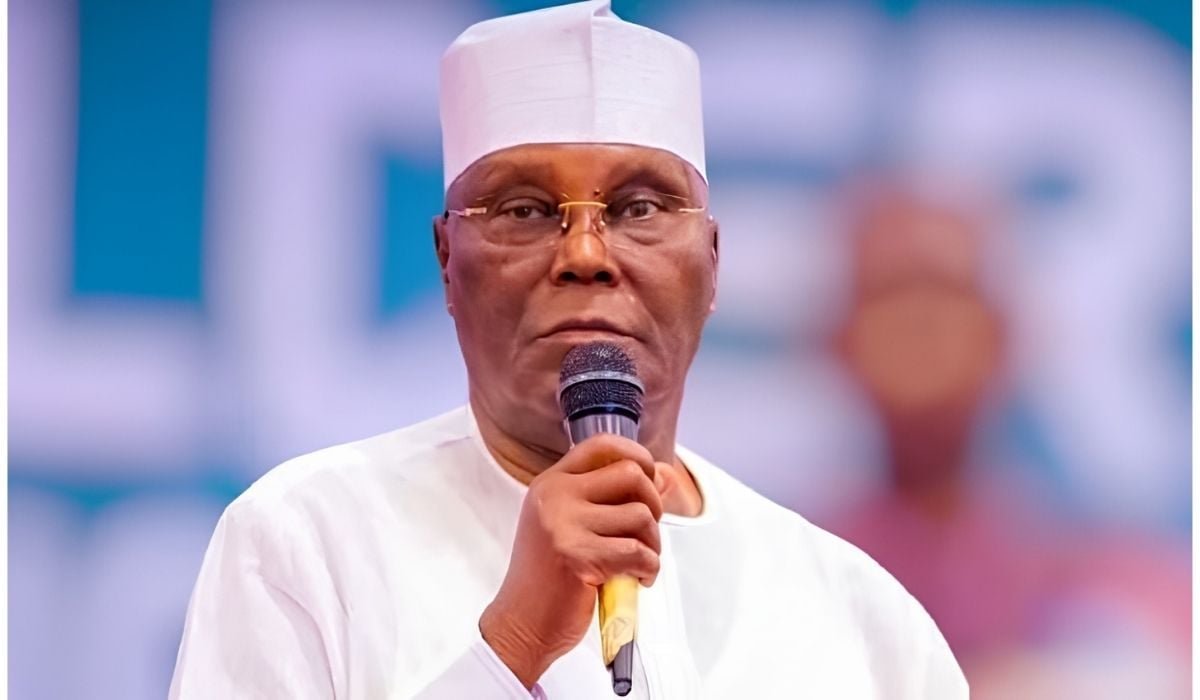
Alhaji Atiku Abubakar stood before cameras in Abuja and asked President Asiwaju Bola Ahmed Tinubu to spend the last 8 months of his term reversing course: cut petrol prices, halt the phase-out of the electricity subsidy, and stop treating palliatives as policy. His language was carefully humane. “Do not break a man’s legs, hand him crutches, and demand applause for providing mobility,” he said, framing subsidy removal as injury and government relief as insult. Convinced that he had invented a profound concept, he invited Tinubu to steal the idea outright: “rename it if he wishes… what matters to me is that Nigerians pay less”. It is a generous-sounding offer. Yet, examined against the arithmetic of both Nigeria’s recent past and the world’s current emergency, this is one of the most fiscally reckless proposals a serious presidential candidate has made this year.
Why Timing Makes This Worse, Not Better
Atiku’s call does not land in a vacuum; it lands in the middle of the most dangerous global energy shock in a generation. The war between the United States and Iran has pushed oil back above $100 a barrel, and Houthi forces have spent September striking Saudi Aramco facilities in Abha, Najran, Khamis Mushait and Jazan, disabling the kingdom’s East-West pipeline and cutting Red Sea crude exports from 4.6 million barrels a day in July to roughly 2.5 mbpd by mid-September. Saudi crude supply has fallen to its lowest level in more than 3 decades. In the United States, diesel has broken $6 a gallon (about ₦2,062.50 per litre) nationally for the first time in history, up more than 55% since the Iran war began, with California pumps nearing $8 and some stations simply running dry. Goldman Sachs has warned clients that global food prices are at risk of surging, citing diesel and fertiliser costs colliding with the fall harvest. Queues are reappearing at filling stations from the American Midwest to the Gulf. This is the moment Atiku has chosen to ask Nigeria to subsidise its way back to comfort.
The Ledger Atiku Wants Nigeria to Forget
To understand why that request is dangerous rather than compassionate, recall the balance sheet Tinubu inherited. In May 2023, Nigeria’s unencumbered external reserves stood at roughly $3.9 billion, barely enough to cover three and a half weeks of imports. By mid September 2026, reserves had climbed to $54.61 billion, and the balance of payments flipped from deficit to surplus. That is not a rounding change; it is the difference between a country that could not pay for its next shipment of wheat and one that can defend its currency. Subsidy removal, however difficult it has been for households in the short run, was the single largest contributor to that reversal, because it stopped the state from bleeding foreign exchange to keep pump prices artificially low.
The NNPC Was Not a Cash Cow, It Was a Sinkhole
Before 2023, the Nigerian National Petroleum Corporation, the institution meant to fund the federation, remitted nothing to the treasury. It was consumed instead by subsidy costs and forward oil sales, borrowing against crude Nigeria had not yet pumped, mortgaging tomorrow’s barrels to pay for today’s illusion of cheap fuel. Atiku’s proposal does not explain how a re-subsidised NNPC would avoid returning to exactly that trap, at the precise moment global crude is spiking and every barrel diverted to subsidy is a barrel Nigeria cannot bank in reserves or reinvest in refining capacity.
Printing Money Is Not Governance
The old model did not stop at oil. It extended to the currency itself: the central bank printed trillions of naira with no productive backing, manufacturing the appearance of stability while eroding the actual value of every Nigerian’s wages and savings. That is the second lever Atiku’s framework implicitly revives, because a government committed to holding fuel prices below market cost, without matching revenue, has only two financing options: foreign borrowing it does not have room for, or domestic money creation it has already proven ruinous. There is no third door.
A State That Was Quietly Failing Everywhere Else
While subsidy and monetary illusion consumed the treasury, everything else decayed. Insecurity spread beyond a shrinking list of safe zones, dragging down farm output and raising the cost of moving goods long before diesel ever became a global crisis. Infrastructure crumbled in what genuinely resembled a state of anomie. States borrowed simply to meet salary obligations, and pensioners struggled despite the earlier PENCOM upgrades under the Buhari administration. Oil production, meanwhile, had collapsed to roughly one million barrels a day from a peak of 2.65 million, gutted by theft, pipeline vandalism and underinvestment, the very foundation Nigeria’s budget depended on was hollowing out even as the government kept spending as though it wasn’t.
What Discipline Actually Bought
Set against that record, the recovery under Tinubu is not “paper growth.” Crude output has risen to roughly 1.7 mbpd, oil-sector output grew nearly 7% year-on-year by late 2025, and real GDP growth reached 4.43% in the Q2 of 2026, the strongest pace in over a decade, and for the first time in years, growth that outruns population expansion. None of that happened by accident. It happened because subsidy funds were redirected, because forward-sold oil stopped mortgaging the future, and because the naira was allowed to reflect reality instead of political convenience. Atiku’s proposal would spend that hard-won credibility back into the ground within a single fiscal year.
The Corruption Atiku’s Plan Would Quietly Restore
There is also a less comfortable truth beneath the populist packaging. Former Finance Minister Ngozi Okonjo-Iweala has described how, during her tenures, a handful of oil marketers routinely billed the federal government for petroleum products that were never actually imported, a subsidy regime that functioned less as welfare and more as a standing invoice for fraud. That is precisely the architecture Tinubu dismantled. Atiku’s insistence on reviving price intervention, without ever detailing an enforcement mechanism to prevent the same billing fraud from recurring, is not a policy oversight; it is a silence that should trouble anyone asking whose interests are actually being protected.
Why the Global Emergency Removes Atiku’s Last Excuse
Even if one were sympathetic to intervention in ordinary times, the present moment eliminates the argument entirely. The world is short of diesel, not abundant in it. Refineries in the Middle East and Russia have been damaged by war; Russia and China are restricting exports to protect their own domestic supply; American households are facing sticker shock on winter heating oil; and Goldman Sachs is warning of a food-price spiral driven by exactly the fuel and fertiliser costs Atiku wants Nigeria’s government to absorb. Asking Abuja to subsidise petrol into that headwind is asking it to fight a global supply shock with money it does not have, against a market that is only getting tighter. It is not compassion. It is asking Nigeria to plunge into the crisis everyone else is scrambling to survive.
The Verdict
Atiku’s language is generous; his economics are not. He offers Nigerians relief on paper while asking the state to reopen the exact wounds: empty reserves, an insolvent NNPC, a debased currency, and unchecked subsidy fraud that nearly finished the country 3 years ago, and to do so in the middle of the worst global energy shock since the 2022 invasion of Ukraine. Tinubu’s reforms were not cost-free, and no honest account of this period pretends otherwise. The government should continue to explore how it can lessen the pain of reform and shield Nigerians from the severest effects of a global energy crisis they did not cause. It must do whatever it takes to ensure that hardship does not deepen further, extending every genuine relief within reach while it works harder to stimulate growth. But that duty to soften the landing is not an argument for reversing course. The alternative Atiku is selling is not a gentler path back to prosperity. It is the same road that led Nigeria to the cliff edge in 2023, now offered again as if the drop below had somehow disappeared.