

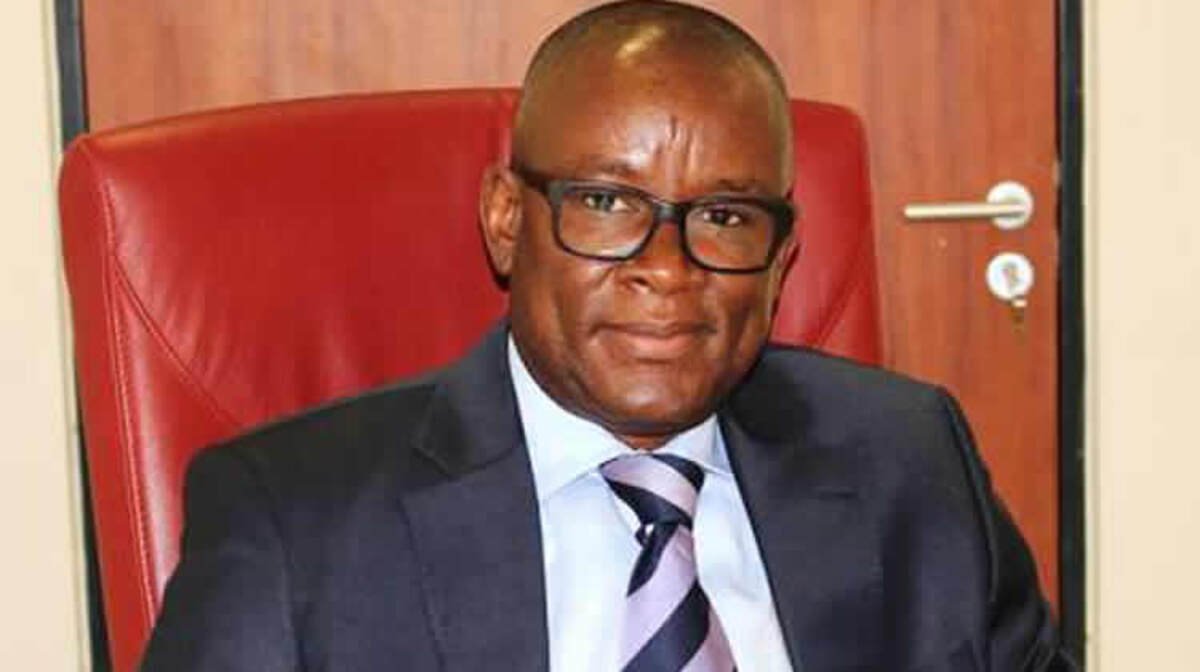
In a significant step towards revitalising Nigeria’s industrial sector, the Minister of State for Industry, Federal Ministry of Industry, Trade, and Investment, Senator John Owan Enoh, has announced the forthcoming launch of a new National Industrial Policy.
The move comes as early signs indicate a slowing rate of corporate exits from the country—an encouraging development amid mounting concerns over Nigeria’s business climate.
ALSO READ: Gov Inuwa unveils 184-hectare agro-livestock industrial zone
Speaking at the opening of a two-day technical session of the Industrial Revolution Work Group (IRWG) in Lagos on Monday, Senator Enoh revealed that the draft policy, long overdue for an overhaul, will soon be revalidated and reshaped to reflect Nigeria’s current economic realities. The revalidation process will involve key industry leaders and stakeholders, ensuring that the final document is practical, inclusive, and results-driven.
“We are not rolling out another document to gather dust. This policy will be a working tool—dynamic, actionable, and designed to address the real challenges that manufacturers and industrial players face today,” Enoh emphasised.
He identified persistent problems such as unreliable power supply, high logistics costs, workforce skill gaps, and a rapidly changing global supply chain landscape as critical issues the policy must tackle. The goal, he said, is not merely to draft lofty ideals but to engineer solutions that can be implemented within defined timelines—some within 90 days, others within 180 days, and more over the longer term.
“There are signs that the rate at which companies are exiting Nigeria has slowed. While this is encouraging, we cannot afford complacency. We must act boldly and decisively. Our industrial future depends on it,” Enoh noted.
Themed “From Activities to Outcomes: Driving Industrial Renaissance,” the IRWG session brought together government officials, development partners, industry stakeholders, and policy experts. The focus of the gathering was clear: shift Nigeria’s industrial narrative from talk to action.
Senator Enoh, who also chairs the IRWG, issued a stern call for execution over rhetoric. “We’ve had enough of policy dialogues without delivery. This group must be the engine room that powers Nigeria’s industrial rebirth,” he said. “Success must be measured not by how well we speak or write, but by the factories we revive, the jobs we create, and the systems we reform.”
Nigeria’s industrial history is littered with unfulfilled plans and abandoned policies. Senator Enoh acknowledged this, urging the IRWG to break the cycle and prioritize implementation. “The Nigerian people are watching. Investors are evaluating. The industrial sector is waiting. We must move the needle,” he asserted.
The draft policy, already prepared, will be selectively shared with thematic group leads and key partners for review and input over the two-day session. Enoh stressed that what the government needs now is not a theoretical framework, but a practical, measurable, and impactful roadmap.
“We are not seeking perfection on paper—we are seeking progress in the real world,” he said. “What can we fix now? What constraints can we ease? Where can we unlock value quickly?”
To guide the discussions and recommendations, the IRWG session is structured around five thematic pillars: Creating innovative financial tools, especially for small and medium-sized enterprises (SMEs); Building reliable and cost-effective energy and transport systems to support manufacturing; Streamlining regulations to eliminate bottlenecks and ease industrial operations; Strengthening the fight against counterfeit and contraband goods, and launching campaigns to support Nigerian-made products and bridging the skills gap and aligning workforce training with the demands of modern industry, particularly in the context of Industry 4.0.
These pillars are expected to shape Nigeria’s transition from the National Industrial Revolution Plan (NIRP) to a new industrial policy more suited for present and future challenges.
Also speaking at the event, the President of the Manufacturers Association of Nigeria (MAN), Otunba Francis Meshioye, highlighted the importance of collaboration in shaping a workable and impactful policy. According to him, the IRWG is a platform where ideas from across the industry spectrum can be consolidated into a unified, effective industrial strategy.
“This is not just about government,” Meshioye said. “It’s about all of us—industry leaders, investors, policymakers—coming together to design practical solutions that will move us forward.”
He emphasized that while Nigeria operates under tough economic and environmental conditions, progress is still achievable. “Yes, the constraints are real. But that should not stop us. Talking about these challenges, working together to overcome them—that’s how we will transform our industrial sector,” he noted.
Meshioye also stressed the importance of evaluating the practicality of proposed solutions during the two-day session. “Success here will not be measured by the volume of reports we produce, but by how actionable and realistic our recommendations are,” he said.
The IRWG, which was established to lead the transformation of Nigeria’s manufacturing sector, represents a central element of the federal government’s broader economic reform agenda.
Recognising that industrialisation is key to long-term prosperity, the group aims to build a strong manufacturing base that can drive sustainable growth, job creation, and export diversification.
With vast natural resources, a youthful population, and a growing entrepreneurial culture, Nigeria is widely seen as having the ingredients needed for industrial success. However, turning potential into reality requires focused leadership, policy consistency, and—above all—effective execution.
As the two-day IRWG session continues, expectations are high that a new chapter in Nigeria’s industrial journey is about to begin.
Senator Enoh left participants with a final charge: “Let this be our moment. Let us be the generation that moved Nigeria’s industrial ambition from aspiration to achievement. It’s not about how much we say—it’s about how much we deliver.”