

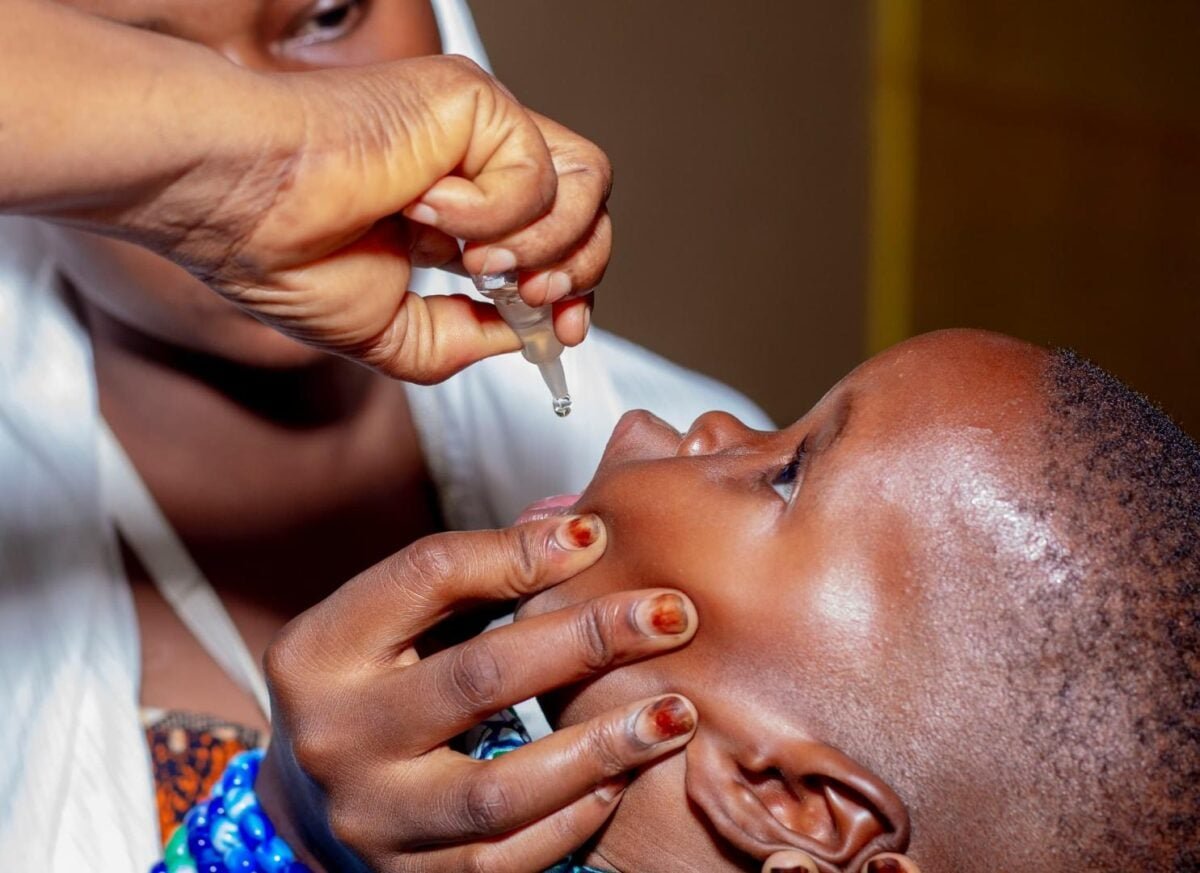
Kano State is set to launch another round of polio vaccination targeting 3,024,026 children aged between zero and 59 months across 30 high-risk local government areas of the state.
The State Social Mobilisation Officer, Alhaji Rabiu Ibrahim, disclosed this while briefing stakeholders ahead of the forthcoming immunisation campaign.
He explained that the exercise, scheduled to commence on November 7 and end on November 10, 2026, would be the third round of the state-wide polio campaign. However, unlike previous exercises, it would focus on 30 prioritised local government areas instead of all 44 LGAs.
According to him, the decision to concentrate on the 30 local government areas was based on risk analysis, prevailing needs and prioritisation to ensure that children in areas most vulnerable to polio were adequately protected.
Ibrahim disclosed that the state had received 3,568,300 doses of oral polio vaccine from the National Primary Health Care Development Agency to immunise the targeted children.
He added that other essential materials, including tally sheets, droppers and registers, had also been provided to ensure the smooth implementation of the exercise.
The mobilisation officer explained that the campaign would adopt three major strategies: house-to-house vaccination, fixed vaccination posts at health facilities, and special teams deployed to schools and other public places where eligible children could be reached.
He called on journalists and other stakeholders to sustain public awareness campaigns, particularly among parents, caregivers, school proprietors and community leaders, to ensure maximum participation.
Ibrahim commended the media for their contributions during previous vaccination exercises, noting that their publicity efforts had helped increase awareness, address misconceptions and encourage caregivers to prioritise immunisation.
He urged parents and caregivers to cooperate with vaccination teams by allowing eligible children to receive two drops of the oral polio vaccine.
The officer also emphasised the importance of ensuring that children were vaccinated before their fingers were marked with indelible ink by vaccination teams.
He explained that the procedure would help prevent situations where children were marked without actually receiving the vaccine, particularly when vaccination teams were in a hurry to move to other households.
Ibrahim said caregivers should insist that vaccination takes place first, followed by thumbprinting, to ensure that every eligible child was properly immunised.
He stressed that protecting every child against poliomyelitis was essential to safeguarding not only individual children but also the entire community from the debilitating disease.
WATCH TOP VIDEOS FROM NIGERIAN TRIBUNE TV