

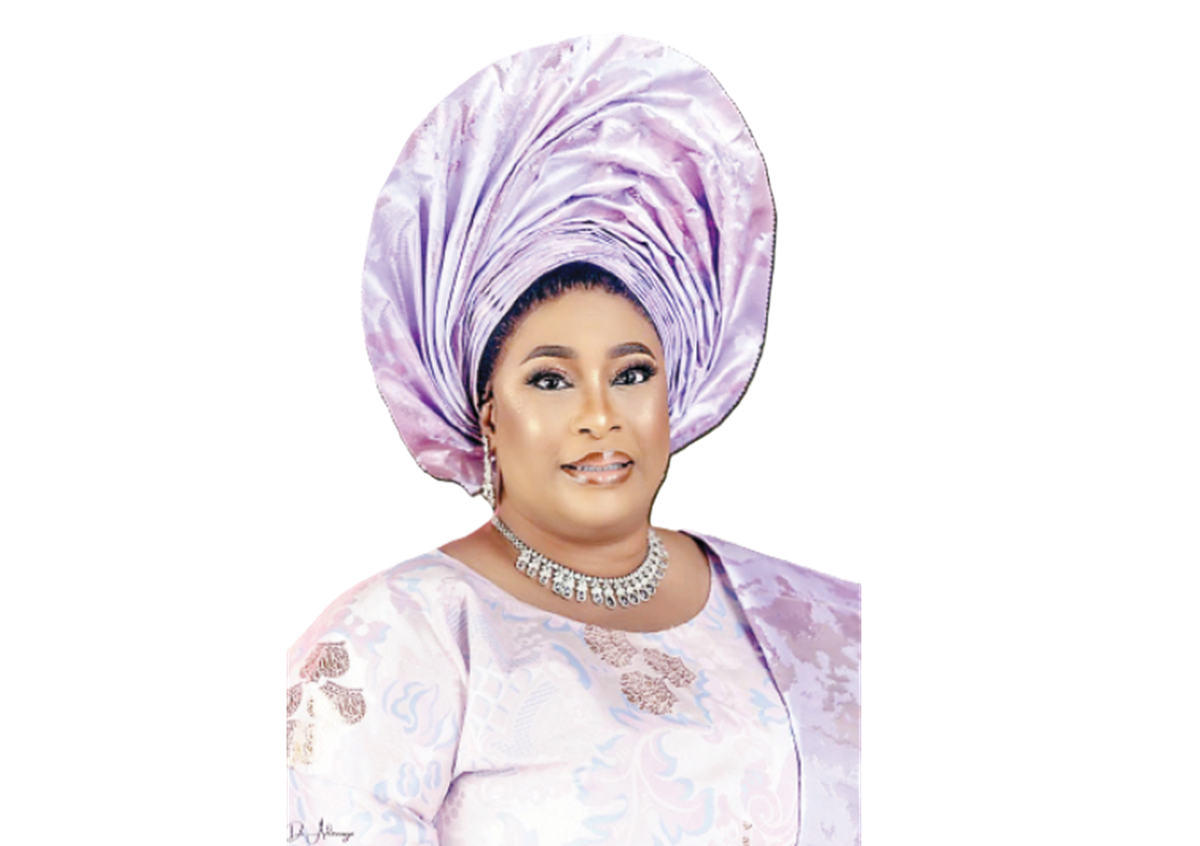
Hon. Fateemah Mohammed believes she can achieve any task and fulfil her dreams no matter how tall they seem. Mohammed, who is passionate about women’s empowerment, speaks with Yetunde Ajanaku about her campaign for justice and opportunity for all in this interview
Do you remember the moment you realised silence wasn’t an option anymore?
Yes, I do. It was at a community meeting where women were told to sit and watch. That moment changed everything for me. I stood up and spoke and I haven’t stopped since then. After that meeting, I started attending others. I asked questions. I started advocacy for the road construction, for inclusion, and for women’s voices to be heard.
The Ekori road, Abule Egba, is tarred today because I started the advocacy. I didn’t even know I was entering politics; I just knew I couldn’t remain silent.
What were some of the challenges you faced as a woman in politics?
Being a woman in politics in Nigeria is like walking into a battle unarmed.
Some men see strong women as threats. They try to intimidate you ignore your opinions, or brand you as arrogant for simply having a voice.
In 2016, I contested an election and was shot at. Yes, they tried to kill me. That was the most terrifying moment of my life. But it didn’t make me retreat; it made me to become more brave. If my voice could threaten them that much, I knew I was on the right path. I decided I would not be cowed. The more they tried to silence me, the more determined I became.
What are some of your notable achievements so far?
I’m grateful to God for how far we’ve come. I’ve provided 23 boreholes to communities that had no clean water. I’ve awarded scholarships to over 200 students ,some of whom are now graduates. I’ve empowered over 5,000 women with tools and training: POS machines, tricycles, sewing machines, and small grants to help them build businesses.
Every month, I host a special gathering for the elderly. We eat, dance, talk; it reminds them they’re not forgotten. I also run a widows’ outreach. Many of these women have no support system. We help them with food, medical care, and small business funding. One of the most emotional moments for me was when a 12-year-old boy ran up to me and said, “Thank you for helping me go back to school.” That’s what makes everything worth it.
You’re very passionate about youth empowerment. Can you share some of the things you have done?
The youth are our most valuable resource not oil, not gold but we’ve failed them for too long. I’m not one for long talk. We empower them with tools actual tools. POS machines, vocational skills, tech training, fashion design kits. And we stay involved in their growth. Mentorship is crucial.
I believe that you don’t just tell the youth what to do you show them. And you trust them to build. I’m inspired by the president of Burkina Faso. His government functions across all sectors. That’s leadership. That’s the model I hope we can adopt in Nigeria- a working system that makes room for young innovators and disruptors.
What key changes do you believe Nigeria urgently needs?
We need to restructure. I’ve said this repeatedly, and I’ll keep saying it. Our system is flawed from the foundation. Restructuring allows every region to control its resources and grow independently. That breeds accountability.
Secondly, electricity. We can’t talk about development when we don’t have power. Businesses can’t function; hospitals can’t operate, and education becomes limited without steady electricity. Then there’s education and healthcare they both need urgent investment. Fixing those sectors will have a ripple effect across the economy.
How do you balance public service work with your personal life?
I won’t sugarcoat it; it’s hard. Most times, I don’t even have weekends. My phone rings constantly, and someone always needs advice, intervention,and emergency support. It’s draining.
But I’ve learnt to take intentional breaks — even if it’s just for a day. I spend time with family, visit quiet places, or do something fun that has nothing to do with politics. You can’t pour from an empty cup. If I burn out, I can’t help anyone. So, I force myself to rest.
Let’s talk about the representation of women in Nigerian politics. What do the numbers say?
Unfortunately, the numbers are still very discouraging.
Women make up less than one per cent of the elected officials in Nigeria.
Meanwhile, the United Nations recommends a minimum of seven per cent participation in governance structures for meaningful gender balance.
Right now, of 107 senators, only four are women. of over 300 members of the House of Representatives, only about 12 are women. That’s appalling. How can we create laws that protect women, families, and vulnerable groups if we’re not even in the room?
We have to break the systemic, cultural, and religious barriers that keep women out of politics especially in Northern Nigeria, where women are often not even encouraged to speak in public, let alone lead.
Have there been times you felt like giving up?
There had been time when you’re funding community projects from your own pocket, and people still question your motives. Or when your fellow women are afraid to stand with you publicly because they fear backlash. Or when you realize that people prefer comfort to change.
But each time I feel like walking away, someone reminds me why I started. A woman who got a job. A boy who went back to school. A grandmother who prayed for me after receiving food aid. Those moments keep me going.
ALSO READ FROM NIGERIAN TRIBUNE: West Africa’s intra-regional trade remains stuck at 10% — Tinubu
What advice do you have for young women aspiring to enter politics?
First of all, bring value. Don’t come empty-handed, and definitely don’t think you can sleep your way to success. That road is dangerous and leads nowhere.
Have a cause. Stand for something. Let people know what you represent. Don’t be afraid to be the only voice in the room sometimes, that’s all it takes to shift the conversation.
Don’t be swayed by what people say. Be principled. Let your work speak louder than your words. Build yourself so well that your competence becomes undeniable. And don’t ever apologise for being bold.
What do you want your legacy to be?
I want to be Nigeria’s first female vice – president. I believe it’s possible. I’m not saying it just to make noise I say it because I know I’ve worked hard, and I’m still working. But more than that, I want my legacy to be about people. I want to be remembered for the lives I’ve touched, for the schools that opened because I spoke up, for the women who started businesses because I gave them capital, and for the voices I helped raise.