

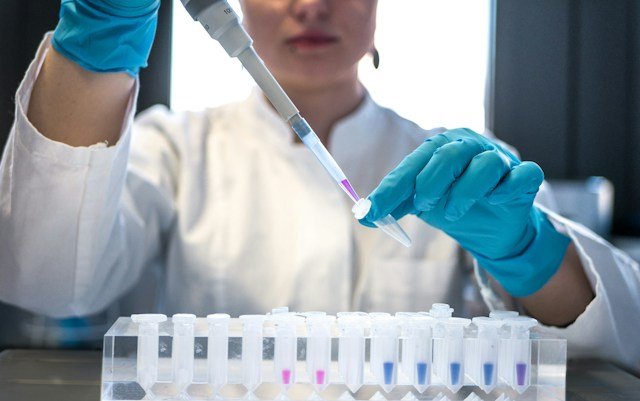
Peptides show up everywhere in the wellness conversation these days, from recovery routines to skin health forums to biohacking communities swapping notes on what they are studying and why. But before any of that conversation gets useful, there is a less exciting layer underneath it: how these compounds are actually handled once they arrive at a research bench. Anyone getting serious about peptide research, rather than just reading about it, needs to understand the basics of storage, reconstitution, and documentation before touching a vial. Get that part wrong and the rest of the study is compromised no matter how good the protocol looks on paper.
Melanotan 1 (MT1), a synthetic peptide researchers use to study melanocortin receptor activity and pigmentation pathways, is a useful example because it follows the same handling rules as most other research peptides on the market. It is not a special case. It is a good teaching example precisely because the principles apply broadly.
Why Handling Discipline Matters More Than People Expect
New researchers, and plenty of curious enthusiasts dipping a toe into this space, often assume a peptide is a peptide: order it, store it in a fridge, mix it when needed, done. In practice, peptides are fragile molecules. Their structure can degrade from heat exposure, from repeated freeze-thaw cycles, from improper reconstitution technique, or from sitting too long once mixed. None of that failure shows up as a dramatic event. It shows up quietly, as inconsistent results between one assay run and the next, which is often far more frustrating to diagnose than an obvious mistake would be.
That is the real argument for learning the basics before starting. A study built on a peptide that was mishandled somewhere between the shipping box and the pipette is not actually testing what the researcher thinks it is testing. It is testing the peptide’s degradation, which is a very different experiment.
Step One: Confirm What Arrived
Every shipment should be checked against its documentation the moment it arrives, not days later. That means confirming the lot number on the vial matches the paperwork, checking that the packaging arrived intact, and noting the date of arrival somewhere it will not get lost. This sounds like paperwork busywork, but it is the first line of defense against a mixup that would otherwise go unnoticed until results stop making sense.
Suppliers vary in how much documentation they provide up front, which is part of why sourcing from a catalog with consistent labeling practices across every product matters. ViVe Peptides, which lists MT1 alongside two dozen other research peptides, applies the same product identification and research-use framing across its full catalog rather than varying the format compound by compound. That consistency makes the intake-check step faster and less error-prone, since a researcher already familiar with how one listing is labeled knows roughly what to expect from the next.
Step Two: Store It Correctly, And Understand Why
Lyophilized (freeze-dried) peptides like MT1 are shelf-stable at low temperatures precisely because the drying process removes the moisture that would otherwise let degradation reactions proceed. That stability disappears the moment the peptide is exposed to warmth, humidity, or light for extended periods. The general rule researchers follow is to keep the unreconstituted peptide in its original sealed container, stored cold and away from light, until the moment it is actually needed for an assay.
This is also where the temptation to cut corners tends to creep in. It is easy to leave a vial out on a counter for a few hours “because it will be used soon anyway,” and easy to assume that a few hours will not matter. Sometimes it does not. Sometimes it introduces enough variability to muddy a comparison across a multi-week study. The safer habit is to treat every peptide, regardless of how many past shipments have gone fine, as sensitive until it is back in cold storage.
Step Three: Reconstitute Only What You Need
Reconstitution, mixing the dry peptide with a diluent to bring it into solution, is where most avoidable mistakes happen. The two habits worth building here are straightforward. First, reconstitute only the volume actually needed for the assay in front of you, rather than mixing the entire vial at once for convenience. Second, once a peptide is in solution, minimize how many times it goes through a freeze and thaw cycle, since each cycle is a small opportunity for the molecule’s structure to break down.
Researchers who are new to this often do not realize how much freeze-thaw cycling can affect comparability between assay runs performed weeks apart. A peptide solution used fresh on day one and a peptide solution thawed for the third time on day twenty are not necessarily equivalent inputs, even if they came from the same vial. Logging reconstitution dates and freeze-thaw counts alongside assay results is a small habit that pays off the first time a result looks unexpectedly off and needs to be traced back to a handling variable rather than a biological one.
Why This Matters For A Compound Like MT1 Specifically
MT1 is commonly used in receptor-binding assays and cell-culture work examining melanocortin receptor signaling, often as a reference compound against which a newer molecule’s activity is measured. In that kind of comparative work, consistency of the reference peptide across the length of a study is not a minor detail, it is the baseline the rest of the study depends on. A researcher running the same binding assay in week one and week six needs confidence that the MT1 sample behaves the same way in both runs, and that confidence starts with disciplined storage and reconstitution practice, not with the compound’s inherent chemistry.
This is one of the reasons continuity of sourcing tends to matter more in this field than price shopping between vendors. A lab that has already learned a supplier’s labeling conventions, documentation style, and shipping reliability for one compound generally prefers sourcing additional compounds from that same catalog rather than re-learning a new vendor’s quirks project by project.
The Bigger Picture For Anyone New To This Space
None of these habits are complicated, but they are easy to skip when a researcher, or a curious hobbyist experimenting for the first time, is eager to get to the interesting part of a project. Confirm the shipment, store it cold and dark, reconstitute only what is needed, minimize freeze-thaw cycles, and log everything as it happens rather than reconstructing it from memory later. Those five habits will do more for the reliability of a peptide research project than almost any other single decision.
As always, anyone sourcing a research peptide, whether it is MT1 or something else entirely, should confirm handling instructions, batch documentation, and storage recommendations directly with the supplier before starting a study. This basic due diligence step applies regardless of where the compound comes from, and it is the difference between a study that produces trustworthy results and one that quietly does not.