

The Federal Government has recruited more than 30,000 healthcare professionals into federal health facilities over the last two and a half years as part of ongoing efforts to strengthen healthcare delivery and address the shortage of skilled personnel across the country.
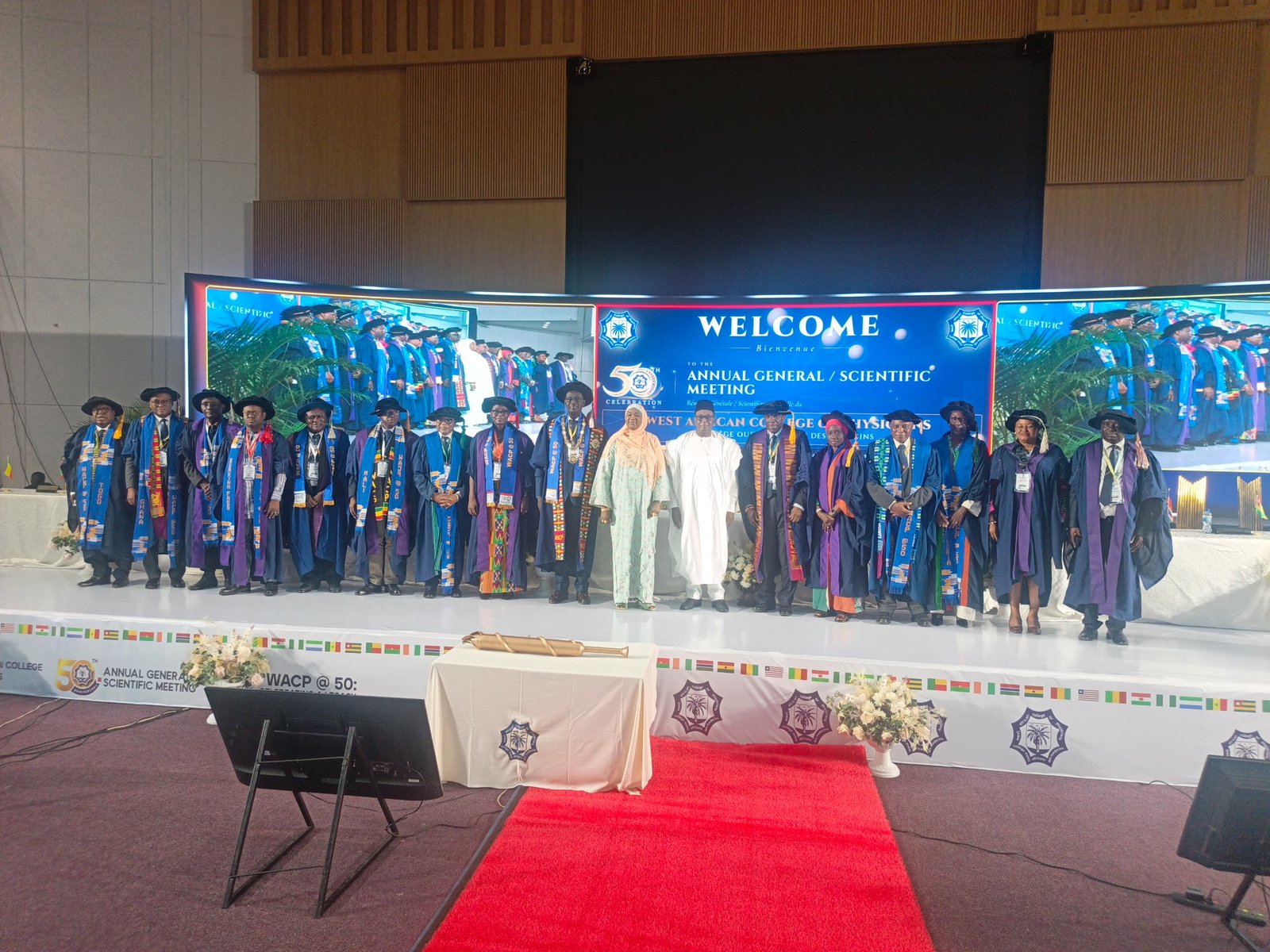
The Coordinating Minister of Health and Social Welfare, Prof. Muhammad Ali Pate, disclosed this on Monday in Abuja at the 50th Annual General Meeting and Scientific Conference of the West African College of Physicians (WACP), where he represented President Bola Ahmed Tinubu.
The conference, themed “WACP at 50: Celebrating a Legacy and Envisioning the Future,” brought together medical professionals, policymakers, and international stakeholders to examine the college’s contributions to healthcare development and chart a course for the future of medical education and clinical delivery in West Africa.
Pate noted that the Federal Government is prioritising workforce development, specialist medical training, and improved working conditions to fortify the health system and counter the migration of Nigerian medical practitioners abroad.
He affirmed that the administration is committed to reversing the brain drain by creating conditions that encourage professionals to return to Nigeria and the wider sub-region.
“We will work hard to stem the trend of ‘japa’ so that we have ‘japada’—people coming back to serve in our region,” Pate said.
The minister explained that the government has rolled out far-reaching reforms under the Renewed Hope Agenda to overhaul the health sector, expand health insurance coverage, and guarantee equitable access to quality healthcare services.
According to him, the reforms encompass direct investments in health infrastructure, the revitalisation of primary healthcare centres, increased direct allocations to facilities through the Basic Health Care Provision Fund, and broadened financial protection for citizens accessing medical care.
He added that the administration has supported the training of thousands of frontline health workers, upgraded specialist institutions, and doubled admission quotas for medical education to expand the pipeline of qualified practitioners.
Pate also highlighted the adoption of digital health innovations to strengthen electronic medical records, disease surveillance systems, health management, and evidence-based decision-making.
He insisted that quality healthcare remains fundamental to national development and must never be treated as a luxury.
“Quality healthcare is not a privilege reserved for a few, but a fundamental right that should be accessible to every resident of Nigeria, all our citizens, and all those who live in or visit our country,” he maintained.
The minister commended the WACP for five decades of pivotal contributions to postgraduate medical training, scientific research, professional standards, and healthcare delivery across West Africa.
He noted that the college has produced generations of specialist physicians who have strengthened national health systems and advanced medical science across the continent.
Pate also called for enhanced regional collaboration to boost preparedness against infectious disease outbreaks, including Ebola virus disease.
He observed that recent global health crises demonstrated that pathogens respect no borders, making robust surveillance, advanced laboratory capacity, emergency readiness, and cross-border cooperation vital for collective biosecurity.
According to him, Nigeria remains steadfast in collaborating with the WACP, ECOWAS institutions, the African Union, the Africa Centres for Disease Control and Prevention, and international development partners to reinforce regional health security.
“The vision of an Ebola-free West Africa and an Ebola-free Africa is achievable. It requires sustained political commitment, stronger institutions, adequate investment in public health preparedness, and continuing collaboration among our countries,” he noted.
Pate reaffirmed the ministry’s readiness to collaborate with the Federal Ministry of Education and other regulatory authorities to deepen postgraduate medical training and create an enabling environment for specialist residency programmes.
He urged the college to embrace cutting-edge technology, including artificial intelligence with appropriate safeguards, while expanding partnerships and investing in the next generation of physicians.
Declaring the conference open, the minister congratulated the college on its golden jubilee and lauded its leadership, fellows, members, and partners for their dedication.
Earlier, the President of the WACP, Dr. Mamadou Mourtalla Ka, stated that the 50th anniversary provided a strategic opportunity to celebrate the institution’s achievements while confronting the region’s expanding disease burden.
Ka noted that the college has trained and certified thousands of specialist physicians over the last half-century, shaping clinical practice, academia, research, and public health leadership across the sub-region.
He paid glowing tributes to the founding fathers, past presidents, senior fellows, faculty heads, and members whose sacrifices sustained the institution since its inception.
While celebrating past accomplishments, Ka identified the surging burden of non-communicable diseases, recurring epidemics, persistent healthcare inequities, and systemic strain as critical challenges requiring decisive action.
“The future of our college depends on our ability to remain united across national, cultural, and linguistic boundaries, guided by a shared commitment to excellence and service,” Ka said.
He expressed gratitude to the Nigerian government, the ECOWAS Commission, the WACP Nigerian chapter, and the local organising committee for hosting the landmark golden jubilee celebration.
Also speaking, WACP Vice-President, Prof. Benjamin Uzochukwu, recalled that the college originated as an initiative of five English-speaking West African nations before expanding into a pan-regional institution encompassing English-, French-, and Portuguese-speaking countries.
Uzochukwu disclosed that the college has produced over 40,000 fellows and more than 4,000 members as of April 2026.
He said the college’s golden jubilee calendar combined academic discussions with impactful community interventions, including a free medical outreach conducted in Abuja’s Garki District on October 24.
According to him, the outreach offered consultations and clinical care for conditions such as anaemia, hydrocele, and uterine fibroids, bringing specialised healthcare directly to underserved communities.
Uzochukwu added that the anniversary featured the unveiling of a 50th-anniversary commemorative monument by the President of the ECOWAS Commission.
He stressed that the college aims to deliver evidence-based policy advisories to help regional governments retain, motivate, and protect healthcare professionals, noting that conference protocols strictly adhered to public health advisories issued by the Nigeria Centre for Disease Control and Prevention (NCDC).
In her remarks, the Minister of State for the Federal Capital Territory, Dr. Mariya Mahmoud, announced a ₦200 million support grant by the FCT Administration toward the conference.
Mahmoud, herself a fellow of the college, congratulated the leadership and membership on attaining the 50-year milestone, urging deeper investments in specialist medical training, research, and healthcare worker welfare.
She commended the Central Organising Committee for selecting Abuja as the host city and expressed optimism that the scientific deliberations would generate practical frameworks for regional health resilience.
The President of the Royal College of Physicians, London, Prof. Mumtaz Patel, reaffirmed her institution’s commitment to deepening its collaboration with the WACP.
Patel noted that medical colleges globally face identical hurdles regarding workforce recruitment, retention, burnout, and equitable healthcare delivery.
“We learn as much from you as we impart, and that bidirectional working and relationships is extremely, extremely important,” Patel stated.
The opening ceremony culminated in the formal induction of 283 new members and 319 fellows into the West African College of Physicians, bolstering the sub-region’s cadre of medical specialists.
WATCH TOP VIDEOS FROM NIGERIAN TRIBUNE TV