

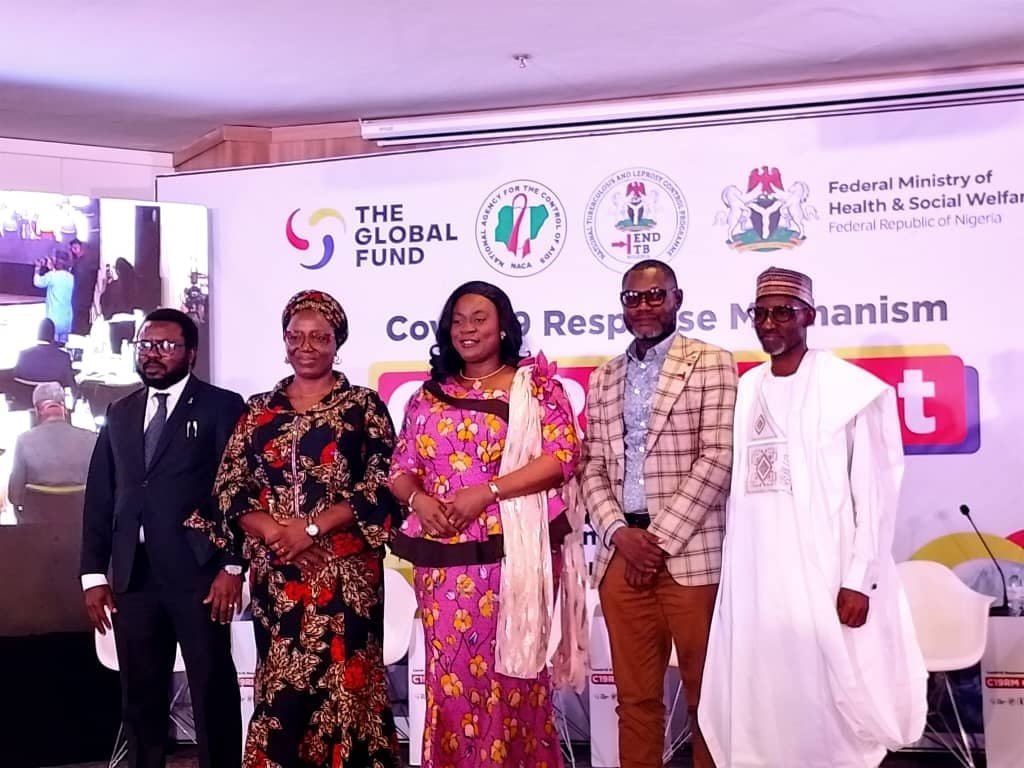
The Federal Government and its development partners have begun efforts to preserve and sustain the gains recorded under the Global Fund COVID-19 Response Mechanism (C19 RM) grant, as the programme comes to an end after strengthening Nigeria‘s disease surveillance systems, laboratory networks, oxygen infrastructure and overall health security capacity.
The commitment was underscored at the C19 RM closeout and dissemination meeting in Abuja, where government officials, donor agencies, implementing partners and public health experts emphasised the need to integrate the programme’s achievements into routine health systems and financing structures to ensure their long-term impact.
Representing the Coordinating Minister of Health and Social Welfare, Professor Muhammad Ali Pate, the Director at the Department of Hospital Services, Federal Ministry of Health and Social Welfare, Vivian Okafor, said the focus must now shift from emergency response to sustaining the systems and institutions established through the intervention.
She noted that the COVID-19 pandemic underscored the importance of resilient health systems and provided Nigeria with an opportunity to strengthen critical health infrastructure while maintaining essential HIV, tuberculosis and malaria services during a period of unprecedented disruption.
According to her, the C19 RM grant supported improvements in surveillance systems and laboratory networks, expanded oxygen infrastructure, strengthened infection prevention and control measures, enhanced supply chain and logistics systems, and supported digital platforms and community-based service delivery mechanisms.
“The most important lesson from C19 RM is clear: emergency investments must leave behind sustainable systems. The true legacy of this programme is not just the equipment procured or the activities implemented. Its legacy lies in stronger institutions, better governance systems, enhanced workforce capacity, improved preparedness and stronger partnerships for the future,” she said.
Okafor explained that the programme’s outcomes align with President Bola Tinubu’s Renewed Hope Agenda and the Health Sector Renewal Investment Initiative (NHSRII), which seeks to improve population health outcomes, strengthen health security, unlock the healthcare value chain and improve governance and financing across the sector.
She added that the Federal Government is working to strengthen domestic health financing through initiatives such as the Basic Health Care Provision Fund and broader reforms under the NHSRII framework to ensure that gains achieved under the grant are not lost.
Stakeholders at the meeting repeatedly stressed that sustaining the programme’s investments would be critical to improving Nigeria’s preparedness for future disease outbreaks and public health emergencies.
The National Coordinator of the National AIDS and STIs Control Programme (NASCP), Dr Adebobola Bashorun, described the intervention as a landmark investment that benefited the entire health system, citing improvements in oxygen systems, genomic laboratories and health infrastructure.
“Global Fund supported the C19 RM and RSSH grant, and Nigeria was wise to invest in the right direction, investing in something that leaves a footprint. What we need to do now as government is to sustain it because Global Fund will not be here forever,” he said.
The Director-General of the National Agency for the Control of AIDS (NACA), Temitope Ilori, echoed the call for sustainability, describing the closeout meeting as an opportunity not only to celebrate achievements recorded under the Global Fund COVID-19 Response Mechanism (C19RM) grant but also to reflect on lessons learned and chart a pathway for preserving its gains.
Ilori said the COVID-19 pandemic presented unprecedented challenges to health systems worldwide, but noted that the C19RM grant provided Nigeria with timely support that strengthened the country’s response while safeguarding essential health services.
According to her, the intervention delivered significant improvements in disease surveillance, laboratory capacity, oxygen infrastructure, infection prevention and control systems, supply chains, community engagement and emergency preparedness.
She noted that the investments had extended beyond the immediate COVID-19 response, contributing to broader efforts to strengthen the resilience of Nigeria’s health system.
“Beyond the infrastructure and systems established, one of the most important achievements of C19RM has been the partnerships that brought together government institutions, development partners, implementing agencies, healthcare workers and communities around a common purpose,” she said.
The NACA boss stressed that the success of the programme would ultimately be measured by how effectively its investments are integrated into routine health systems, maintained over time and leveraged to improve health outcomes for Nigerians.
She expressed appreciation to the Global Fund and other development partners for their support, while commending the Federal Ministry of Health and Social Welfare, the Nigeria Centre for Disease Control and Prevention (NCDC), the National Tuberculosis, Leprosy and Buruli Ulcer Control Programme (NTBLCP), state governments, implementing partners, healthcare workers and communities for their contributions to the programme’s implementation.
Ilori urged stakeholders to use the closeout meeting as a platform to capture lessons, identify opportunities and collectively shape the future of resilient and responsive health systems in the country.
“With these investments and lessons learned, we have an opportunity to strengthen the foundation of Nigeria’s health system and ensure that the gains achieved through C19RM continue to benefit Nigerians long after the grant has ended,” she said.
Also speaking, the Executive Secretary of the Country Coordinating Mechanism (CCM), Ibrahim Tajudeen, said the programme delivered unprecedented investments in health infrastructure, including oxygen systems, public health laboratories and 23 pharmaceutical-grade warehouses across the country.
“The only concern we have now is how we are going to sustain this investment moving forward. Nigeria has benefited maximally, and we all need to rise to the occasion and make sure that this investment continues to benefit Nigerians,” he said.
ALSO READ: Mr Ibu’s children, widow seek support over school fees, rent
Speaking virtually from Geneva, the Global Fund Country Fund Manager for Nigeria, Ketevan Vakhanishvili, said the closeout meeting provided an opportunity to assess achievements, identify lessons learned and determine what should be sustained and scaled.
She noted that insights from the programme would help shape future investments in pandemic preparedness and resilient health systems in Nigeria.
A representative of Jhpiego, Dr. Yemisi Ogundare, urged stakeholders to build on the gains of the intervention and ensure that systems established through the grant remain functional and effective long after the funding cycle has ended.
Representing the United States Government, Dr. Obinna Ogbanufe of the US Centers for Disease Control and Prevention (CDC), said investments made during the COVID-19 response strengthened Nigeria’s emergency preparedness, laboratory services and outbreak response capacity.
Health Watch Foundation Managing Director, Vivianne Ihekwazu, said the priority going forward should be ensuring that investments made through the programme are maintained and leveraged to strengthen healthcare delivery.
“The critical thing we need to make sure is that these investments do not go to waste but are sustained in the long term to ensure that our health system is strengthened and the care Nigerians receive continues to improve into the future,” she said.
Participants agreed that while the Global Fund COVID-19 Response Mechanism grant is ending, its legacy should endure through stronger institutions, sustainable financing, improved preparedness and continued collaboration among government, development partners and communities.
WATCH TOP VIDEOS FROM NIGERIAN TRIBUNE TV