

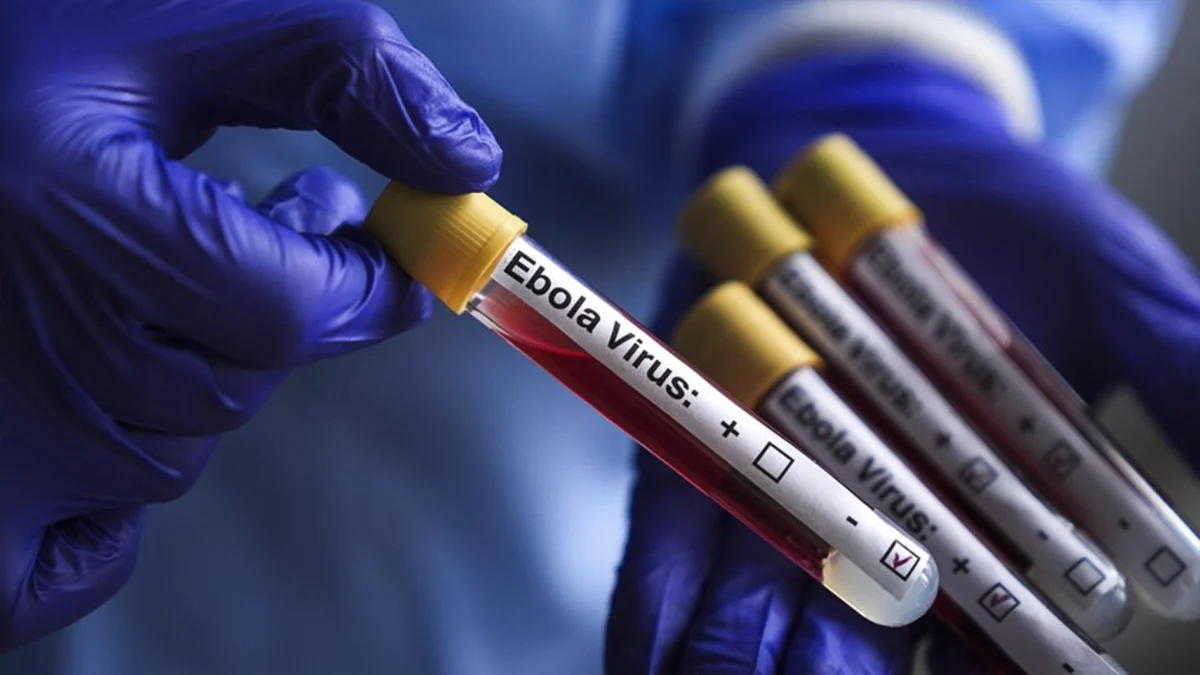
THE World Health Organisation (WHO) has called for urgent collective action against Ebola, warning that the outbreak has become a regional public health concern.
The News Agency of Nigeria (NAN) noted that the development comes as the infection begins to spread across Central, Eastern and Western Africa.
“Ebola does not wait. It follows movement, exploits gaps, and tests the strength of our health systems,” WHO Regional Director for Africa Mohamed Yakub Janabi said during an online press briefing.
“Today, the test is no longer confined to one place,” he said, stressing that the increasingly complex outbreak demands regional vigilance and collective resolve.
Janabi said Nigeria has confirmed an imported case of Ebola caused by the Bundibugyo virus, while Kenya has reported nine cases, including one death.
Kenya’s Director-General for Health, Patrick Amoth, said at the briefing that the eight patients were receiving treatment, while more than 120 people remained in quarantine.
He disclosed that Kenyan authorities had requested 10,000 vaccine doses from the WHO and the Africa Centres for Disease Control and Prevention (Africa CDC) to strengthen protection for frontline health workers.
In the Democratic Republic of the Congo (DRC), where the outbreak was declared in May, the disease has spread to eight of the country’s 26 provinces.
According to the latest figures released October 14 by the DRC’s health authorities, the country had recorded 9,704 confirmed Ebola cases, including 4,687 deaths, as of October 20, with a case fatality rate of 48.3 percent.
Janabi expressed particular concern over continued transmission in communities, noting that around six in every 10 recent Ebola deaths in the DRC had occurred outside treatment centres.
The warning came as the Africa CDC announced Wednesday that it would convene an extraordinary virtual meeting of African health ministers on October 28 to coordinate efforts against the escalating outbreak.
On Tuesday evening, following Nigeria’s confirmation of its first Ebola case, Africa CDC Director-General Jean Kaseya warned that the outbreak had become the most geographically widespread Ebola epidemic on record, with infections reported across Central, Eastern and Western Africa.
UN expresses confidence in Nigeria’s containment efforts
Meanwhile, the United Nations has expressed confidence in Nigeria’s capacity to contain its newly confirmed Ebola case, pledging support to prevent further spread of the deadly disease.
UN Secretary-General’s spokesperson, Stéphane Dujarric, gave the assurance on Wednesday while responding to questions from the NAN at the UN Headquarters in New York.
Dujarric urged countries to comply with international health regulations and collaborate closely with the World Health Organisation (WHO) to contain the outbreak.
Africa CDC warns Nigeria over cross-border threat
Also, the Africa Centres for Disease Control and Prevention (Africa CDC) has raised concern over the risk of cross-border transmission of Ebola following Nigeria’s confirmation of an imported case, as health authorities investigate the source of the infection and trace people who may have been exposed.
Africa CDC epidemiologist, Dr Wessam Mankoula, speaking during a virtual press conference, said Nigerian authorities had initially identified 44 high-risk contacts and were continuing investigations to identify additional people who might have been exposed, including healthcare workers.
MDCAN demands essential supplies, functional isolation facilities in hospitals
Meanwhile, the Medical and Dental Consultants’ Association of Nigeria (MDCAN) has urged federal and state governments to provide essential medical supplies and ensure functional infectious disease isolation facilities in hospitals to support efforts to contain the Ebola Virus Disease in Nigeria.
In a release by Dr Taiwo Alatishe, publicity secretary of MDCAN, on behalf of Professor Apollos Chidi Ndukuba, president of the association, the association called for increased investment in infection prevention and control, stronger disease surveillance, and adequate protection for healthcare workers, following the diagnosis of an Ebola case in the country.
MDCAN said Nigeria’s large population, high mobility, and fragile health system required coordinated efforts to prevent further transmission.
It urged the government to draw on lessons from the country’s successful containment of Ebola in 2014, including the activation of Emergency Operations Centres (EOCs), Port Health Services, and infectious disease isolation centres nationwide.
The association also called for intensified surveillance, contact tracing, and laboratory diagnostics, alongside stronger collaboration at airports, seaports, and land borders.
MDCAN called on the government to ensure that federal tertiary institutions and state hospitals have adequate supplies of running water, personal protective equipment (PPE), diagnostic materials, holding bays, and other essential medical consumables.
It also urged chief medical directors and medical directors to provide hand sanitisers and infrared thermometers and enforce strict compliance with universal precautions.
The association did not provide a nationwide assessment of the availability of these supplies in hospitals.
MDCAN urged medical and dental consultants to maintain a high index of suspicion when assessing patients presenting with fever, severe headache, vomiting, diarrhoea, unexplained bleeding, or a relevant contact history.
It warned that no consultant should attend to a suspected Ebola case without adequate personal protective equipment.
The association also called for strict hand hygiene, appropriate patient triage, and the correct use of protective equipment.
US warns citizens in Nigeria to monitor health for 21 days after exposure
THE United States Mission in Nigeria has advised its citizens in the country to monitor their health for 21 days, following travel to areas experiencing an Ebola outbreak, as Nigerian authorities intensify contact tracing after confirming an imported case of Bundibugyo virus disease.
The mission, in a health advisory published on its official X account on Wednesday, said Nigerian health officials were conducting contact tracing, following the reported case, involving an individual who travelled by air from Uganda.
It urged Americans, who might have been exposed to the virus, to seek medical guidance if they developed symptoms consistent with Ebola, advising them to alert their healthcare providers before presenting for treatment.
“If at risk for Ebola, alert your healthcare provider if you are experiencing symptoms consistent with Ebola to receive guidance prior to presenting for care,” the advisory stated.
The mission also urged travellers to consult the United States Centres for Disease Control and Prevention’s website for information on Ebola and its health guidance for travellers to Nigeria.
It advised Americans to continue taking malaria preventive medication as prescribed by their doctors, warning that symptoms of malaria could resemble those of Ebola and trigger unnecessary health concerns.
“Continue to take malaria prophylaxis as recommended by your doctor. Symptoms of malaria can mimic symptoms of Ebola, leading to preventable health scares,” the mission added.
ALSO READ: Ebola: Africa CDC warns Nigeria over cross-border threat
The advisory further recommended that travellers monitor their health for 21 days after visiting an area experiencing an Ebola outbreak and seek appropriate medical advice if symptoms develop.
The Federal Government has said there is no evidence that the Ebola virus disease has spread into Nigerian communities, assuring citizens that the country’s response remains focused on containing the single confirmed imported case, as the patient shows significant improvement and may recover.
Coordinating minister of Health and Social Welfare, Professor Muhammad Ali Pate, gave the assurance at a ministerial press briefing, on the government’s response to the outbreak, saying health authorities had intensified contact tracing, isolation and surveillance to prevent further transmission.
Pate disclosed that the patient, who developed symptoms a few days after arriving in Nigeria, was responding to treatment, with laboratory results indicating considerable improvement.
WATCH TOP VIDEOS FROM NIGERIAN TRIBUNE TV