

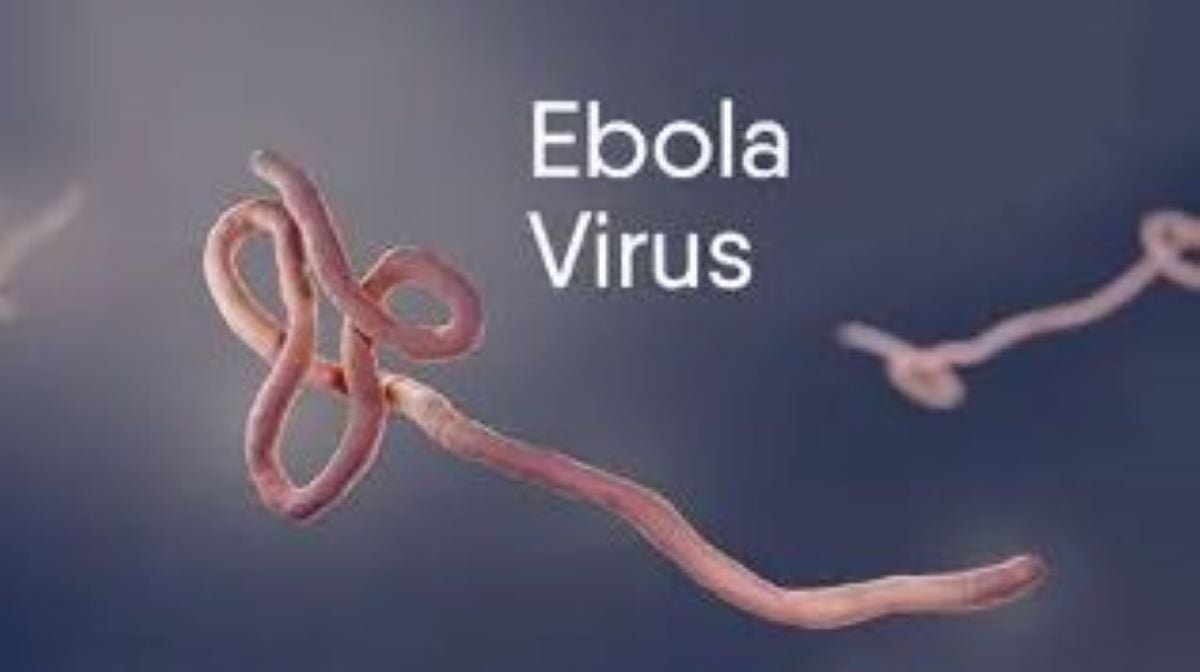
Coordinating Minister of Health and Social Welfare, Prof. Muhammad Ali Pate, has disclosed that genomic analysis of the Ebola virus isolated from Nigeria’s confirmed case shows a close relationship with the virus identified in the index case in Kenya.
Pate, however, said there was no evidence of travel by the Kenyan index case linking it directly to Nigeria, adding that further analysis could provide additional insights into the possible origin and transmission of the virus.
The minister disclosed this while providing an update on Nigeria’s response to the outbreak, assuring Nigerians that the country had maintained one confirmed case, with contact tracing, quarantine measures and additional testing ongoing.
ALSO READ: Umahi clarifies Lagos-Calabar highway ‘diversion’ remark
He said the Federal Ministry of Health and Social Welfare, working with the Nigeria Centre for Disease Control and Prevention (NCDC), had activated various components of the national incident management system to contain the outbreak.
“We still have only one confirmed case. The contacts are being traced, quarantined, and we are conducting additional tests, some of which are negative and others are pending,” Pate said.
He explained that further genomic analysis had been conducted using the country’s public health laboratory infrastructure and laboratories at Redeemer’s University, Ede, Osun State, led by Prof. Christian Happi.
According to him, the findings provided additional information about the imported case, although the implications for understanding the source of transmission remained uncertain.
“That case appears to be closely related to the case identified in the index case in Kenya. That is all that we can say at this stage based on the genomic analysis.
“There is no evidence of travel of that index case in Kenya that links it to Nigeria, but the viruses are appearing to be related,” he said.
Pate added that the findings could either change or leave unchanged the current understanding of the route of transmission, noting that viruses require time to undergo genetic changes.
The minister said the government would continue to provide regular updates on the outbreak as new information became available, in line with its commitment to transparency and public communication.
He also disclosed that the NCDC was developing and refining guidelines on mass gatherings and activities in public spaces to provide a framework for protecting public health while ensuring that preventive measures were guided by scientific evidence and best practices.
Pate maintained that Nigeria had the public health infrastructure and expertise required to respond to the outbreak, citing the capacity of the NCDC, the Federal Ministry of Health and Social Welfare, public health laboratories and trained professionals.
He said the government was working to contain the virus and prevent its spread into communities.
“We have assured Nigerians that the public health capacity in our country is robust through the NCDC, through the Federal Ministry of Health, through various laboratories, and a tremendous number of qualified public health experts,” he said.
The minister urged Nigerians to remain vigilant and comply with established public health precautions, while warning against unnecessary panic.
“We are reassuring Nigerians that we will continue to work diligently to ensure that we contain this virus as much as possible and that we avoid a situation where it spills over to the communities.
“And call on Nigerians to remain vigilant, but also be calm. There is no need to panic, but it’s important to follow public health preventive measures that have been clearly identified,” Pate said.
WATCH TOP VIDEOS FROM NIGERIAN TRIBUNE TV