

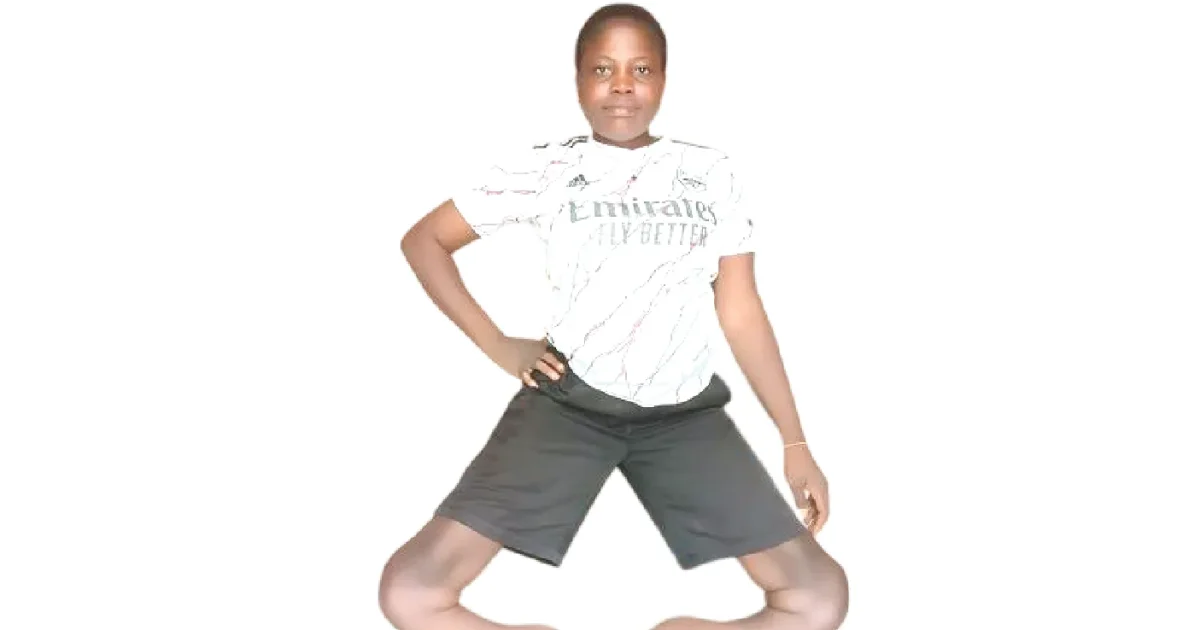
Oluwakemi Mustapha, a hairstylist from Ogun State living with a physical disability, speaks with TEMITOPE ADETUNJI about how rejection in the workplace because of her disability inspired her to learn hairstyling, become self-reliant, and build a livelihood of her own
How long have you been in the hairstyling business?
I have been in the hairstyling business for about three years now.
What inspired you to start the business?
Initially, I wanted to get a job and work for a company, but because of my condition, I was not employed. I kept looking for a job, but had always been experiencing disappointment.
At a point, I decided that instead of continuing to look for employment and facing disappointment, I would rather learn a skill and become my own boss.
I first thought about the kind of work I could learn that would make me comfortable and would not put too much physical strain on me. I realised that hairstyling was something I could do because I could either sit or stand while working. That was one of the reasons I chose it.
How long did the training take?
I spent about one and a half years learning hairstyling.
When did you first become aware of your disability?
I was not born with the condition. When I was around two or three years old, I saw some of my childhood pictures and noticed that my legs were not like this at the time.
As I grew older, my legs changed. Some people used to tell me that as I grew, my legs would eventually become straight, but that did not happen.
Were you ever given a specific explanation about the condition?
I heard different explanations. Some people said it was bow legs, while others talked about an injection and what they believed might have been related to polio.
What did your parents tell you about it?
My mother told me that my legs were not like this when I was younger, but she did not really know what happened. I did not grow up entirely with my mother. I stayed with my father and my stepmother.
Did your father or stepmother ever tell you what might have caused the condition?
My stepmother told me that it was because of an injection.
Growing up, were you able to attend school?
Yes. I attended both primary and secondary school.
What was your experience like in primary school, especially because you were already living with the condition?
In primary school, I was able to cope because my legs did not give me much trouble at that time. They did not really cause me pain, and I did not think about the condition very much.
My school was also very far from home. I attended Ogudimu Primary School in Iju Ishaga, and my brother and I used to trek to school. So, at that time, I did not really see myself as having a serious condition.
Was secondary school different?
Yes. During secondary school, things became very difficult for me. There was a lot of bullying and mocking. But I had my brother with me, and he was always by my side. He would defend me whenever anybody tried to bully or abuse me.
While I was in secondary school, my sister would hire a motorcycle rider to take me to and from school to make things easier for me. I also received a lot of support from my friends throughout my secondary school years. I attended Iyesi-Otta High School for my secondary education.
Can you remember a particular incident that affected you deeply?
There was a girl in my secondary school who came to my class and tried to abuse me because of my condition. She even used her leg to demonstrate how I walked, mocking me.
I was ready to show her that I was not going to accept that kind of treatment. Eventually, she apologised.
After that, I did not really experience much direct bullying in secondary school, although people still used to stare at me. They would look at the way I walked and wondered how I was able to cope.
Were you able to continue your education after secondary school?
I wanted to further my education, but I could not because of money. There was no support. You cannot just go to university without financial support or the necessary resources. That was why I decided to learn a skill and start working.
What position are you in your family?
I am the last child.
You mentioned that you lived with your grandmother, your father and your stepmother at different times. Did you ever feel that you missed your mother’s presence and support while growing up?
Yes. When I was very young, I stayed with my grandmother. There were periods when I did not see my father for a long time. Sometimes, I could stay for one or three months without seeing him.
My grandmother was there for me and gave me the support I needed. After some years, I moved in with my stepmother and my father. I completed my primary education at Ifo Ibogun, Egbeda, Lagos, and later moved in with my mother.
After secondary school, I went to stay with my sister. That was where I learnt hairstyling. Now, I am back with my mother in Ogun State.
Was hairstyling something you had always wanted to do?
No. Initially, I wanted to learn decoration and event planning. I was interested in events and decoration. But because of my condition, I realised that some aspects of decoration would be difficult for me because I might have to climb and do other things that could be physically demanding.
I also wanted to learn computer skills, but there was no support for that. Eventually, I decided to learn hairstyling.
After completing your training, when did you decide to establish your own business?
After I finished my training, I started working from home and using the compound. I also started having customers around where we lived. People would come to our house to make their hair.
Some customers would look at me as if they were wondering, “Can this person really make my hair?” But after I finished making their hair, they would look at the result and say, “Wow, the hair is nice.” That was how I gradually started getting customers.
Did those experiences influence your decision to start your own salon?
Yes. Last year, in January, I decided that I wanted to have a place where I could work properly. Before then, I was working from home, but I felt that people did not always respect the work when I was doing it from home.
They might assume that you did not really know what you were doing. So, I decided to start working from my mother’s shop. She already had a shop, so I did not have to rent another one. I just decided to start from somewhere.
Have you ever had a customer walk into your salon, see you and decide not to have her hair done by you because of your disability?
No.
What is the most hurtful reaction you have received from someone because of your disability, now that you are an adult?
Sometimes, people do not want to go out with me. For example, if there is a party, they may avoid inviting me. They may not say it directly, but I can understand from their reaction that they are trying to avoid me.
With time, I have become used to it. Before, I did not really like going out because I was shy. If I went out, people would look at me. But now, I do not feel that way anymore.
Have you experienced difficulties in relationships because of your disability?
Yes, many times. I do not really do online dating because sometimes people may tell you that they understand your condition, but when you eventually meet physically, their behaviour changes.
They may give you different excuses, and later you realise that they are uncomfortable with your disability. But I do not force relationships. I believe that when the right person comes, I will meet him.
Have you ever been in a serious relationship where the person knew about your disability but eventually left?
I was in a relationship that lasted about five years. Eventually, things changed. I felt that the person was looking for something from me that I was not ready to give. When I did not give him what he wanted, his behaviour changed.
There are also relationships where, after about a year, someone may decide to leave because of what they want from you. That is why, at some point, I decided that I would rather stay on my own than force a relationship.
What is the biggest misconception people have about you when they see you for the first time?
Sometimes, people look at me and immediately think, “Can this person really do this?” They look down on me because of my disability. But it is not right to look down on someone because of their physical condition. You cannot know what a person is capable of simply by looking at the person. You are not what you look like on the outside.
What achievement are you most proud of since you started your business?
I am proud when I do people’s hair and they like the result. They come back again.
Many of my customers also enjoy coming to my shop because we are friends. They sit with me, we talk and we laugh together. Most importantly, I am proud that I am using my work to take care of myself.
I am proud that I am not depending on someone else to survive. I can take care of myself. I do not have to wait for someone to give me money before I can eat or buy clothes. It is not easy, but I am proud that I can do it.