

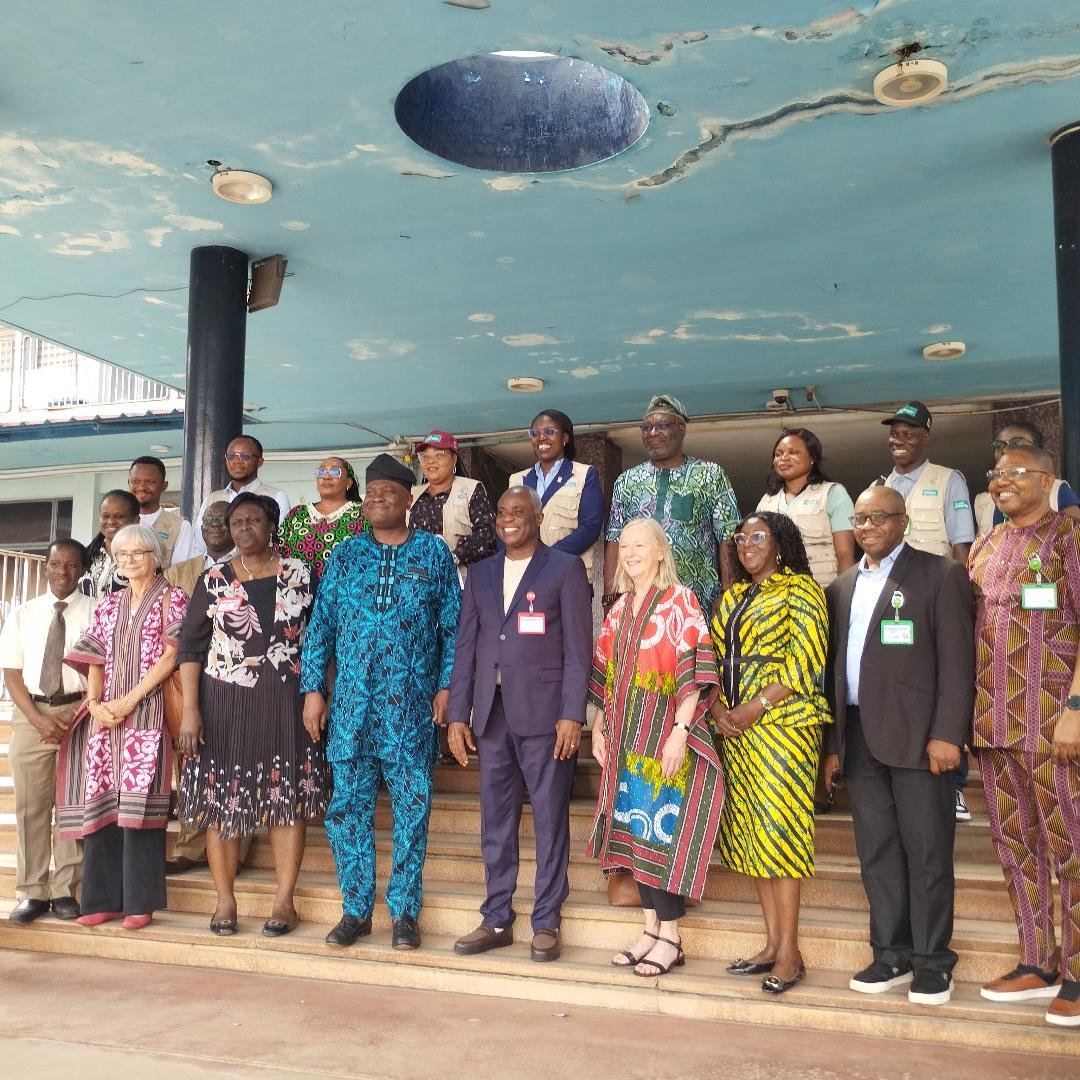
The West and Central Africa Programmes Director of Malaria Consortium, Dr Kolawole Maxwell, has called for stronger collaboration between the organisation and the University College Hospital (UCH), Ibadan, to strengthen malaria prevention, improve case management and accelerate malaria elimination in Nigeria.
Dr Maxwell made the call during an advocacy visit by the Malaria Consortium Board of Trustees to UCH management. He said tertiary health institutions play a critical role not only in treating severe malaria cases but also in advancing prevention, research, capacity building and health system strengthening.
He thanked the hospital’s management for receiving the delegation despite its busy schedule, describing the visit as an opportunity to deepen collaboration between one of Nigeria’s foremost teaching hospitals and an organisation committed to preventing diseases and saving lives across Africa.
According to him, Malaria Consortium, a United Kingdom-registered charity, has implemented public health programmes in Nigeria since 2008 and now operates in more than 20 states, managing projects worth over £18 million annually.
Although malaria remains its core focus, he said the organisation uses malaria programming as an entry point for broader health system strengthening to improve maternal, newborn and child health.
Dr Maxwell disclosed that Malaria Consortium supports the Oyo State Government in implementing Seasonal Malaria Chemoprevention (SMC) in six northern local government areas identified through epidemiological evidence as having highly seasonal malaria transmission. The intervention targets areas where at least 60 per cent of annual malaria transmission occurs within a four-to-six-month period, making preventive treatment particularly effective for children.
He said programme data and feedback from caregivers indicate that the intervention has significantly reduced malaria cases among children in benefiting communities.
“We have seen encouraging evidence from programme data and from mothers themselves that malaria cases have reduced considerably in the intervention areas. However, we recognise that one intervention alone cannot eliminate malaria,” he said.
Dr Maxwell stressed that malaria elimination requires multiple evidence-based interventions recommended by the World Health Organisation (WHO), including preventive chemotherapy, vector control, prompt diagnosis, effective treatment and emerging tools such as the malaria vaccine.
He described UCH as one of Nigeria’s foremost referral centres for severe malaria cases, noting that many complicated cases from Oyo and neighbouring states are referred to the hospital, making it a vital partner in reducing malaria-related deaths.
He also revealed that the visit held personal significance, as Malaria Consortium’s Chief Executive Officer, Dr. James Simbendirani, and Board of Trustees member, Professor Jenny Hill, were both born at UCH.
Dr. Maxwell added that discussions with clinicians and researchers would explore how tertiary hospitals could strengthen the continuum of malaria care, from households and primary healthcare facilities to specialised referral centres.
He reaffirmed Malaria Consortium’s commitment to working with the Federal Government, Oyo State Government, UCH and other stakeholders to strengthen malaria prevention, improve case management and mobilise additional resources towards eliminating malaria in Nigeria.
A member of the Malaria Consortium Board of Trustees, Professor Jenny Hill, reaffirmed the organisation’s commitment to supporting Nigeria’s malaria control efforts through stronger collaboration with tertiary health institutions, primary healthcare facilities and communities.
Professor Hill, a Professor of Global Health and Malaria at the Liverpool School of Tropical Medicine, United Kingdom, said the advocacy visit was aimed at identifying ways to further support Nigeria’s malaria response across all levels of the healthcare system.
She said the delegation was particularly interested in visiting the hospital’s paediatric ward to gain deeper insights into the management of severe malaria in children and its complications.
Professor Hill commended UCH for its longstanding contributions to specialised healthcare, medical training and research, expressing confidence that stronger collaboration would improve child survival, advance operational research and strengthen Nigeria’s malaria response.
Responding, the Chief Medical Director of UCH, Prof. Jesse Otegbayo, pledged the hospital’s commitment to strengthening collaboration with Malaria Consortium to reduce childhood malaria deaths.
While commending the organisation for its sustained investment in malaria prevention and control, he noted that although SMC and other preventive drug interventions remain valuable, lasting malaria control requires a comprehensive public health approach that addresses the environmental and social factors driving transmission.
He said environmental sanitation, mosquito breeding site control and community-based vector management should complement chemoprevention to achieve sustained reductions in malaria incidence.
“We look forward to a future where fewer children are admitted to our wards because of malaria. Through stronger partnerships, improved prevention and sustained research, we can significantly reduce the disease burden and give more children the opportunity to grow up healthy,” Prof. Otegbayo said.
As part of the visit, the Malaria Consortium delegation presented insecticide-treated mosquito nets and toys to children admitted to the paediatric wards to protect vulnerable patients from mosquito bites during admission, while providing emotional support to those undergoing treatment.
WATCH TOP VIDEOS FROM NIGERIAN TRIBUNE TV