

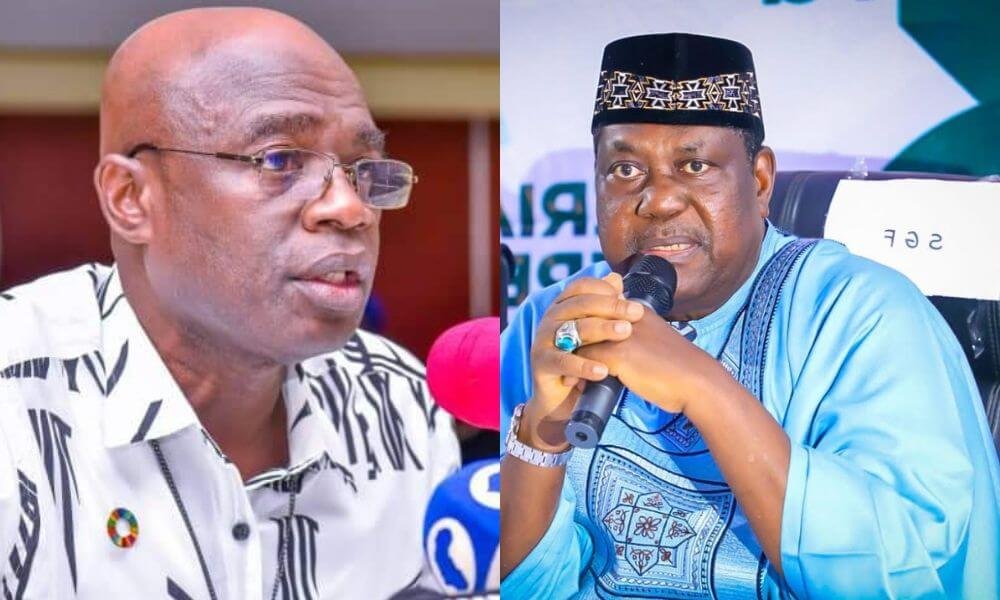
He said, “Our position has always been clear, reconciliation is not only possible, it is necessary for the growth, unity, and electoral success of the All Progressives Congress, APC, in Benue State. As a party, we must rise above personal differences and recognize that our collective interest is far greater than the ambitions of any individual or group.”
Yawe added, “As members of the Alia-led APC, we remain confident in our position because we believe in the strength of our party’s established structure, the support of our members at the grassroots, and the importance of democratic principles in determining the direction of any political organization.
“We understand that politics is a game of numbers, and in a democracy, numbers, broad-based support, and the strength of party structures are important factors in determining legitimacy and political success.
“However, our confidence should not be mistaken for hostility or an unwillingness to accommodate differing opinions.
“Our doors remain wide open to genuine reconciliation, meaningful dialogue, and an inclusive approach that puts the unity and future of the APC first. We are not interested in deepening divisions or creating unnecessary tensions within our party.”
He further stated, “That said, reconciliation must be sincere, principled, and guided by respect for the party’s constitution, established structures, and legitimate leadership.
“It should not be about imposing the interests of one group on another, but about finding common ground in the overall interest of the party.
“We therefore call on all stakeholders to approach the reconciliation process with open minds, a genuine spirit of compromise, and a willingness to put the party first. We are ready to welcome our brothers and sisters back into a common political family because, at the end of the day, we are stronger together than apart.”
Meanwhile, Morgan Ihomun, publicity secretary of the Austin Agada-led faction, dismissed claims that his group was responsible for the failure of the peace initiative.
He accused Governor Alia of refusing to make genuine efforts to reunite party members despite the intervention of President Bola Tinubu.
“Governor Hyacinth Alia has refused to genuinely reconcile the party despite the intervention of President Bola Tinubu. Instead of embracing reconciliation, he has continued to grandstand and insult critical stakeholders of the party, referring to them as ‘Jija Bokoti’ (expired buckets).
“Since assuming office as governor, Alia has failed to build the necessary bridges with key stakeholders, in fact he has never held a single meeting with members of the National Assembly elected on the platform of the APC. Rather than unite the party, his style of leadership has deepened divisions and distrust.
“Alia has chosen to act like a lone ranger, giving the impression that he no longer needs the same party leaders, stakeholders and political structures that worked tirelessly to secure his emergence as governor in 2023.
“Reconciliation cannot be achieved through propaganda, intimidation or the shifting of blame. It requires sincerity, mutual respect, recognition of legitimate party structures and a willingness to accommodate differing interests.
“We remain committed to the leadership of President Bola Ahmed Tinubu and the ideals of our great party. We are working hard for Mr President’s re-election in 2027,” Ihomun said.
Political observers have warned that the unresolved crisis could undermine the APC’s electoral prospects in Benue State in 2027, particularly as opposition parties, including the Peoples Democratic Party, PDP, seek to take advantage of the division within the ruling party.
The disagreement has also reportedly unsettled the APC national leadership, amid concerns that the party could face significant challenges in the North-Central state if the rival structures remain in place as the elections approach.
There are indications that the national leadership may consider imposing a political settlement or establishing a caretaker committee if the two factions fail to agree on a unified party structure in the coming weeks.
For now, both camps continue to function independently, issuing separate statements and mobilising their supporters ahead of the 2027 elections.
Stakeholders have warned that the continued division could create confusion among party members at the grassroots and discourage some voters if urgent steps are not taken to restore unity.
With the 2027 general elections approaching, concerns are mounting that the Benue APC could enter the electoral contest deeply divided unless the national leadership intervenes decisively to resolve the dispute.