

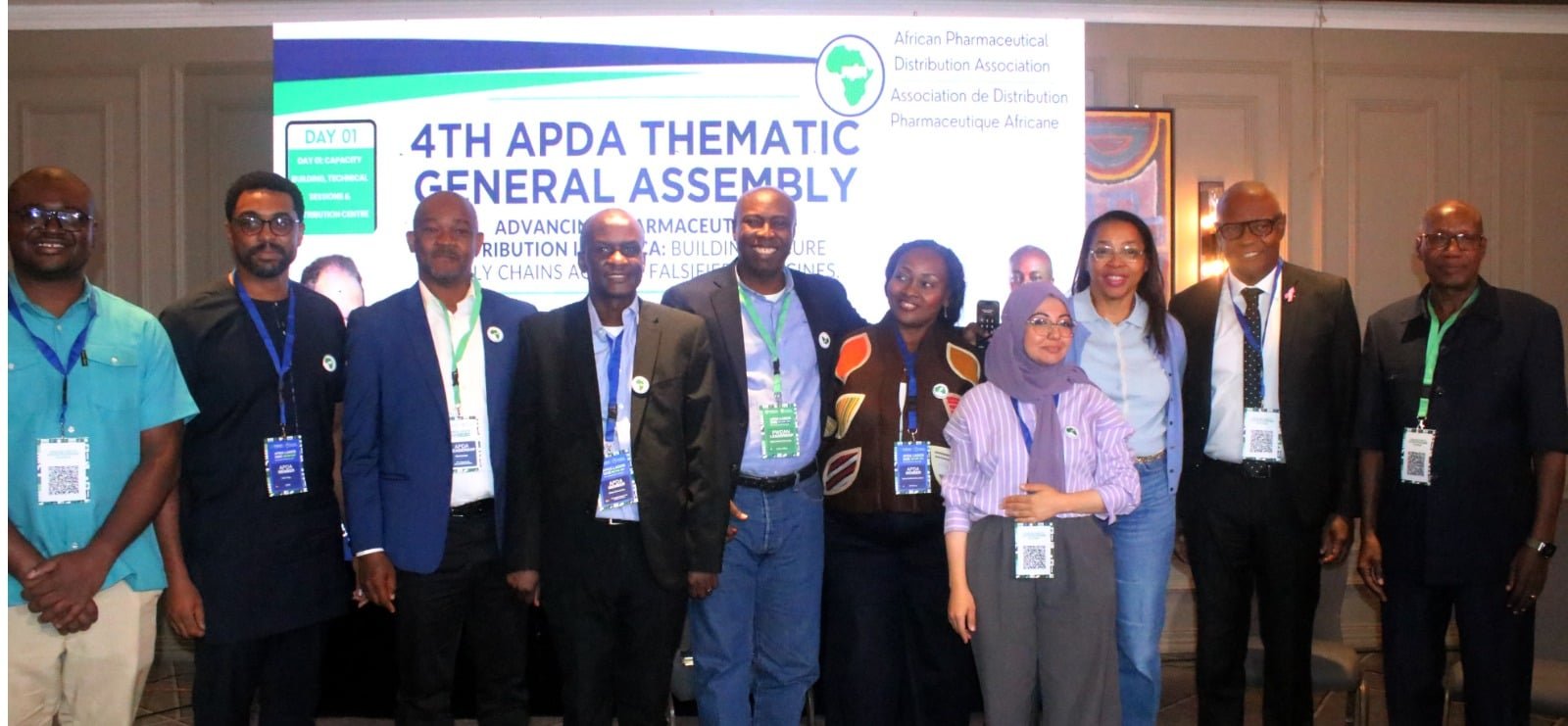
Key players in Africa’s pharmaceutical industry, African Pharmaceutical Distribution Association (APDA) and the Pharmaceutical Wholesalers and Distributors Association of Nigeria (PWDAN) have taken steps to end the infiltration of both substandard and fake medicines across the African continent.
To achieve this target, both group are urging regulators in the sector to tighten enforcement of professional medicine distribution in the supply chain.
They gave the advice at the 4th Thematic General Assembly Lagos 2006 with the theme: “Advancing Pharmaceutical Distribution in Africa: Building Secure Supply Chains Against Falsified Medicines”, held in Marriot Hotel in Lagos on Tuesday.
ALSO READ: NHRC calls for stronger systems to protect rights of older persons
Speaking on the sidelines of the conference, Vice President of APDA (Central Region), Dr. Yolande Djomo, who represented the President of APDA, Dr. Lahcen Senhaji, said that African countries have similar problems as it relates to distribution of medicines.
She said, “We are here to exchange ideas and to come out with solution from within so that we can move together and find a lasting solution”.
She listed the problems to include: securing the supply chain; counterfeit medicine, amongst others.
“We have same problem in Africa as mostly there are informal markets and infiltration of substandard and fake medicines in the market. We are here to come out with solution. And even in this era, we want to see how AI can be used to help us to be more efficient in fighting substandard and fake medicines and also try to secure the supply chain”.
Also speaking, Chairman of PWDAN, Pharm Oghenochuko Omaruaye emphasised that the conference is to discuss issues of falsified and substandard medicines, not only in Nigeria but across Africa.
“We want to make sure that the distribution of medicines is done in such a manner that, the integrity of the medicine is intact when it arrives to the final users in the best shape for what it was manufactured for the users”, Omaruaye said.
Insisting that Nigeria’s system is not properly structured, the Chairman called for a national drug distribution guideline.
“Our systems are not properly structured. The distribution channel through which medicine flow through are not properly structured. That is why we have constantly engaged the government agencies such as NAFDAC, PSN and others to encourage them to implement what we call the national drug distribution guideline”.
According to Omaruaye, when implemented, the guideline will help solve a lot of problems that we have now.
“When implemented, those who are distributing will be properly recognised and known. Those who are manufacturing will also be recognised and known and we will not have fake or unregistered people coming into the system. We will only have those who are regulated by government”
He pointed out that one of the major challenges is that the government has not put enough resources into making sure that the guideline is implemented.
Omaruaye therefore called on the government to look at that document again and implement it 100 per cent.
Former PWDAN Chairman, Mr Ernest Okafor, equally shared a similar perspective, advising that the regulators should do more.
“If the regulators have a unified regulatory system, we can be able to tackle common issues that affect drug distribution in Africa”, Okafor said.
He, however, commended NAFDAC, stressing that drug falsification has come down from 70 per cent to 50 per cent approximately.
The conference hosted by PWDAN in Nigeria and chaired by Clare Omatseye also had other dignitaries, including Mr Aderemi Adeseun, Mr Wilson Chandomba, Mr Razi Miliani, Pharm Solomon Shiishii, Mrs Azuka Okeke, Dr Jules Charles Kebe, Dr Regina Kuwat Garba, and Pharm Dr Monica Eimunjeze, who played different roles as speakers and panelists.
There were also representatives from the Pharmacists Council of Nigeria (PCN), the Pharmaceutical Society of Nigeria (PSN), NAFDAC, and Lagos State Ministry of Health.
WATCH TOP VIDEOS FROM NIGERIAN TRIBUNE TV