

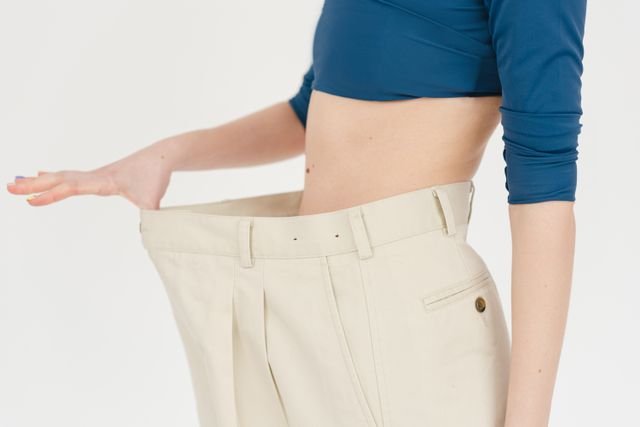
Dropping several stone changes far more than a dress size. Whether the weight came off after bariatric surgery, with weight-loss medication or through years of steady effort, many people reach their goal and find that their skin has stayed where it was.
That leftover skin rarely sits in one spot. The tummy, the upper arms and the inner thighs often loosen together, which is why some clinics offer to treat all three in a single operation. The idea is appealing: one trip, one anaesthetic, one recovery. Whether it is the right idea depends on your health, your weight history and how much surgery your body should take on at once.
Why Exercise Cannot Tighten Stretched Skin
Strength training can firm the muscle underneath, but it cannot remove skin that has been stretched for years. The NHS describes a tummy tuck as a way to take away excess skin that exercise will not shift, for example after pregnancy or losing a lot of weight.
The same NHS page is clear that the operation is not a quick fix for losing weight and is usually only recommended for people with a healthy body mass index (BMI). Surgery deals with the skin that is left over, not with the weight itself.
For some people, loose skin is mainly about how clothes fit. For others, skin that folds and rubs is a daily nuisance. Both are fair reasons to ask about surgery, as long as expectations are realistic.
First, Let Your Weight Settle
Timing matters as much as technique. The body-contouring guides of AKM Clinic, a cosmetic surgery clinic in Istanbul, ask for a stable weight, ideally steady for several months, before surgery. Its tummy tuck guide suggests waiting while your weight is still shifting, if you plan another pregnancy, or if your health is not stable. Its thigh lift page sums it up: sometimes the safest decision is “not yet”.
Nicotine is the other big factor. The clinic names smoking and nicotine as a key influence on wound healing and scar quality.
Before you book, check that:
- your weight has held steady for several months;
- you are not planning a pregnancy;
- you can stop smoking, vaping and other nicotine products for as long as your surgeon asks;
- any long-term condition, such as diabetes, is well controlled.
What One Combined Operation Involves
AKM Clinic’s combined tummy tuck, arm and thigh lift package treats all three areas in a single operation. According to the package page, the operation lasts five to six hours and needs a general anaesthetic, followed by a night on the ward and four nights in a hotel, breakfast included. The price includes VIP transfers for the airport and clinic runs, a patient consultant assigned to you, and compression wear and medicines for after surgery. Flights are extra.
The clinic prices the package at £5,950, against £9,450 for the three procedures priced one by one. According to the NHS, a tummy tuck on its own can cost about £5,000 to £10,000 in the UK, before consultations or follow-up care.
The clinic’s argument for combining is simple: one anaesthetic, one hospital stay and one recovery, instead of three separate operations.
Why Staging Can Be The Safer Choice
That convenience comes with trade-offs, and the clinic’s own pages say so. Its thigh lift guide notes: “Combining surgeries can reduce total downtime, but it also increases operative time and recovery demands.” Its tummy tuck guide goes further: in many cases, it says, doing the work in stages is safer and gives a more predictable result.
According to the same guide, the clinic recommends staging rather than combining when someone has higher clot risk factors, when wound healing could be affected (smoking is one example), when there are significant health conditions, or when a combined operation would run too long. It also warns that combining without strict safety limits can increase risk and prolong recovery.
So the useful question at a consultation is not “can you do all three?” but “should all three be done on me in one go, and what limit will you set on the length of the operation?”
What Recovery Really Looks Like
The package covers the first five nights: one in hospital, then four in a hotel while the clinic’s team monitors your progress. The clinic’s tummy tuck guide describes a final in-person check before departure to confirm you are fit to fly. As the thigh lift page puts it, “Flying is not just about comfort; it is about circulation.”
Recovery carries on long after you land. The clinic’s tummy tuck guide says many patients begin to feel more “normal” between weeks four and six. The NHS advises around 4 to 6 weeks off work and exercise after a tummy tuck, a supportive garment for about six weeks and no driving for a few weeks.
With arms and thighs healing at the same time, everyday movement needs planning too. The clinic’s arm lift guide rules out lifting, pulling and sudden overhead movements early on, and its thigh lift guide advises against deep squats and stretching, so arrange help at home before you travel.
Scars are the price of removing skin. The tummy scar is usually placed low, where underwear or swimwear can cover it; thigh scars are planned in natural creases where possible; arm scars often look pink or red for a while before they fade. The NHS says tummy tuck scars should fade over 12 to 18 months, but as the clinic puts it plainly: “Scars do not disappear.”
The Risks To Weigh Up
Every operation carries risk, and combining procedures makes the operation longer. Across its tummy tuck, arm lift and thigh lift guides, AKM Clinic lists:
- bleeding, including a collection of blood under the skin (haematoma);
- infection;
- fluid build-up under the skin (seroma);
- delayed wound healing, more likely with nicotine;
- scars that widen, thicken or change colour;
- numbness or other changes in sensation;
- blood clots in the legs or lungs (DVT and PE), which are rare but serious.
The NHS adds that some patients are left with extra skin at the ends of the scar, known as “dog ears”, and that tummy numbness can last from a few months to years. The full list is in the NHS guide to tummy tuck surgery.
Who Is Behind The Clinic
Dr Akif Mehmetoğlu, who set up AKM Clinic, medically reviews its procedure guides. Two other surgeons work with him. Dr Aylin Yılmaz is a breast and body specialist; Dr Göknil Gültekin is both an ENT and a facial plastic surgeon.
Wherever you have surgery, the NHS advice holds: look into the person who will carry out your operation, and ask what follow-up to expect if something goes wrong. When the clinic is abroad, add one more question: who looks after you if a complication shows up once you are home in the UK?
Final Thoughts
Loose skin after major weight loss is a common reason to consider surgery, and treating the tummy, arms and thighs together can mean one trip and one recovery. It is also a bigger operation, and for some people a staged plan is safer. A settled weight, no nicotine, realistic expectations about scars and time off, and a clear aftercare plan matter more than how many areas are treated at once.