

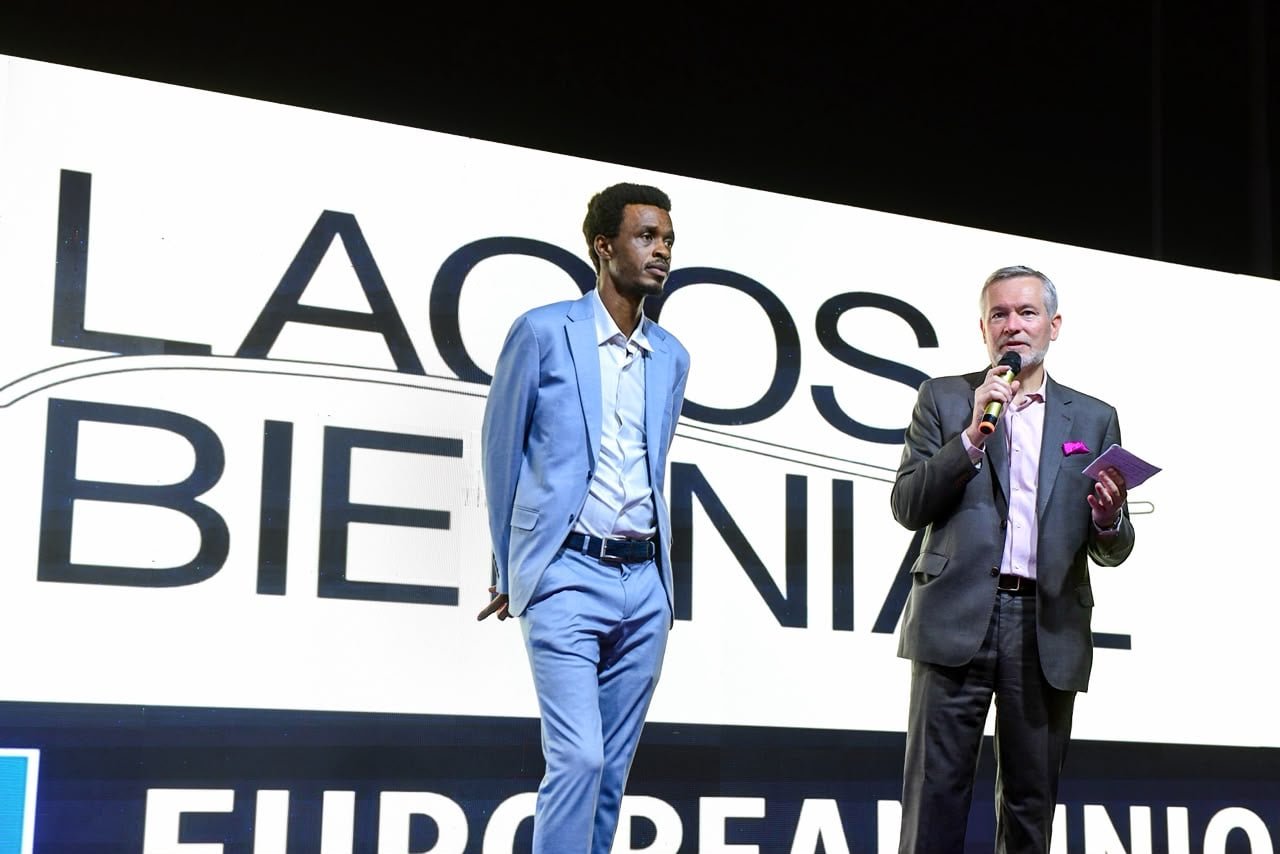
The European Union (EU) has showcased Ukrainian artistic perspectives and emerging digital creativity through two immersive exhibitions at the 2026 Lagos Biennial, as part of efforts to strengthen cultural relations between Europe and Africa.
The exhibitions, unveiled at the EU pavilion, tagged Together, on Saturday, November 14, feature digital artworks highlighting the human cost of Russia’s war against Ukraine and the transformative potential of technology in contemporary art.
Speaking at the opening ceremony, the EU Ambassador to Nigeria and ECOWAS, Gautier Mignot, said the Union’s participation followed several years of planning aimed at deepening cultural cooperation with Africa and creating opportunities for artists and creative institutions.
Mignot explained that the EU had moved beyond sponsoring cultural events to participating directly in major international exhibitions, citing its involvement in the Guadalajara International Book Fair in Mexico and Expo 2025 in Osaka, Japan.
He said Nigeria became a natural choice when the EU began exploring opportunities to expand its cultural engagement in Africa, noting that Lagos had established itself as one of the world’s major cultural centres and a hub of artistic innovation.
According to him, the Lagos Biennial provided an important international platform for advancing cultural exchange and strengthening connections between African and European creative communities.
The ambassador recalled that his meeting with the Biennial’s founder and director, Folakunle Oshun, in Paris about two years ago laid the foundation for the EU’s participation in the 2026 edition.
Describing the outcome as exceeding expectations, Mignot commended the organisers for transforming the initial idea into a major international cultural gathering.
“It was a bit of an act of faith, in truth, but really the result is beyond expectations,” he said.
The first exhibition, Home Beyond the Dawn, explores the devastating human consequences of Russia’s full-scale invasion of Ukraine through the experiences of Ukrainian artists and civilians.
Using immersive digital art, the exhibition documents displacement, the destruction of homes and communities, family separation and the suffering of civilians under Russian occupation, including human rights abuses and alleged war crimes.
It also examines how war threatens people’s sense of belonging, cultural identity and collective memory, while highlighting the role of artistic expression in preserving identity, resilience and resistance.
Mignot said the exhibition explores how art and the concept of home could serve as instruments of identity and resistance in the face of Russia’s aggression against Ukraine.
The second exhibition, The Future is Shared, created by Italian digital artist Stefano Fake, examines how immersive technologies are redefining contemporary artistic expression and creating opportunities for greater audience participation.
Combining images, light, sound and digital environments, the installation encourages visitors to become active participants in the creative process rather than passive observers.
The exhibition also demonstrates how digital art can connect people across cultures, communities and generations, making artistic expression more accessible, interactive and collaborative.
As part of the programme, Fake is engaging students, designers and artists in a collaborative creative process that will incorporate their contributions into an evolving immersive digital installation.
Both exhibitions form part of the EU’s contribution to the fifth edition of the Lagos Biennial, themed The Museum of Things Unseen, which seeks to bring overlooked experiences into focus while exploring new possibilities for artistic expression and cultural exchange.
Mignot also drew attention to the Africa-Europe Partnerships for Culture programme, through which the EU supports collaborations between African and European artists and cultural institutions.
He said the programme offered funding opportunities through calls for proposals, including initiatives targeting cultural institutions and museums, urging stakeholders in Nigeria’s creative industry to take advantage of the opportunities.
In his remarks, the founder and director of the Lagos Biennial, Folakunle Oshun, expressed appreciation to the European Union for its support and commitment to strengthening cultural cooperation.
Oshun said the Biennial’s growth over the years reflected the resilience, determination and creativity of artists and cultural professionals who had contributed to its development.
He particularly thanked the EU ambassador and his team for bringing their artists and creative contributions to Lagos, describing the partnership as significant to the success of the exhibition.
“Thank you for the support, thank you for the encouragement, thank you for the kind words, thank you for bringing your amazing artists and your amazing team to Lagos. It means a lot to us,” he said.
Oshun also acknowledged the participating artists, sponsors, supporters and individuals whose contributions had sustained the Biennial over the past nine years.
Through its Together pavilion, the EU is using the Lagos Biennial 2026 to promote artistic collaboration, showcase digital innovation and strengthen cultural connections between Europe, Africa and Ukraine.
WATCH TOP VIDEOS FROM NIGERIAN TRIBUNE TV