

The Federal Government has projected that Nigeria’s health sector will surpass those of comparable countries by 2036, banking on ongoing reforms, increased investments and improved coordination across the three tiers of government to deliver better healthcare outcomes.
The Minister of Health and Social Welfare, Prof. Muhammad Ali Pate, gave the projection on the final day of the 2026 Health Sector Joint Annual Review (JAR) conference in Abuja, stressing that sustained discipline, effective implementation, and accountability would be critical to achieving the target.
Pate, who reviewed progress under the $650 million Immunisation Plus and Malaria Progress by Accelerating Coverage and Transforming Services (IMPACT) programme, said Nigeria’s health sector had undergone significant reforms since 2009, with increasing emphasis on measurable health outcomes rather than investments in infrastructure alone.
He said the next five to 10 years offered Nigeria an opportunity to outperform its peers, provided governments at all levels remained committed to implementing agreed policies and sustaining investments.
“So the next five to 10 years will outperform our peers and other comparators, which has not been the case in the past. But it requires two things; it requires discipline,” he said.
Pate added that effective execution required the discipline to implement necessary reforms, even when doing so was difficult.
Explaining the evolution of the reforms, the minister said the shift towards measuring health outcomes began in 2009, when greater attention was placed on determining whether investments were actually improving the health of Nigerians.
“2009 was when the shift began to happen to let’s talk about outcomes. Let’s talk about the results because you cannot reward effort, you need to reward result,” he said.
He argued that constructing hospitals and providing medical equipment would not necessarily improve public health unless such investments translated into better access to quality healthcare and improved health indicators.
On the IMPACT programme, Pate explained that the $650 million World Bank-supported intervention, approved in early 2020, was designed as a bridge between earlier investment programmes and the implementation of the Basic Health Care Provision Fund (BHCPF).
He said the programme built on previous interventions, including the Nigeria State Health Investment Project (NSHIP) and the Saving One Million Lives initiative introduced between 2014 and 2015.
According to him, the introduction of the Health Sector-Wide Approach (SWAp) and the Health Sector Renewal Investment Initiative under the HOPE programme in 2023 represented another phase of the reforms, with greater emphasis on national systems, domestic financing and measurable results.
Pate said the government had demonstrated within three years what could be achieved when federal, state and local governments worked with development partners to align investments, strengthen accountability and share experiences.
He, however, warned that allowing institutions and development partners to operate independently without coordination could undermine the gains recorded so far.
“If everybody goes their own way because I’m this or that, I think we’ll struggle and the progress will stall, and that will be quite unfortunate because we have demonstrated what could be done,” he said.
The minister urged political leaders to sustain their commitment to healthcare financing, describing health as an investment in both the present and future of the country.
He also disclosed that additional financing from development partners, including the French Development Agency (AFD), would support human resources for health, health insurance and the revitalisation of primary healthcare.
Meanwhile, the 2026 JAR communiqué, read by the Permanent Secretary of the Federal Ministry of Health and Social Welfare, Daju Kachollom, identified maternal and child health, primary healthcare delivery, emergency medical services, health workforce shortages and sustainable health financing as five priority areas requiring urgent government attention.
The communiqué, issued after the three-day review meeting, acknowledged improvements in skilled antenatal care attendance, skilled birth attendance and reductions in facility-based maternal mortality.
It called for sustained interventions to expand access to quality maternal healthcare and reduce preventable deaths among women and children.
On primary healthcare, stakeholders recognised improvements in facility functionality through investments in infrastructure, medical equipment, essential medicines and workforce development, but urged governments to sustain the investments, particularly in underserved communities.
The communiqué also commended the expansion of emergency medical services across states and the Federal Capital Territory, while calling for stronger emergency transportation systems, a unified reimbursement mechanism for emergency care and accelerated passage of the National Emergency Medical Treatment System Bill.
It identified inadequate healthcare personnel, poor distribution of professionals and limited training capacity as major constraints, urging governments to strengthen workforce production, retention and incentives for health workers serving rural and underserved communities.
On financing, the stakeholders acknowledged increased investments through the BHCPF and expanding health insurance coverage but called for stronger domestic resource mobilisation, improved budget implementation and transparent expenditure tracking to ensure that public spending translated into measurable service delivery outcomes.
The review assessed progress in implementing the Nigeria Health Sector Renewal Investment Initiative and the Health Sector Strategic Blueprint 2023–2027.
It also identified persistent challenges, including inadequate funding, workforce shortages, poor distribution of healthcare professionals and gaps in service delivery, while adopting 12 resolutions to improve healthcare access, accountability, local pharmaceutical production and coordination among the three tiers of government.
Speaking on the partnership behind the IMPACT programme, the World Bank Country Director, Matthew Verghis, said the intervention was government-led, with implementation driven largely by state and local institutions.
He described the programme’s results as remarkable, noting that more than 15,000 health workers initially engaged through the Bridge Staffing Pact had been absorbed by state governments.
He added that more than 6,000 primary healthcare centres were equipped with laptops, while medical records officers were trained to upload routine health data onto the District Health Information Software 2 (DHIS2) platform.
Verghis said the programme had demonstrated how government leadership could bring different levels of government and stakeholders together to deliver reforms.
“The Nigerian Health Sector Investment Initiative, the SWAp, is a programme that we see as a lesson to be learned for how government can take leadership and bring the entire country together, not just for a whole-of-government reform, but a whole-of-society reform,” he said.
“The project may be closing, but the partnership and the work must continue,” he added.
Similarly, the Executive Director of the National Primary Health Care Development Agency (NPHCDA), Dr. Muyi Aina, said the IMPACT programme recorded measurable improvements in immunisation, malaria control and primary healthcare infrastructure.
He said the proportion of fully immunised children increased from 31 per cent to 39 per cent, while more than 200 million doses of routine vaccines were financed over three years.
On malaria control, Aina said prevalence declined from 22 per cent to 15 per cent between 2021 and 2025, while the proportion of pregnant women receiving the recommended three doses of intermittent preventive treatment for malaria increased from 31 per cent to 33 per cent.
He added that the proportion of children using insecticide-treated mosquito nets also increased by four percentage points.
On infrastructure, the NPHCDA chief said about 2,500 primary healthcare facilities were supported and upgraded to Level 2 functionality across 30 states and the FCT, while more than 3,000 solar direct-drive refrigerators were financed to strengthen vaccine storage and distribution.
He said the programme’s interventions would benefit more than 90 million Nigerians across the South-West and South-South zones.
Aina stressed that the end of the programme should not mean the end of government responsibility for the facilities and services established through the intervention.
“First, the programme can close, but our health centres do not close. The need for health services by our people does not end. We need to own them, we need to guard them,” he said.
Providing details of the programme’s performance, the National Project Manager of IMPACT, Dr. Amina Abdu-One Muhammed, said the intervention was conceived against the background of poor health indicators but recorded improvements that exceeded several of its targets.
She said under-five mortality stood at 132 deaths per 1,000 live births when the programme commenced, while malaria prevalence was 22 per cent and full immunisation coverage was 31 per cent.
According to her, the programme initially targeted a reduction in under-five mortality from 132 to 88 deaths per 1,000 live births through improved utilisation and quality of immunisation and malaria services.
She disclosed that under-five mortality declined to 90 deaths per 1,000 live births, while full immunisation coverage increased from 31 per cent to 39.7 per cent, exceeding the programme’s target of 36 per cent.
She added that Penta vaccine coverage rose from 56.6 per cent to 59.9 per cent, exceeding the initial target of 59.8 per cent, while the quality-of-care score increased by 11 percentage points, from 39.3 to 50.2.
Muhammed said the $650 million World Bank credit programme had recorded disbursements of $641.7 million, representing a 97.9 per cent disbursement rate.
She explained that $525.2 million was allocated to the immunisation component, $93.5 million to malaria interventions and $23 million to the Knowledge for Change component.
The project covered 30 states and the FCT, trained about 79,000 healthcare workers and supported more than 2,500 health facilities.
On health security, the Director-General of the Nigeria Centre for Disease Control and Prevention (NCDC), Dr. Jide Idris, said strengthening preparedness required more than establishing response structures across the country, stressing the need to ensure that emergency teams could deploy promptly whenever outbreaks occurred.
He said Nigeria’s objective should be to ensure that every state could prevent, detect and respond to public health threats before they escalated into emergencies.
“Our goal is not simply to manage the next outbreak; it is to make every state better prepared to prevent, detect and respond to threats before they become larger emergencies,” he said.
Idris disclosed that rapid response teams had been trained across the 36 states and the FCT, while 25 laboratories in 20 states were connected through laboratory information management systems.
However, he cautioned against equating the existence of response teams with actual operational readiness, noting that the speed of deployment and timely laboratory results were critical to containing outbreaks.
He said 148 early warning signals had been detected and escalated through event-based surveillance as of October 2026.
He added that the system received 3,728 calls in October, reviewed 913 articles and escalated 34 signals for further action.
Idris also disclosed that response teams reached more than 77,000 people in the FCT between October 28 and November 6, stressing that early warning systems must translate into timely and proportionate interventions.
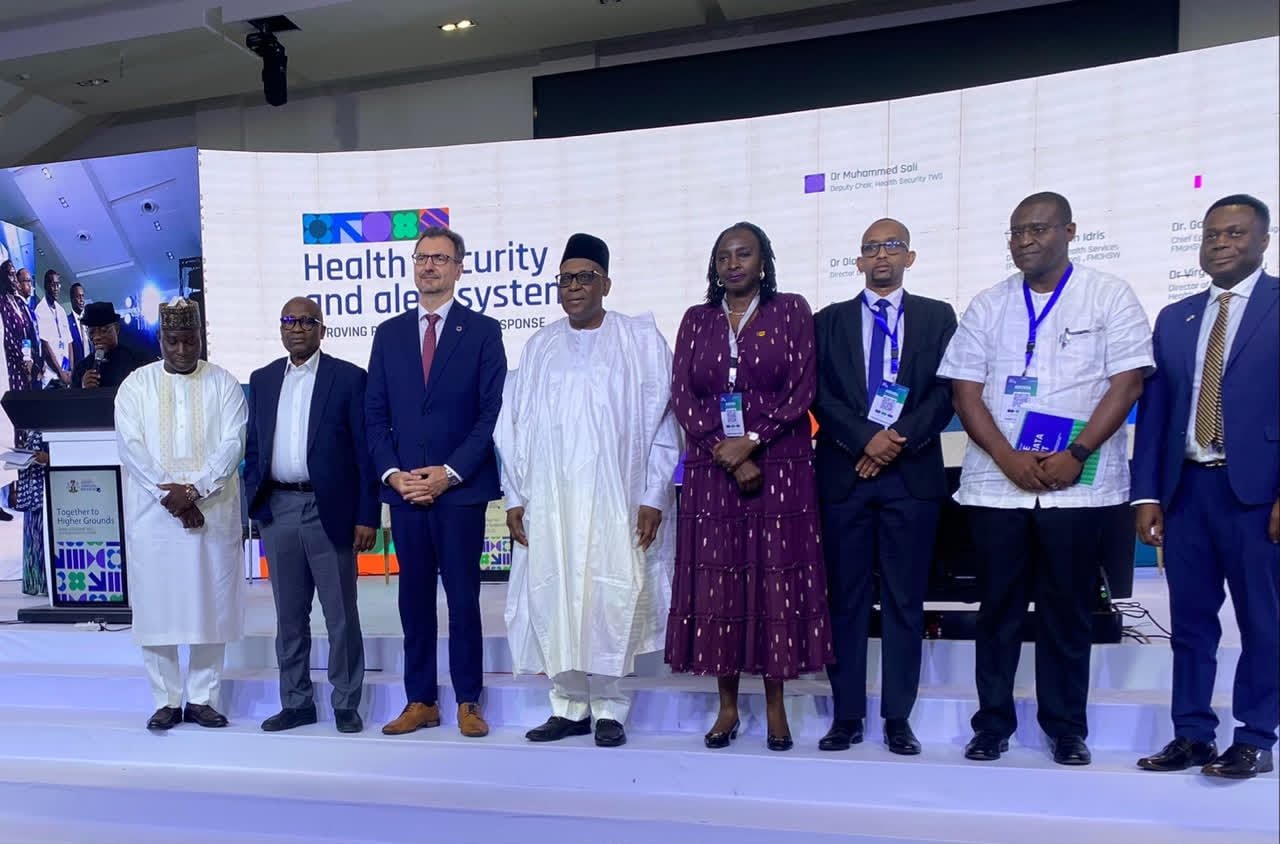
In his remarks, the Deputy Chair of the Health Security Technical Working Group, Muhammad Sali, warned that Nigeria must sustain year-round preparedness as it approaches the 2027 outbreak season, with multiple infectious disease threats emerging across the country.
He recalled that the recent imported Ebola case had tested the country’s public health response system, adding that although Nigeria no longer had an active case, contacts in Nigeria and Switzerland remained under monitoring.
Sali also raised concerns over the early onset of the Lassa fever season in November, including infections among healthcare workers.
He further disclosed that a dengue outbreak had been declared in Zamfara State, with about 366 cases and 46 deaths recorded, underscoring the need for stronger surveillance and emergency response capacity.
He said the health security review was intended to assess Nigeria’s alert systems, preparedness at airports, seaports and land borders, and the capacity of public health institutions to respond effectively to emerging threats ahead of 2027.
WATCH TOP VIDEOS FROM NIGERIAN TRIBUNE TV