

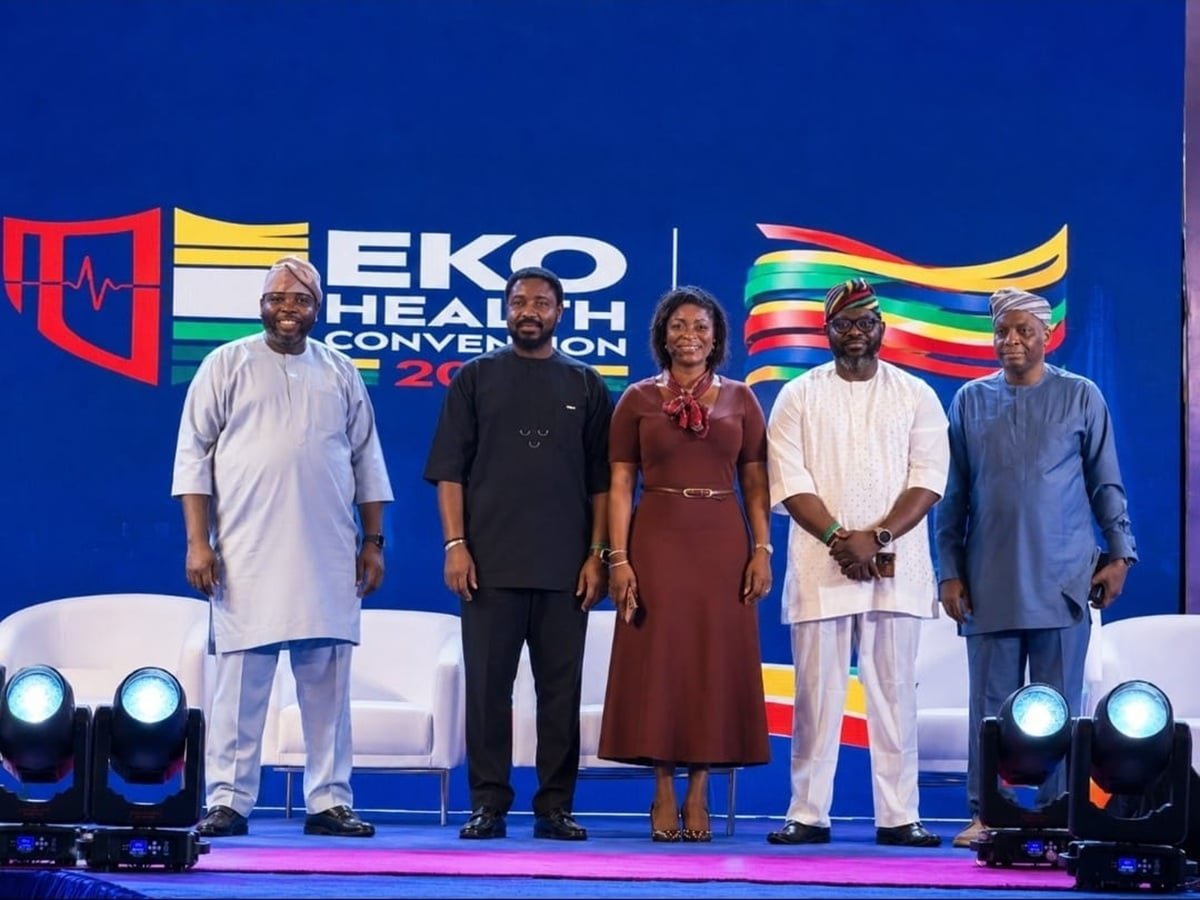
DOCTOR and founder of Mobihealth International, Dr Funmi Adewara, has emphasised the importance of telehealth and digital health technologies and why governments, policymakers, healthcare providers, and the private sector should position them at the centre of healthcare planning and delivery in Nigeria.
Dr Adewara said this during the two-day 2026 Eko Health Conference (EHC) held on Thursday and Friday in Lagos, with the theme Building a healthier Lagos: Connecting access with excellence’, and sub-theme Leveraging digital innovation and strategic partnerships for better outcomes’.
The Mobihealth boss’ call for the urgent adoption and positioning of telehealth at the centre stage of the Nigerian healthcare system was necessitated by the statement of the Lagos State Commissioner for Health, Professor Akin Abayomi, at the conference.
ALSO READ: Insecurity: NCCSALW, NYSC strengthen partnership to tackle illicit arms proliferation
Lagos State Commissioner for Health revealed that Lagos currently has approximately 7,000 doctors but requires an estimated 40,000 to adequately serve its rapidly growing population.
Adewara, alluding to the health commissioner’s comment, said that digital health innovations are the way forward to effectively address the shortage of doctors and other healthcare workers in Nigeria, especially in rural communities.
“Lagos has 7,000 doctors but needs 40,000. We cannot build our way out of this crisis. We must innovate our way out,” she said.
According to her, the solution to Japa is not in replacing every doctor who leaves the country, but in strengthening the impact of every doctor who remains.
“The future is not about where the doctor is. It is about ensuring the doctor’s expertise is wherever the patient is,” she added.
She stated that telehealth should be seen as a pillar of healthcare policy, workforce strategy, and national healthcare infrastructure that can unlock untapped clinical capacity by allowing doctors to provide care wherever they are.
According to Adewara, nearly 70 to 80 per cent of healthcare needs can be safely managed at the primary healthcare level. She advocated strengthening primary healthcare through telehealth, artificial intelligence, electronic health records, and appropriate task shifting, enabling secondary and tertiary hospitals to focus on more complex cases.
“Even if medical school admissions were doubled immediately, population growth and the continued migration of healthcare professionals would outpace workforce expansion,” she said.
In light of this, Adewara reiterated that telemedicine creates more doctors’ hours without creating more doctors, stressing the need to harness the expertise of Nigerian healthcare professionals in the diaspora.
The 2026 Eko Health Conference (EHC) was hosted by the Lagos State Ministry of Health. The conference brought together policymakers, healthcare professionals, researchers, development partners, investors, and private sector organisations to shape the future of healthcare in Lagos with an emphasis on how technology, collaboration, and strengthened health systems can be leveraged to improve access to quality healthcare.
WATCH TOP VIDEOS FROM NIGERIAN TRIBUNE TV