

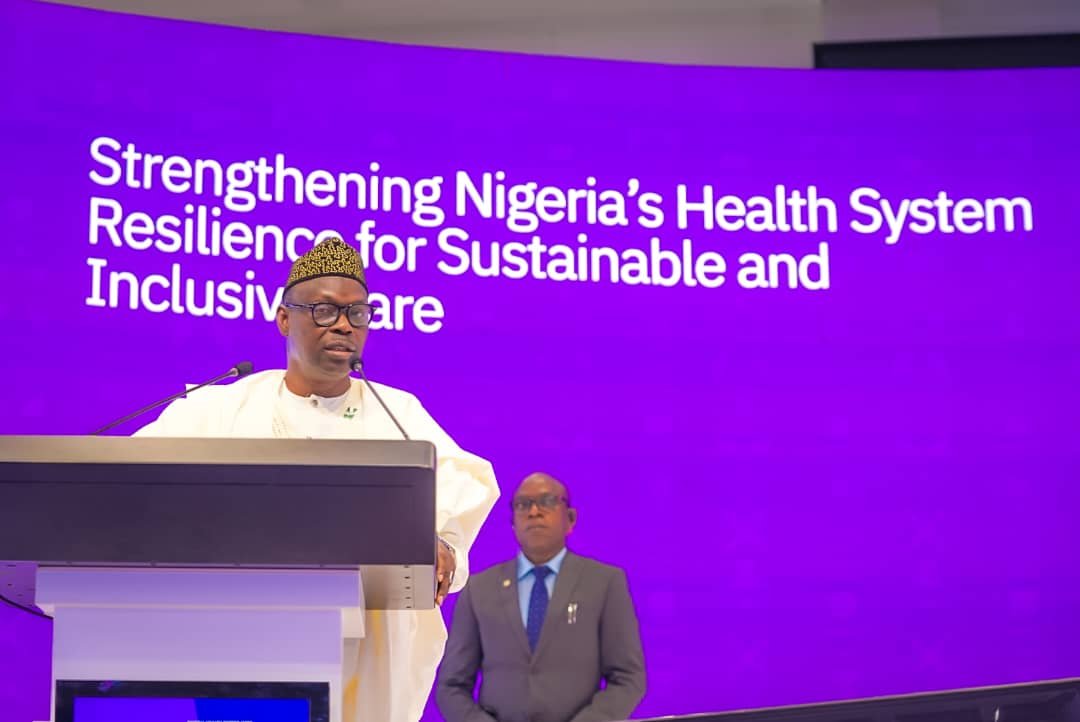
The Federal Government has called for increased African-led research, stronger partnerships, and sustainable financing to develop affordable, locally relevant solutions to the growing burden of hepatobiliary cancers on the continent.
The Minister of State for Health and Social Welfare, Dr Iziaq Salako, made the call at the fifth Africa Hepato-Pancreato-Biliary Cancer Consortium (AHPBCC) Conference in Abuja.
Salako, who, as the Director of Clinical Services, represented the National Institute for Cancer Research and Treatment (NICRAT), Prof. Ali Gombe, said cancer interventions in Africa must be guided by evidence that reflects the continent’s populations, disease patterns and health system realities.
ALSO READ: SEC orders fresh asset freeze over alleged terrorism financing, names nine more
He called for increased investment in research into the epidemiology, risk factors, genetics, prevention, diagnosis and treatment of hepatobiliary cancers, supported by cancer registries, clinical trials and collaborative research networks.
The minister also advocated the deployment of digital health, genomics and artificial intelligence where they could strengthen cancer prevention, diagnosis, treatment and surveillance.
“Research should translate into affordable, accessible, sustainable interventions for African populations,” Salako said, describing the AHPBCC as an important platform for multidisciplinary collaboration.
He said Nigeria was strengthening cancer prevention and early detection while expanding diagnostic and treatment capacity under the National Strategic Cancer Control Plan.
According to him, effective cancer control required an integrated continuum spanning risk reduction, health education, early diagnosis, referral, surgery, systemic therapy, radiotherapy, palliative care and survivorship.
Salako said the government was also strengthening financial protection for cancer patients through the National Cancer Health Fund, although hepatobiliary cancers were currently excluded from its coverage.
He said efforts were underway to expand the fund, while the Nigerian Cancer Access Partnership was providing between 50 and 60 per cent discounts on anti-cancer medicines.
He added that plans were also being developed for a catastrophic health fund to provide additional financial protection for patients requiring expensive cancer care.
On prevention, Salako said government was prioritising tobacco control, healthier lifestyles and the prevention and control of viral infections associated with cancer.
“For liver cancer, particularly hepatitis, emphasis is placed on prevention and control of hepatitis B and C through vaccination, screening, diagnosis and treatment,” he said.
The minister said Nigeria was also investing in specialists, laboratories, cancer treatment centres and research infrastructure, while expanding mentorship, fellowships, specialised training and knowledge exchange.
He stressed that no single country or institution could tackle the cancer burden alone, urging governments, researchers, academia, civil society, development partners and the private sector to deepen collaboration.
The President of the Society of Gastroenterology and Hepatology in Nigeria (SOGHIN), Prof. Abdulfatai Olokoba, said the conference demonstrated the value of partnerships among organisations working across the cancer and digestive disease fields.
Olokoba said the collaboration had brought together oncologists, surgeons, pathologists, radiologists, scientists, nurses and other specialists to improve knowledge and skills in managing hepatobiliary cancers.
He said such cancers remained particularly challenging in Africa because of late presentation, limited resources, capacity gaps and inadequate public awareness.
According to him, the three-day conference would focus on prevention, treatment, research, survivorship, public health education, vaccination, surgical innovations and approaches tailored to African realities.
The President of the African Institute for Liver and Digestive Diseases (AILDD), Prof. Lewis Roberts, said hepatobiliary cancers often affect Africans at younger ages, resulting in significant years of productive life lost.
Roberts said prevention and early detection should remain priorities because cancers diagnosed at an early stage were generally more treatable and less costly to manage.
He said conference workshops were examining ways of detecting bile duct, pancreatic and liver cancers earlier through advanced endoscopic procedures, endoscopic ultrasound, ultrasound and FibroScan.
Roberts said research should also explore blood-based diagnostic methods capable of detecting cancers earlier without subjecting patients to more invasive procedures.
For patients presenting with advanced disease, he said research into tumour biology could pave the way for targeted chemical and immune-based treatments tailored to individual cancers.
He, however, noted that the cost of advanced treatments, including monoclonal antibodies, remained beyond the reach of many African health systems.
“We have to start now, and we have to start here,” Roberts said, urging African scientists to develop solutions suited to the continent’s realities.
The President of the Nigerian Cancer Society, Prof. Abidemi Omonisi, said the consortium was focusing attention on cancers of the liver, pancreas and biliary tract, which continued to claim many lives across Africa.
Omonisi said liver cancer deserved particular attention because a significant proportion of cases were preventable, with chronic hepatitis B remaining a major cause of the disease.
He said the consortium, established six years ago, had contributed to awareness creation, capacity building, research, knowledge exchange and networking among African countries.
According to him, the participation of experts from North America had also created opportunities for African researchers to establish links with institutions capable of supporting research through funding and technical partnerships.
Omonisi said Nigeria had made progress through routine hepatitis B vaccination, particularly among children, but major gaps persisted in the treatment of patients who develop liver cancer.
He noted that Nigeria currently had no centre capable of performing liver transplantation, unlike Egypt and South Africa, which have established liver transplant programmes.
“People don’t die from liver cancer in developed countries because you can do liver transplant,” Omonisi said.
He disclosed that discussions were ongoing between the government and consortium partners on establishing a liver transplant programme in Nigeria, saying this could reduce the need for Nigerians to travel abroad for treatment.
WATCH TOP VIDEOS FROM NIGERIAN TRIBUNE TV