

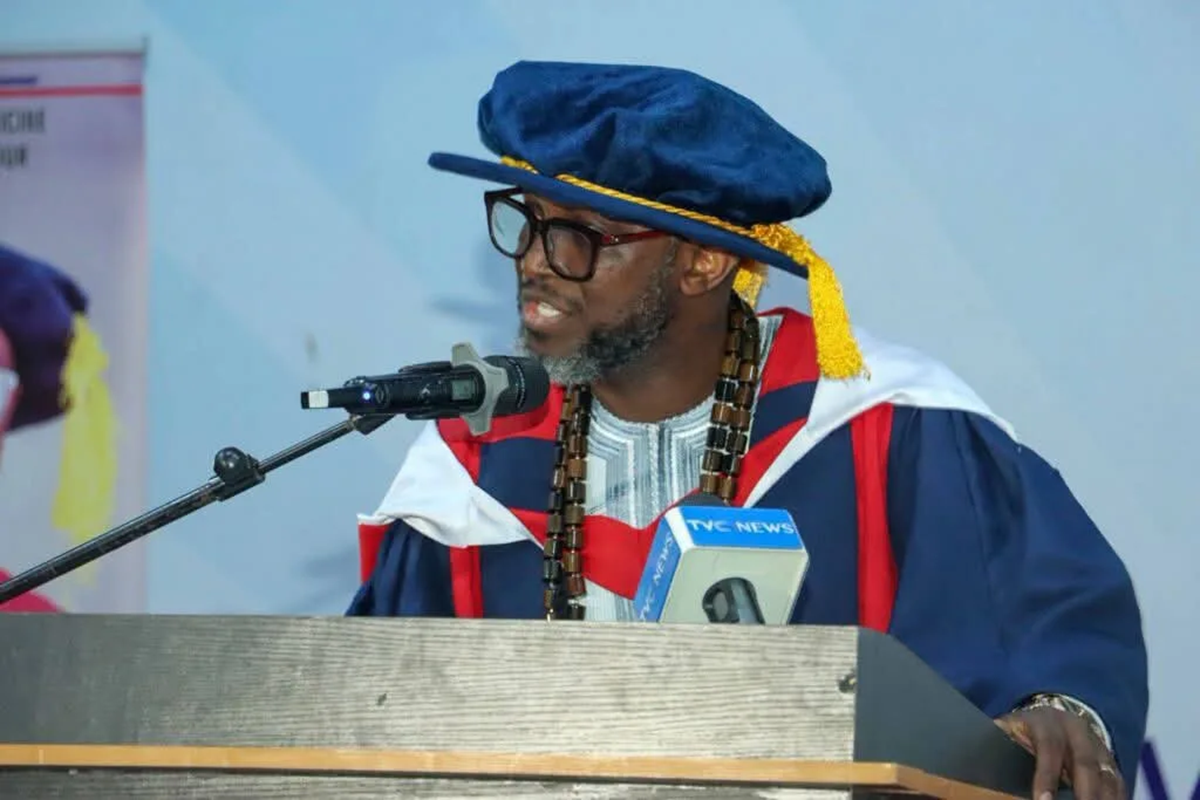
Professor of Paediatric Cardiology at Obafemi Awolowo University (OAU), Ile-Ife, John Akíntúndé Òkèníyì, has called for a comprehensive overhaul of Nigeria’s child healthcare system, urging sustained investment in paediatric cardiology, stronger primary healthcare, and expanded specialist training to reduce preventable childhood deaths.
Professor Òkèníyì made the call while delivering the university’s inaugural lecture titled “State of the Heart: Echoes from Paediatrics, Pulsations, and Purpose,” where he reflected on more than two decades of clinical practice, research, teaching, and healthcare leadership dedicated to improving child survival in Nigeria.
Òkèníyì, the Chief Medical Director of the Obafemi Awolowo University Teaching Hospital Complex (OAUTHC), Ile-Ife, argued that the condition of the child’s heart, both as a vital organ and as a metaphor for compassion, justice, and national responsibility, should remain central to healthcare planning and public policy.
According to him, Nigeria can only improve its child health outcomes through deliberate investment in preventive healthcare, early diagnosis of congenital heart diseases, expanded newborn screening, improved maternal care, and equitable access to specialist paediatric cardiac services.
The professor warned that the late presentation of congenital heart defects, inadequate diagnostic facilities, a shortage of specialists, and weak referral systems continue to deny many Nigerian children timely access to life-saving interventions.
“A nation that neglects the hearts of its children mortgages its future. A nation that protects them invests in its destiny,” he said, urging governments at all levels to treat child healthcare as a strategic investment in national development.
Òkèníyì, looking back on his academic journey, pointed out that he has spent decades researching topics like poisoning, trauma, infectious diseases, neonatal medicine, and paediatric cardiology and that his work has always aimed at creating practical solutions for child health issues in areas with limited resources.
Among his landmark contributions are studies demonstrating the effectiveness of natural honey in the treatment of paediatric wounds and burns; investigations into locally available remedies such as pawpaw seeds for intestinal parasites; and pioneering research on neonatal tetanus, neonatal sepsis, low blood sugar, and childhood pneumonia.
He also highlighted his contributions to advancing the understanding of congenital heart disease among Nigerian children and strengthening indigenous paediatric cardiac care.
ALSO READ: How to check your blood pressure at home
Professor Òkèníyì identified the successful localisation of paediatric open-heart surgery in Ile-Ife as one of the defining milestones in Nigeria’s indigenous cardiac care programme, attributing the achievement to sustained collaboration between Nigerian specialists and international partners.
“Our experience has demonstrated that advanced cardiac care can be successfully developed and sustained in Nigeria through visionary leadership, institutional commitment, and strategic partnerships,” he said.
The professor suggested creating a Centre of Excellence in Paediatric Cardiology at the Obafemi Awolowo University Teaching Hospitals Complex (OAUTHC), expanding telecardiology services to rural areas, increasing investment in locally made diagnostic technologies, and setting up a national paediatric cardiovascular registry to improve planning, research, and healthcare services.
Reflecting on the personal experiences that shaped his professional calling, Òkèníyì recounted how the premature births of his three children inspired him to devote a decade of his career to neonatal medicine, a commitment he described as transformative both professionally and spiritually.
He stressed that healthcare delivery must continue to balance scientific excellence with compassion, ethics, and respect for the dignity of every child.
The professor challenged policymakers, healthcare professionals, development partners, and the wider society to regard child health as a national priority rather than a sectoral concern.
“If we nurture the child, we nurture the nation. If we protect the child’s heart, we protect the nation’s future,” he said.
WATCH TOP VIDEOS FROM NIGERIAN TRIBUNE TV