

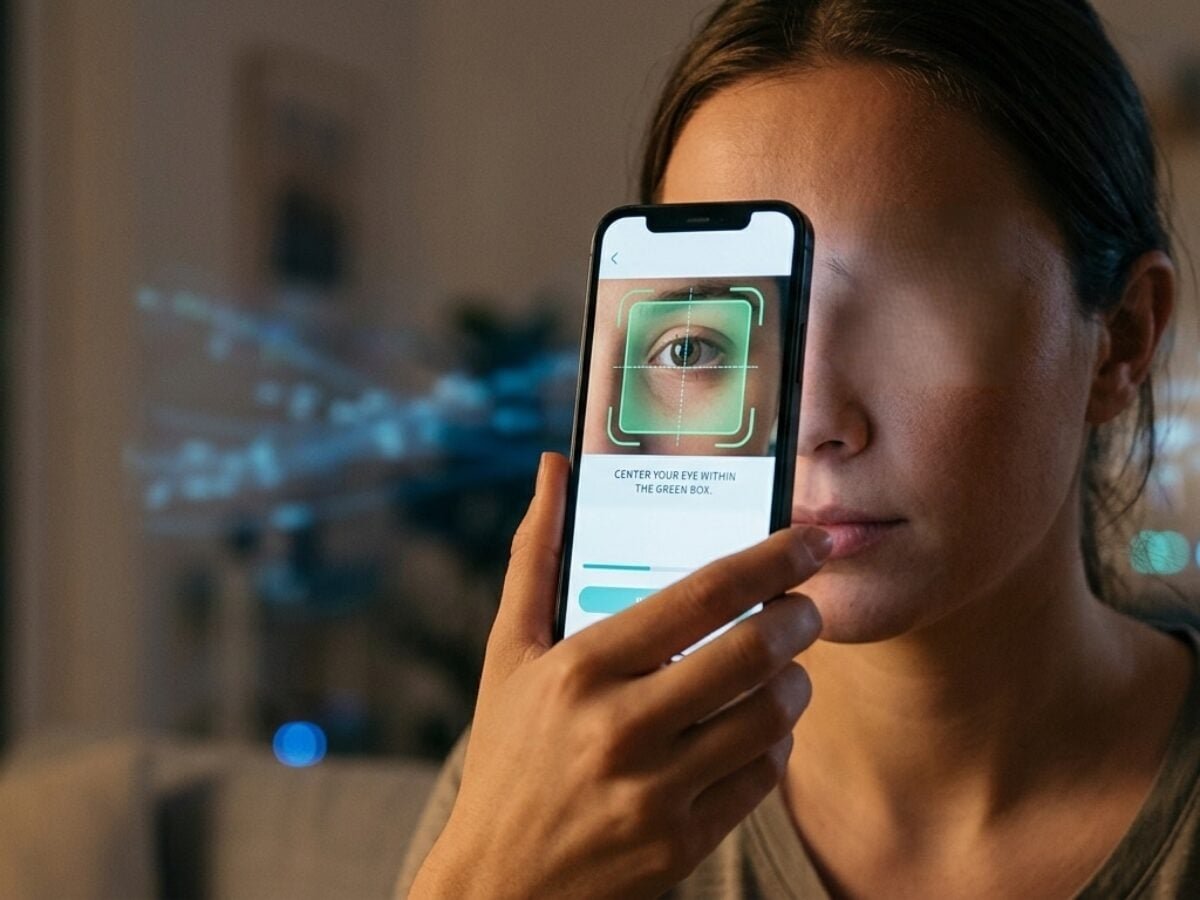
A smartphone-based Artificial Intelligence application has been shown to detect cancers on the surface of the eye with near-specialist accuracy while also identifying previously undiagnosed cases and streamlining referrals to expert care, according to new research.
The app, called Capture-Tumor, analyses photos of the eye taken by users and flags potential malignancies using a deep learning model trained on more than a decade of specialist clinical images.
Researchers say the system could help reduce delays in diagnosis by offering a faster, simpler pathway from initial screening to specialist assessment.
The findings come from a non-randomised clinical trial conducted in China, where the app was tested and refined as a self-screening tool for eye surface malignancies.
The study included 614 participants aged between four and 87, with a median age of 46, recruited via television, social media and online hospital platforms. In total, 805 images from 535 participants were included in the final analysis.
The AI system was trained on slit-lamp images collected by ophthalmologists over 12 years and then adapted to work with smartphone photographs. The app included automated checks for image quality and provided real-time guidance to users on how to take suitable pictures.
ALSO READ: Study links routine episiotomy to dangerous bleeding in anaemic mothers
Images were processed in the cloud and reviewed by clinicians within 24 hours, with high-risk cases referred to specialist centres. Each image was labelled using histopathology, where available, or clinical diagnosis and telemedicine review when tissue confirmation was not possible. The main measure of performance was the system’s ability to distinguish malignant from benign lesions.
In controlled testing, the model achieved an area under the curve (AUC) of 0.945 using specialist images. In real-world use with smartphone photographs and in-app guidance, performance rose to an AUC of 0.977, with a sensitivity of 89.3% and a specificity of 95.9 percent.
The app also generated 58 referrals, leading to the confirmation of 20 malignant cases through histopathology. Nineteen of these were newly diagnosed, and none required removal of the eye or surrounding orbital tissue.
Researchers reported that before using the app patients typically required an average of 3.69 referrals before reaching definitive treatment. After the introduction of the system, this fell to 1.02 referrals, a statistically significant improvement.
The authors also suggested the technology could substantially increase case detection per treatment centre, although they noted that this projection still requires further validation.
An accompanying commentary described the system as a “closed-loop” model combining public education, AI-assisted triage and specialist referral and highlighted its potential as a proof of concept for decentralised screening of rare diseases. However, experts cautioned that its real-world impact will depend on how well it performs across diverse populations who actually use the technology and whether its accuracy holds up at a large scale.
The study was led by researchers from Sun Yat-sen University and published in JAMA Ophthalmology.
However, the authors also acknowledged several limitations, including a relatively small number of non-Chinese participants, potential barriers for older users, and the fact that the study focused on short-term screening outcomes rather than long-term clinical impact.
WATCH TOP VIDEOS FROM NIGERIAN TRIBUNE TV