

Add Tribune Online as your preferred source on Google
The Federal Government has called for sustainability and retention mechanisms to be integrated into cancer workforce training programmes to curb the migration of skilled professionals and strengthen oncology services across the country.
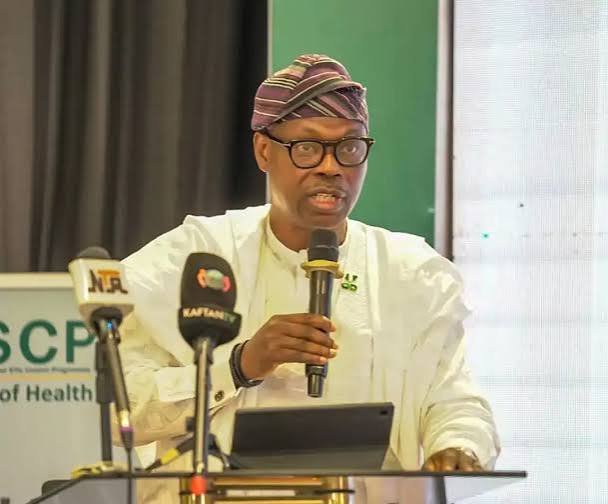
The Minister of State for Health and Social Welfare, Iziaq Adekunle Salako, made the call in Abuja during the presentation of Project STRAWN (Strengthening Radiation Therapy Workforce in Nigeria), a supervised workforce-readiness initiative aimed at addressing the shortage of radiotherapy professionals and improving cancer treatment delivery.
Salako described the initiative as a timely contribution to Nigeria’s cancer control priorities, noting that it aligns with government efforts to expand access to quality cancer care through workforce development, regulated progression, and patient safety.
He urged the project team to ensure that personnel trained under the programme remain in Nigeria after certification, stressing the need to build sustainability into the country’s growing oncology workforce.
The project was presented to the Federal Ministry of Health and Social Welfare by the University of Nigeria Teaching Hospital (UNTH), Enugu, and OncoClinics Africa, with support from Siemens Healthineers and other stakeholders in the cancer care sector.
Stakeholders at the event said Nigeria currently has fewer than 80 licensed radiotherapy professionals serving about 12 operational linear accelerators nationwide, a shortfall they described as a major challenge to effective cancer treatment despite recent investments in infrastructure.
Project STRAWN is designed to strengthen the radiotherapy workforce through advanced training for certified therapy radiographers and a six-month competency-based bridge programme for fresh radiography graduates.
Speaking on the initiative, the programme’s principal investigator, Nwamaka Lasebikan, said the programme was created to strengthen the regulated workforce pipeline rather than circumvent existing certification requirements.
“Project STRAWN is not a shortcut around regulation; it is a governed bridge into the regulated workforce pipeline. Nigeria is investing in radiotherapy infrastructure, but machines do not treat patients by themselves,” she said.
According to her, the country needs a competent and supervised workforce capable of supporting safe cancer treatment while progressing through established certification pathways.
Chief Executive Officer of OncoClinics Africa, Zahi El Khatib, said the workforce gap remains one of the most pressing constraints in cancer care.
“At OncoClinics Africa, our experience has shown that infrastructure, technology, and clinical excellence must move together. Project STRAWN addresses one of the most urgent constraints in cancer care: the workforce gap,” he said.
The Chief Medical Director of UNTH, Obinna Onodugo, described the initiative as an example of the kind of collaboration needed to build local oncology capacity without compromising standards.
Salako also outlined a four-point roadmap for the initiative, including formal recognition of STRAWN as a supervised national demonstration pilot, the development of a clear regulatory pathway for participants, integration into the National Cancer Control Programme’s workforce agenda, and phased expansion of training capacity through existing institutions.
Organisers said the long-term plan is to scale the programme nationwide, beginning with UNTH and OncoClinics Africa before extending it to training hubs across Nigeria’s geopolitical zones under the National Cancer Control Plan.
WATCH TOP VIDEOS FROM NIGERIAN TRIBUNE TV