

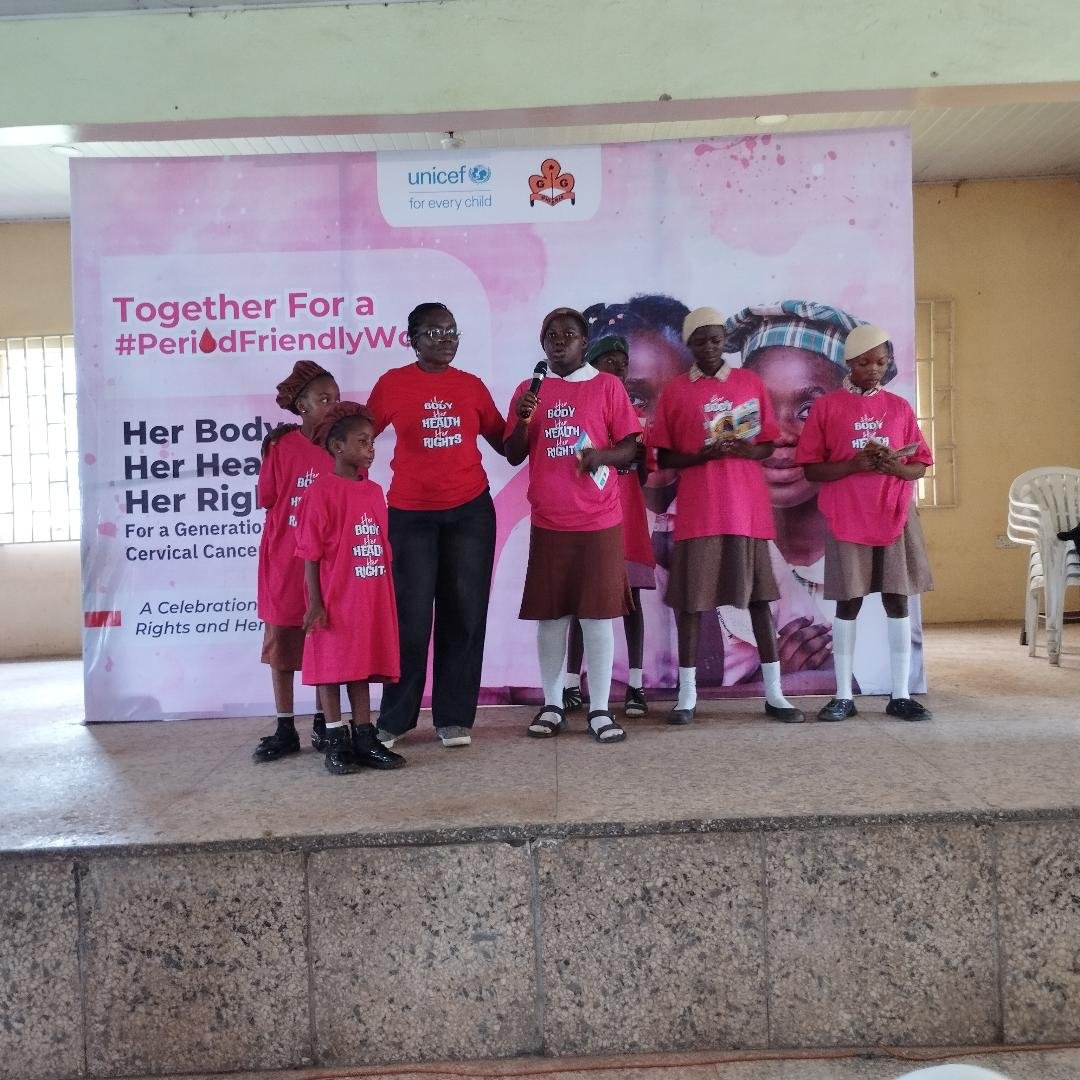
The United Nations Children’s Fund (UNICEF), in collaboration with the Oyo State government and Girls Brigade, has engaged over 700 students in promoting proper menstrual hygiene practices and the HPV vaccine.
UNICEF’s Water, Sanitation and Hygiene (WASH) expert, Mr Monday Johnson, speaking at the event held at St Anne’s Girls’ College, Ibadan, marking the 2025 Menstrual Hygiene Day with the theme “Together For a Period Friendly World”, said it was critical to raise more awareness among girls on the importance of maintaining proper hygiene and dispelling myths and misconceptions about menstruation.
According to him, menstruation is a normal occurrence that happens in the body; it is not something to be ashamed of but rather something to be proud of because it indicates that they are complete women.
Mr Johnson said the culture of silence around menstruation needs to be broken, and more men should talk about it, support the women in their lives to observe menstruation in a safe and dignified place, and become a voice to the government to provide necessary facilities in the community to ensure menstrual hygiene.
He also called on manufacturers to make menstrual products more affordable, particularly for girls and women in underserved communities.
“It is a right that you should be able to have and observe your menstruation in a safe, dignified place, where you are not ashamed, where you will have all the support, and where the government will provide the necessary amenities for you to observe that menstruation.
“The right to menstruate is the right to health. The right to menstruate is the right to health. The right to menstruate is the right for procreation,” he added.
ALSO READ: https://tribuneonlineng.com/fg-seizes-osun-lgs-february-march-april-allocations/
The WASH expert therefore advocated for the integration of menstrual education into school curricula to deepen menstrual education and dispel myths about menstruation.
“Menstrual education will promote a more open discussion; by promoting menstrual education we can work toward creating a more informed and supportive environment for individuals to manage their menstrual health.”
In addition, UNICEF’s Social Behavioural Specialist, Mrs Aderonke Akinola-Akinwole, said that myths and misconceptions about menstruation have continued to contribute to menstrual stigma and shame; therefore, there is a need for more advocacy to dispel the cultural and social stereotypes surrounding menstruation.
“Misinformation about menstruation can lead to poor menstrual health and hygiene practices, while menstrual stigma can affect women’s education, employment and overall well-being,” she added.
Earlier, the Director in charge of UNICEF programmes at the Oyo State Ministry of Information, Mrs Bukola Bakare, stated that raising awareness about maintaining proper hygiene during the menstrual period and dispelling myths and misconceptions about menstruation is crucial.
ALSO READ TOP STORIES FROM NIGERIAN TRIBUNE