

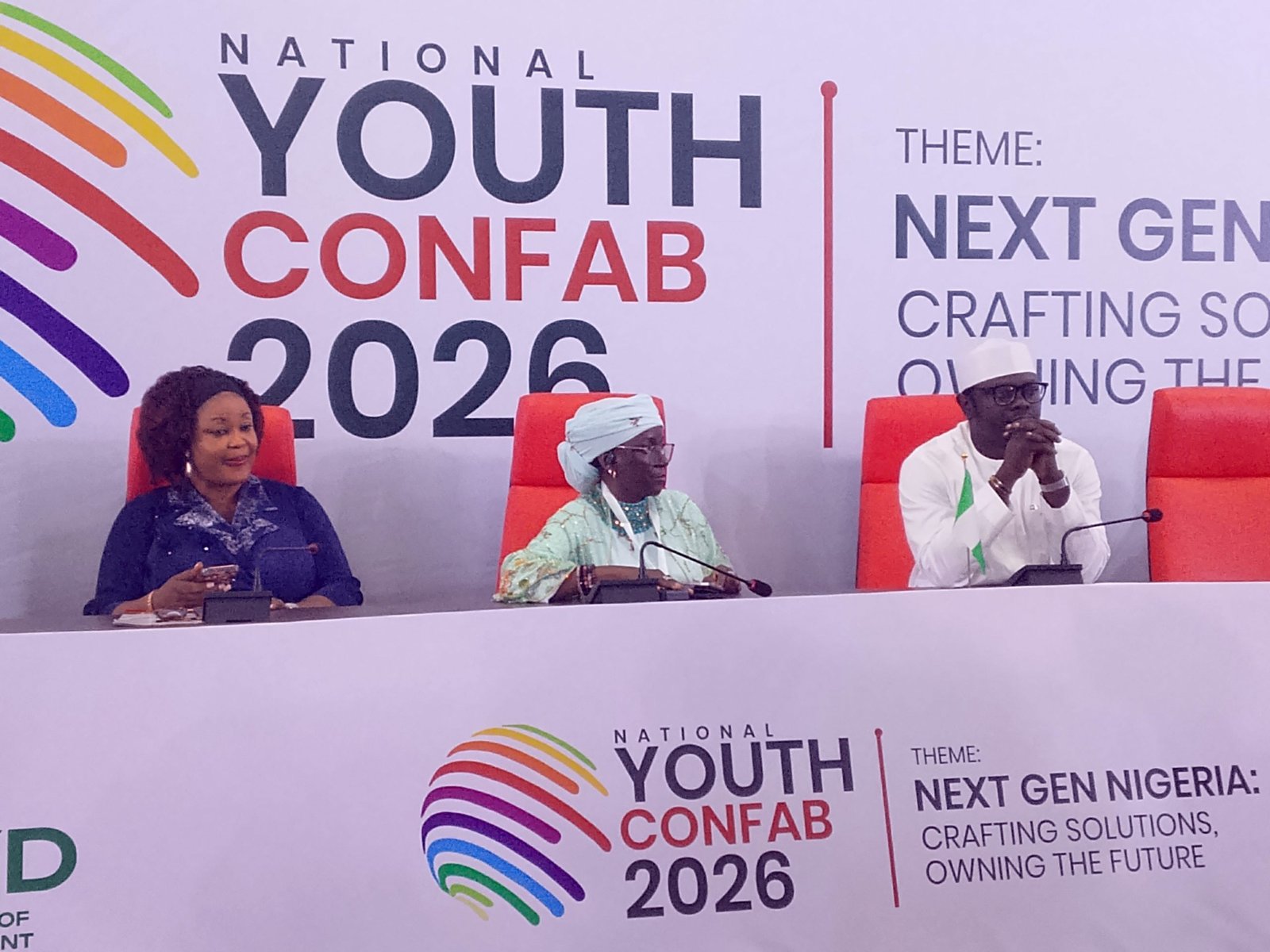
The physical phase of the 2026 National Youth Conference (Youth Confab) opened in Abuja on Wednesday, bringing together 360 delegates drawn from across the federation to deliberate on systemic issues affecting young Nigerians and formulate actionable policy recommendations for the Federal Government.
The six-day convention marks the second and concluding phase of the national dialogue, following a two-week virtual consultative exercise that commenced on October 2, 2026, across the country’s six geopolitical zones.
Declaring the physical plenary open, the Minister of Youth Development, Ayodele Olawande, stated that the conference was structured to transcend routine rhetoric and deliver concrete, evidence-based recommendations designed to shape public policies and statutory programmes on youth development.
Olawande noted that the initial virtual sessions provided a nationwide forum for youths to debate critical thematic areas, including leadership and governance, employment and economic opportunities, education and skills acquisition, technology and innovation, climate change, peace and internal security, and national cohesion.
He charged the delegates to rigorously evaluate the submissions from the virtual consultations, prioritize critical challenges, and develop measurable, realistic action plans for presentation to President Bola Tinubu and relevant state institutions.
The minister stressed that the final document should serve as an operational benchmark for policy formulation across the executive, legislative, and judicial branches of government.
Emphasizing that the gathering was strictly non-partisan, Olawande noted that delegate selection followed an open, transparent registration and screening process devoid of political patronage.
He explained that participants were selected to reflect Nigeria’s diverse demographics, encompassing various local government areas, ethnic backgrounds, student movements, civil society groups, and persons with disabilities (PWDs), alongside continuous virtual participation windows for Nigerian youths in the diaspora.
“We are not here just to speak to ourselves. We are here to help shape decisions that will affect millions of young Nigerians who are not in this room,” Olawande reminded the assembly, reiterating the Federal Government’s commitment to expanding educational access, vocational skills, digital enterprise, and job creation under the administration’s Renewed Hope Agenda.
In her opening remarks, the Permanent Secretary of the Ministry and Chairperson of the Conference Organising Committee, Dr. Maryam Keshinro, described the assembly as a critical milestone in drafting a genuine, youth-owned national development framework.
Highlighting that citizens under the age of 30 comprise over 60 per cent of the national population, Keshinro emphasized that the demographic reality demands strategic investments in gainful employment, digital literacy, entrepreneurship, and leadership training.
“Let this six days translate conversations from the virtual sessions into practical recommendations, stronger partnerships and measurable commitments. Our goal must be a youth-owned development agenda that promotes inclusion, national unity, accountability and active participation of young people in governance,” she said, giving assurances that the ministry will coordinate with inter-agency stakeholders to implement the final resolutions.
Also speaking, the Resident Representative of the United Nations Population Fund (UNFPA), Muriel Mafico, urged delegates to fashion pragmatic solutions to systemic headwinds facing young people.
Mafico highlighted key findings from a recent UNFPA national youth survey, which identified youth unemployment, soaring living costs, poverty, technical skill gaps, and deteriorating mental health and emotional well-being as acute concerns.
She urged policymakers to move beyond tokenistic youth inclusion, arguing that empirical evidence demonstrates that direct youth participation yields more resilient and sustainable policy outcomes.
Commending the Federal Government for embedding youth voices into the formulation of the national youth policy, Mafico reaffirmed the UNFPA’s readiness to provide technical and institutional backing for youth development programmes in Nigeria.
The six-day conference is scheduled to conclude with the adoption of a harmonized blueprint on national youth development priorities for onward transmission to the Presidency.
WATCH TOP VIDEOS FROM NIGERIAN TRIBUNE TV