


Despite the global dominance of Afrobeats on international streaming charts, African creators are failing to retain the financial windfall of their cultural output due to deeply entrenched architecture gaps and external ownership models within the continent’s creative ecosystem. Industry leaders warn that unless Nigeria and the wider African market rapidly formalise intellectual property frameworks, establish robust local licensing structures, and attract domestic capital, the continent will remain a mere exporter of raw talent while foreign conglomerates extract the primary economic value.
This means Nigeria’s creative industry must shift from celebrating global recognition to building structures that allow creators to retain and multiply the economic value of their work. This was the consensus among industry leaders at the BusinessDay Creative Entertainment Summit 2026.
The summit, themed ‘Ownership is the New Global: Monetising Afrobeats Power Through Equity, Transparency and Strategic Scale’, brought together artists, investors, regulators, and creative entrepreneurs. The discussions focused on how Africa’s booming entertainment sector can transform into a sustainable business ecosystem.
Intellectual property and governance key to scaling creative assets
Delivering the welcome address, Frank Aigbogun, Publisher of BusinessDay Media Limited, said Afrobeats had evolved from a regional music movement into a global cultural force influencing fashion, digital content, and international entertainment. However, he questioned whether African creators were benefiting sufficiently from the value generated by their creativity.
“While the world celebrates our creativity, an important question remains: who truly owns the value that is being created?” Aigbogun said.
Read also: From suya stands to premium brands: Meet entrepreneurs building Nigeria’s grill economy
He emphasised that the next stage of growth for Africa’s creative economy would depend on stronger intellectual property ownership, transparent royalty systems, better governance, access to capital, and the development of globally competitive creative businesses.
Architectural gaps undermine a multi-million dollar music ecosystem
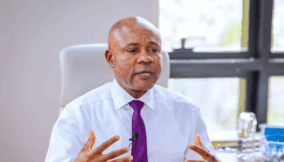
Obi Asika, Director-General of the National Council for Arts and Culture (NCAC), stated that Nigeria’s music sector does not suffer from a lack of talent or audience, but rather from weak industry structures and ownership gaps. He noted that while Nigeria has possessed a music industry for more than 70 years, the sector has struggled to develop the formal systems required to capture and retain value.
“Nigeria does not have a music industry problem per se,” Asika said. “The Nigerian music industry has been going for well over 70 years. But we do have issues with ownership and architecture.”
He explained that ownership does not always mean controlling 100 per cent of an asset, but rather securing the best possible deal and retaining meaningful economic benefits. He also noted that Nigeria’s music economy has been significantly underreported, pointing to recent data suggesting the industry could be worth hundreds of millions of dollars.
Unlicensed commercial use drains potential nightlife billions
Asika referenced industry research showing that Nigeria’s music industry could be valued at about $600 million, while the wider entertainment ecosystem, including nightlife, represents a much larger opportunity. A report tracking Lagos nightlife estimated the city’s nightlife economy at about $900 million in 2024, with the national figure potentially running into billions of dollars.
“The worst part about it is they’re making all this money, but they’re not paying,” Asika said, highlighting the lack of licensing structures for businesses that commercially use music. He argued that clubs, lounges, transport operators, and other businesses using Nigerian music must contribute to the creative economy through proper licensing and royalty payments.
“The first thing to understand is our music is not free. It belongs to somebody—either the artist that created it, the label that invested in it, or the management company that developed it,” Asika said.
Unregistered IP and foreign ownership create structural imbalances
The NCAC Director-General raised concerns about unregistered intellectual property, warning that many creators lose revenue because their works cannot be properly tracked. He described the global growth of Afrobeats as a major opportunity, noting that Nigerian artists are increasingly dominating international streaming platforms, with three of the top 10 most streamed artists globally in 2024 hailing from Nigeria.
However, he warned that the industry faces a major imbalance because many of the assets driving Afrobeats’ global success are owned outside Africa.
Read also: Africa’s largest nation gets $1bn BRICS funding boost to tackle infrastructure crisis
“The artists who built Afrobeats globally are not its primary financial beneficiaries,” Asika said, calling for increased domestic investment to match the capital, infrastructure, and expertise deployed by global companies.
Institutional frameworks look to K-pop model for sustainability
To address these gaps, the NCAC is outlining efforts to strengthen the creative economy through initiatives focused on intellectual property registration, industry data, creator support, and institutional development. Plans disclose the intent to establish stronger industry structures, including a Nigerian Music Business Council, a creative economy centre of excellence, and systems to improve licensing, publishing, and royalty collection.
Asika said the ultimate goal was to move Afrobeats beyond passing trends and turn it into a sustainable global industry, comparing the ecosystem to international creative models like K-pop, where businesses generate auxiliary revenue through merchandise, fan experiences, and strategic licensing.
Get Newsletter Updates
Enjoying our column?
Subscribe to our specialised **Tech Pulse** feed to receive fresh reports and analyses directly in your inbox.

