

The fear of death is often linked to the unknown. What happens after we die? Do we enter heaven, become an animal, or reset in a simulation? From Hindu, Rastafarian, or Buddhist theory, all of them try to explain what comes next.
To explore various theories on death, here are 30 philosophies on the afterlife!
Do you ever get the sensation that everything in our existence is predetermined? What if even death followed a preordained script? According to the simulation theory, our lives are perceived as mere numerical information within the video game of a superior entity.
Buddhists embrace the concept of reincarnation postmortem. After death, individuals may be reborn into various realms, including gods, demigods, humans, animals, or ghosts.

The concept of parallel universes has been portrayed in numerous science fiction movies and comic books, raising the question of its plausibility. According to this theory, our existence continues after death, albeit in a distinct region of space and time within the same universe we inhabited previously.
The never-ending life theory is definitely one of the most unique on the list. This claims that when you die you are immediately reborn into your life again without any memory of the life you had just led before. What if after death, everything becomes completely dark and you cease to exist? Not necessarily a reassuring notion.
Rastafarians believe that life is eternal. It is only those who shun righteousness that actually die. Because of this, funerals are not really celebrated in their culture.
In the belief system of the ancient Aztecs, three distinct paths guided the afterlife: the sun, Mictlan, and Tlalocan. The afterlife one experienced depended on the circumstances of their death. Fallen soldiers and women who died during childbirth were believed to transform into hummingbirds who followed the path of the sun. Those who died from causes considered less honorable would find themselves in Mictlan. Lastly, individuals who died by drowning were thought to go to Tlalocan.
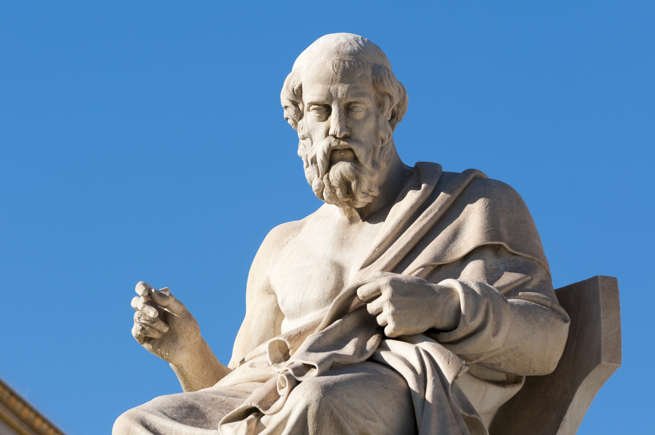
Plato held the belief that our knowledge is constrained by the physical world. He posited that after death, individuals embark on a more fulfilling journey, where their souls can discover their genuine existence. According to his theory, death provides an opportunity for this exploration.
Our understanding of death is limited to the phenomena experienced by the physical body. The ambiguous theory acknowledges this harsh truth while leaving room for discussion concerning the remaining aspects.
The Church of Latter-Day Saints holds the belief that deceased Mormons who are good and righteous will become gods. Conversely, non-believers face condemnation in the afterlife.
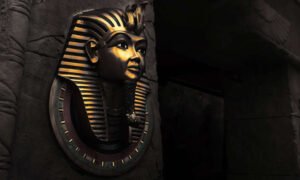
The Egyptian pharaoh theory
What if everything was merely a dream? The dream theory claims that when we die, we will just wake up from a very confusing, vivid, and long dream. Pinch yourself.
The paranormal theory
This concept typically forms the foundation of many horror movies. Advocates of the supernatural argue that our souls linger on Earth after death. Additionally, it is commonly believed that communication with these spirits can be achieved using different methods.

The frozen head theory
The egocentric theory
If you believe you are the focal point of everything, then the egocentric theory of death might be of interest to you. According to this theory, the universe begins with your birth and concludes with your death.
The ‘Stranger Things’ theory
If you are familiar with the popular Netflix show ‘Stranger Things’, you are likely acquainted with the concept of the Upside Down. The series suggests the existence of an alternate realm within our own universe, where individuals can become trapped in a state between life and death.
The Hindu theory
Is there anything beyond our own thoughts that actually exists? The concept of solipsism applies to both life and death. The only undeniable reality is what an individual perceives and encounters. Consequently, it is possible that when the individual dies, everything else ceases to exist too.
The excretion theory
According to the excretion theory, the universe represents a colossal brain within a human body, and individuals are akin to cells. Similar to how a cell is eliminated when it perishes in a human body, people might undergo a similar fate eventually.
Nihilism holds the belief that all values lack meaning and foundation. Consequently, a genuine nihilistic perspective on death and the afterlife suggests that there is absolute nothingness beyond, as life itself already encompasses emptiness.
The ‘Beetlejuice’ theory
The popular 1988 comedy film ‘Beetlejuice’ by Tim Burton tells the story of a deceased couple who haunt their former home and its new residents. To escape this in-between realm, they must rely on an unconventional exorcist. Do you envision the afterlife resembling this quirky film?
The Christian theory
According to Christian beliefs, individuals trust in the existence of both Heaven and Hell. Those who live virtuously and with integrity are rewarded with entry into the blissful paradise known as heaven. Conversely, those who engage in sinful actions and moral transgressions are destined for hell.
The theory of many worlds posits that our death only occurs within this singular, existing universe. Beyond it lie numerous alternative universes awaiting our transition.
