

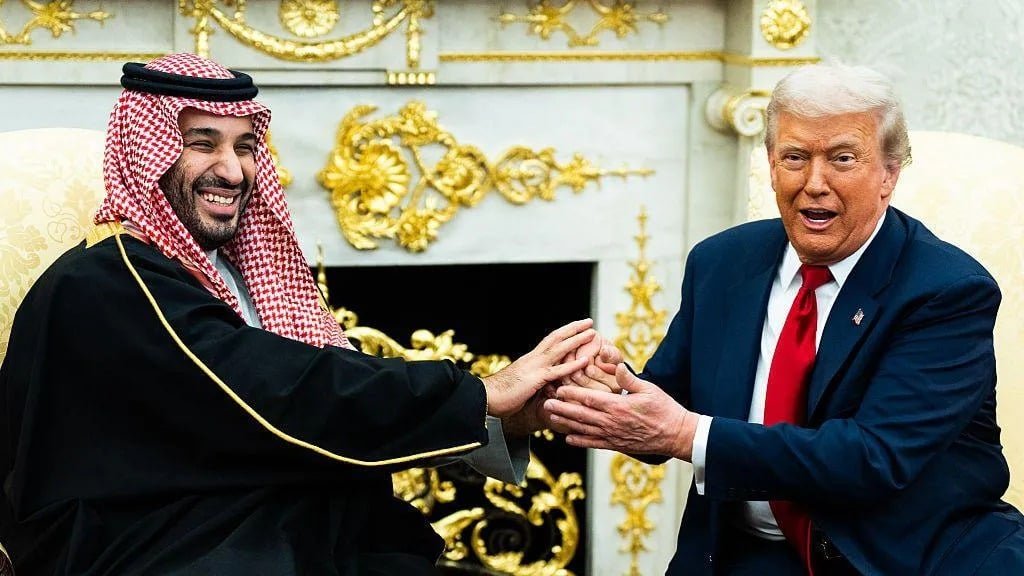
Critics say the US-Saudi deal could spark a nuclear arms race in the Middle East. It’s certainly not making US allies, like Israel and the UAE, happy. And reports suggest the US may already be backtracking on the deal.
After new statements by US President Donald Trump on Thursday morning, it is still unclear whether a controversial new dealwith Saudi Arabia that allows the Middle Eastern autocracy to establish a civilian nuclear program will go ahead.
Trump said the deal could only progress if Saudi Arabia normalized diplomatic relations with Israel. In the recent past, the Saudi government has repeatedly stated it would only do this if the Israelis make genuine moves toward establishing a Palestinian state. With the current Israeli government, that is unlikely to happen.
One of the main reasons experts are so worried is that in several years’ time, the deal, as it stands now, may let the Saudis enrich their own uranium. The more uranium is enriched, the more it could potentially be diverted to make weapons. And in the past Saudi Arabian ruler Mohammed bin Salman has said that if Iran produces a nuclear bomb, then Saudi Arabia would need to have one too.
The majority of the approximately 38 countries with civilian nuclear energy programs don’t enrich uranium. Instead they import it.
The US-Saudi deal also has regional implications, especially because it seems to have been formulated in a far less rigorous way than similar deals.
United Arab Emirates: Preferential treatment for Saudis?
The less strict deal the US has made with Saudi Arabia is likely to upset the United Arab Emirates, who often compete with the Saudis for geopolitical influence.
The UAE already has a nuclear power plant, Barakah, as a result of arrangements made with the Americans back in 2009.
The Saudi deal is bilateral only — that is, just between the US and the Saudis and doesn’t include the IAEA — and the Saudis may eventually be allowed to enrich their own uranium.
For the UAE, nuclear power was always more about the prestige of being the first Arab nation to develop it than about military ambitions, Nour Eid told DW earlier this year. Eid is an independent researcher based in Paris who has published papers on nuclear ambitions in the Middle East for a number of think tanks.
But, she pointed out, there is also a clause in the UAE agreement that stipulates that “if a regional or neighboring country has a more flexible agreement then they reserve the right to renegotiate their terms.”