

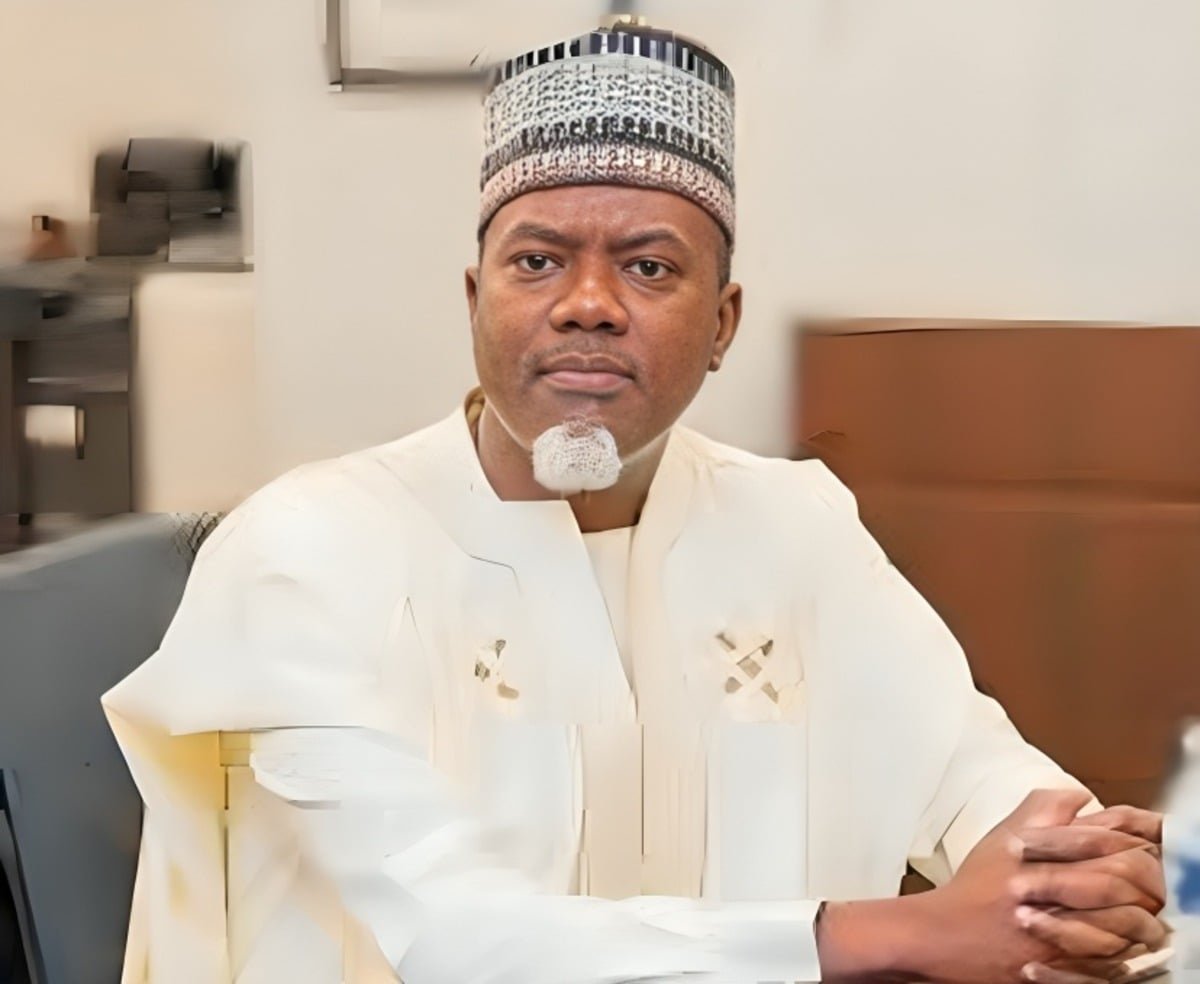
Nigeria’s ambassador-designate to Mexico, Reno Omokri, has acknowledged that an FBI investigation took place involving individuals connected to President Bola Ahmed Tinubu but insisted that the President himself was not the target of the probe.
Omokri, who spoke on Channels Television’s Politics Today programme anchored by Seun Okinbaloye, said the investigation concerned other individuals whose funds, according to him, were considered suspicious, while Tinubu was linked to the matter through funds he held as an accountant for clients.
“There was an investigation. Bola Ahmed Tinubu was not the subject of that investigation,” Omokri said.
ALSO READ: Why Tinubu doesn’t want his FBI records released — Reno Omokri
He rejected the description of Tinubu as having been “investigated by the FBI”, describing it as “a fallacious statement”, and argued that the existence of an investigation involving other individuals should not be interpreted as evidence that the President was himself the subject of a criminal probe.
According to him, Tinubu was an accountant at the time and held funds belonging to clients who were under investigation by US authorities.
“The President was an accountant, and then the President had client funds. Those persons had been indicted by the FBI, and as a result of that, it said that certain funds… are suspicious funds,” he said.
“And then when it was brought to the attention of the President, the President agreed for a forfeiture. Now, it was to the accounts, not the President.”
Omokri said the forfeiture of the funds therefore did not establish that Tinubu himself had been investigated or committed a crime.
He compared the situation to lawyers and accountants holding money on behalf of clients, saying the existence of such funds in a professional’s account did not necessarily make the professional the subject of an investigation involving the clients.
“Even the great F.R.A. Williams… had clients that the police investigated, and he kept money for those clients. It’s called clients’ fund,” he said.
“Now coming out to say, well, Rotimi Williams was investigated, Rotimi Williams is a criminal, is a fallacious statement.”
The ambassador-designate further relied on a 2003 FBI communication which he said followed a records check concerning Tinubu.
Reading from the document during the interview, Omokri said the FBI had found no criminal arrest record, warrant or wanted status against Tinubu.
“It says that the result of the checks were negative for any criminal arrest records, warrants, or warrants for Bola Ahmed Tinubu,” he said.
However, when Okinbaloye pointed out that the absence of an arrest record or warrant did not necessarily establish that no investigation had ever taken place, Omokri acknowledged that an investigation had occurred.
“There was an investigation. Bola Ahmed Tinubu was not the subject of that investigation,” he reiterated.
He said the identities of the individuals who were the subject of the investigation were already in the public domain, but declined to name them, saying he did not want to hurt their families.
The exchange comes amid continuing controversy over US records relating to a 1990s investigation and an ongoing Freedom of Information Act litigation seeking access to documents held by US law-enforcement agencies.
Recent US court reporting has described Tinubu as a subject of a criminal investigation involving the FBI and the US Drug Enforcement Administration, although the court records do not establish that he committed a drug-trafficking offence or was convicted of a crime.
The controversy has centred particularly on 399 pages of records identified in the FOIA proceedings, some of which have been redacted or withheld.
Asked whether he had read the 399 pages, Omokri declined to discuss the matter, saying it was before the courts.
“That is a case that is before the courts. I’ve got a master’s in law. It’s expected of me to be an amicus curiae, a friend of the court. So that’s sub judice. I’m not going to respond to a question that is before the court,” he said.
Pressed on the possible consequences of releasing the withheld records, Omokri argued that they could contain sensitive personal information that could be exploited by political opponents.
“They are not going to be harmful to the President or to his campaign, but they can be used as a party in the hands of his political opponents to set up the President, to incriminate the President,” he said.
He listed biometric, DNA, blood-group, familial and financial information among what he described as sensitive material that could be contained in FBI records.
“You don’t want those records in the hands of your enemies,” he added.
The interview also provided an opportunity for Omokri to explain his dramatic change of position on Tinubu.
The ambassador-designate, who was previously a vocal critic of the President, said he had travelled to the United States to investigate allegations surrounding Tinubu’s academic records and alleged links to the drug controversy.
He said his findings in Chicago changed his position.
“I went to Chicago to disgrace the President, but I found out that he actually was admitted, attended, and graduated from Chicago State University,” Omokri said.
According to him, he visited Chicago State University on September 19, 2022, where he was shown documentary and photographic evidence concerning Tinubu’s education.
He said he subsequently reviewed court proceedings and publicly acknowledged that his earlier position had been wrong.
“I honestly believed what the media reported, like most Nigerians… But I did something that, I mean, no other Nigerian did. I went to Chicago,” he said.
Omokri also dismissed renewed questions over Tinubu’s age and educational history, arguing that Nigerians should focus on issues such as the economy, security and healthcare rather than repeatedly revisiting controversies surrounding the President’s past.
“But even if the President was 91 years old, is that the issue right now? What about the economy? What about security? What about health?” he asked.
“These are the things that we should be talking about in Nigeria, and not age-shaming the President.”
He also rejected the argument that the absence of publicly identified primary and secondary school classmates constituted evidence of wrongdoing, saying educational practices differed significantly among Nigerians of Tinubu’s generation.
Omokri further argued that the controversies surrounding Tinubu had already been litigated in Nigeria and the United States and should not continually be reopened.
“Seeking to relitigate them now is madness,” he said.
The ambassador-designate’s defence of Tinubu marks a significant reversal from his earlier public criticism of the President, a change he attributed to what he described as personal fact-finding and a willingness to change his position when confronted with contrary evidence.
WATCH TOP VIDEOS FROM NIGERIAN TRIBUNE TV