

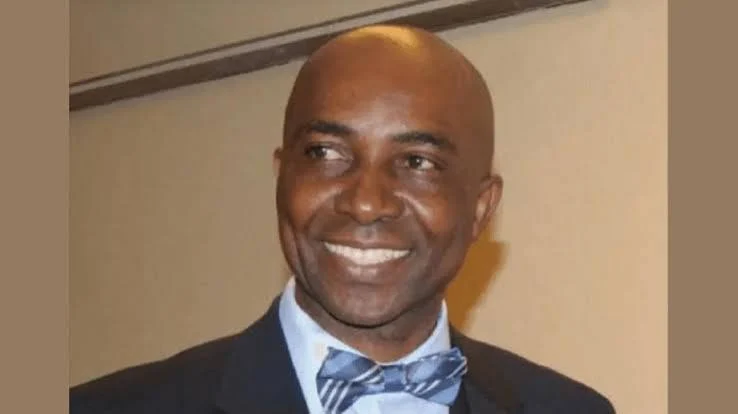
The Chief Executive of the Office of the Tax Ombud, Dr John Nwabueze, has warned that arbitrary tax assessments, multiple levies and inconsistent enforcement could erode public confidence in Nigeria’s ongoing tax reforms.
He urged revenue authorities to protect taxpayers’ rights and ensure the implementation of the new tax laws did not impose unlawful burdens on individuals and businesses.
Nwabueze spoke on Friday at a stakeholders’ engagement at the Ladi Kwali Conference Centre, Abuja, where he said fairness and transparency were essential to the success of the reforms.
“Fairness is not a favour to taxpayers; it is the foundation of public trust and sustainable revenue mobilisation.
“When taxpayers are treated fairly, understand their obligations and have access to impartial redress, they are more likely to comply voluntarily.
“Conversely, arbitrary assessments, overlapping levies and inconsistent enforcement undermine confidence in the system,” he said.
The Tax Ombud said the reforms, which commenced on January 1, 2026, were designed to simplify tax compliance, strengthen revenue mobilisation, support eligible small businesses and improve accountability.
He stressed, however, that the quality of the legislation alone would not guarantee success without fair implementation.
Nwabueze said the Office of the Tax Ombud, established under the Joint Revenue Board of Nigeria (Establishment) Act 2025, would provide an independent channel for resolving administrative complaints and identifying weaknesses in tax administration.
He disclosed that the office was developing governance structures, a digital complaint management system, taxpayer education programmes, stakeholder partnerships and dedicated call centres.
He also outlined five principles guiding its operations: equity and proportionality, procedural justice, professionalism, transparency and accountability, and the protection of vulnerable taxpayers.
According to him, the office is developing a Taxpayer Charter in English, Hausa, Igbo, Yoruba and Nigerian Pidgin to explain taxpayers’ rights and responsibilities.
“Tax obligations must be administered consistently and proportionately. Exemptions and reliefs provided by law, particularly for eligible small businesses, must be properly communicated and respected. No taxpayer should face unlawful or avoidable administrative burdens,” he said.
Nwabueze urged revenue authorities to treat taxpayers with dignity while ensuring individuals and businesses met their lawful obligations.
Also speaking at the engagement, the acting Chief Executive Officer of Abuja Markets Management Limited, Onya Ojiji, represented by the Head of Finance and Accounts, Faruk Baffa, raised concerns about multiple levies and unauthorised revenue collection in markets across the Federal Capital Territory.
He identified collections without receipts, unclear tax assessments and the activities of unauthorised agents as challenges confronting traders.
“In these spaces, the issues that shape perceptions of fairness are practical and everyday, evident through multiple levies on the same activity, collections without proper receipts, unclear assessment bases, and the presence of unauthorised agents,” he said.
Ojiji pledged the organisation’s support for efforts to educate traders about their rights, discourage unauthorised collections and provide feedback to the Tax Ombud.
The President of the Chartered Institute of Taxation of Nigeria, Innocent Ohagwa, called for sustained public education on the new tax laws, warning that inadequate understanding of tax obligations could create confusion and weaken compliance.
“Without the knowledge, without the understanding, there is usually confusion everywhere on the issue of compliance,” Ohagwa said.
Similarly, the Senior Special Adviser on Intergovernmental and International Matters of the National Union of Road Transport Workers, Sulaiman Danzaki, complained about multiple taxation affecting transport operators.
He said commercial drivers faced repeated collections by different authorities, sometimes without explanations or proper receipts, and called for the harmonisation of transport-related taxes and greater consultation with operators.
Danzaki argued that excessive collections increased operating costs and ultimately affected passengers. He also raised concerns about road maintenance and vehicle operating costs despite repeated payments by transporters.
The NURTW representative, who said the union had more than four million members, maintained that operators were willing to pay legitimate taxes but wanted greater transparency and accountability in revenue collection.