

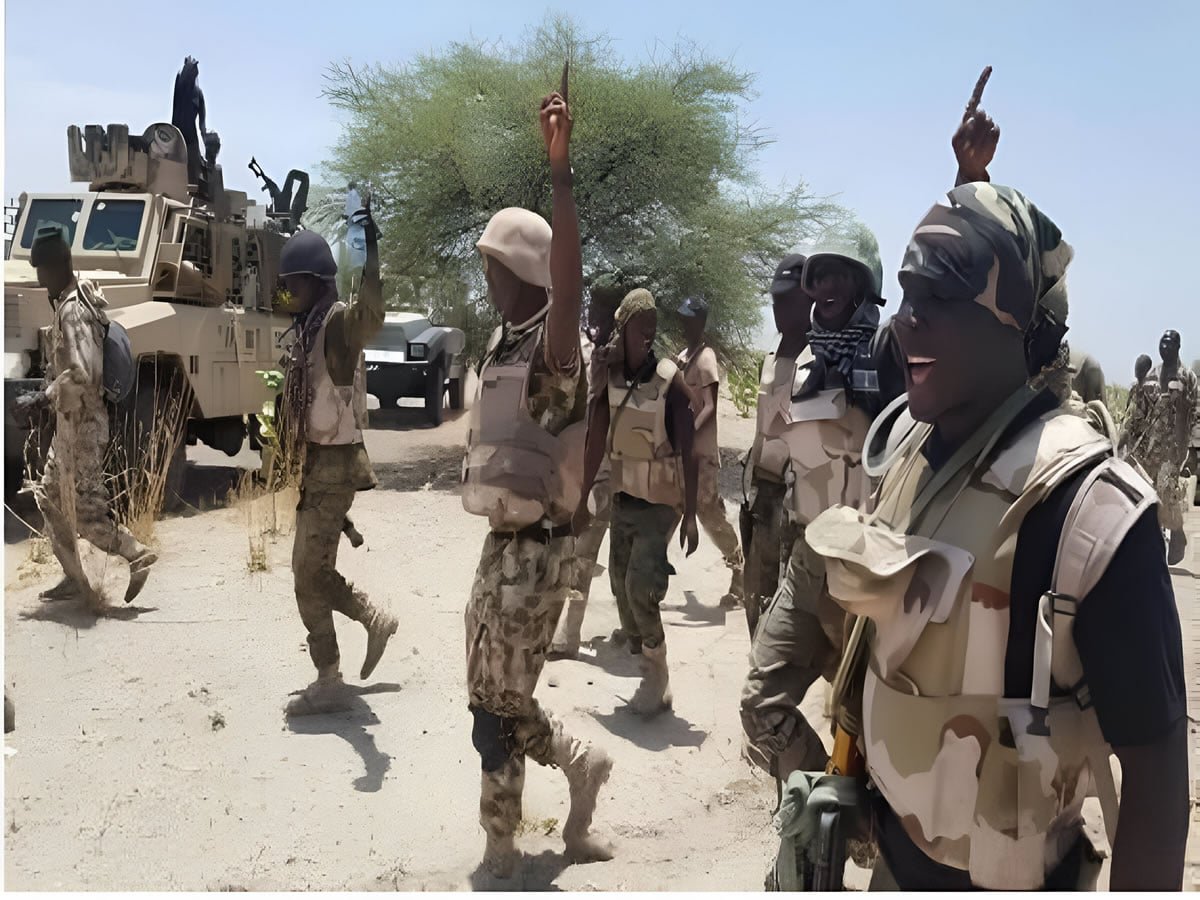
The Special Adviser to Sokoto State Governor Ahmed Aliyu on Security Matters, Col. Ahmed Abdul Usman (retd.), has backed the Federal Government’s plan to gradually withdraw military personnel from internal security operations, describing it as a necessary step toward strengthening Nigeria’s security architecture.
Usman said the move would enable the Nigeria Police Force to take greater responsibility for tackling domestic security challenges while allowing the military to concentrate on defending the country’s territorial integrity.
He, however, warned that the withdrawal must be gradual and properly coordinated to prevent security gaps, particularly in areas battling terrorism, banditry, and other forms of criminality.
The retired colonel stated this while reacting to a recent declaration by the Minister of Defence, Gen. Christopher Musa (retd.), that the Armed Forces would gradually pull out of internal security operations as the Federal Government strengthens the operational capacity of the police.
Musa made the position known at the APC Abuja Roundtable, where he acknowledged that prolonged military deployment for internal security duties had overstretched the Armed Forces.
Supporting the minister’s position, Usman argued that the police should take the lead in routine domestic security operations, including crime prevention, law enforcement, and the maintenance of public order.
According to him, the military’s continued involvement in such duties has placed considerable pressure on its personnel and resources, limiting its ability to concentrate fully on its primary constitutional responsibilities.
He said, “The police are better positioned to handle routine internal security responsibilities, while the military should be allowed to focus on confronting threats to the nation’s territorial integrity and other major national security challenges.”
Usman described the proposed repositioning as an opportunity to promote professionalism, improve operational efficiency, and ensure that security agencies function within their respective constitutional mandates.
He, however, cautioned against a hasty withdrawal of troops, stressing that adequate arrangements must be put in place before the military relinquishes its current responsibilities in troubled areas.
“The withdrawal must be gradual and properly coordinated to avoid creating security gaps, particularly in areas facing serious threats from terrorists, bandits and other criminal elements,” he said.
The security adviser explained that withdrawing troops from routine internal security assignments does not mean the military will no longer support domestic security operations.
He maintained that the Armed Forces would remain relevant in situations where the scale of insecurity exceeds the operational capacity of the police and other security agencies.
Usman also called for stronger inter-agency collaboration, intelligence sharing, and coordinated operations among the military, police, Department of State Services (DSS), and other security institutions.
He said no single security agency could effectively address the country’s complex security challenges without sustained cooperation and timely intelligence.
The retired officer further urged the Federal Government to increase investment in police recruitment, specialised training, modern equipment, intelligence gathering, and operational logistics.
He said strengthening the police was essential to ensuring a smooth transition and preventing criminals from exploiting any operational gaps that might arise during the withdrawal of military personnel.
Usman expressed confidence that allowing each security agency to concentrate on its core responsibilities, backed by effective collaboration, would enhance national security and improve the protection of lives and property.
The proposed transition, he said, should strengthen the capacity of the police without undermining the military’s continued role in responding to serious security threats.
WATCH TOP VIDEOS FROM NIGERIAN TRIBUNE TV