

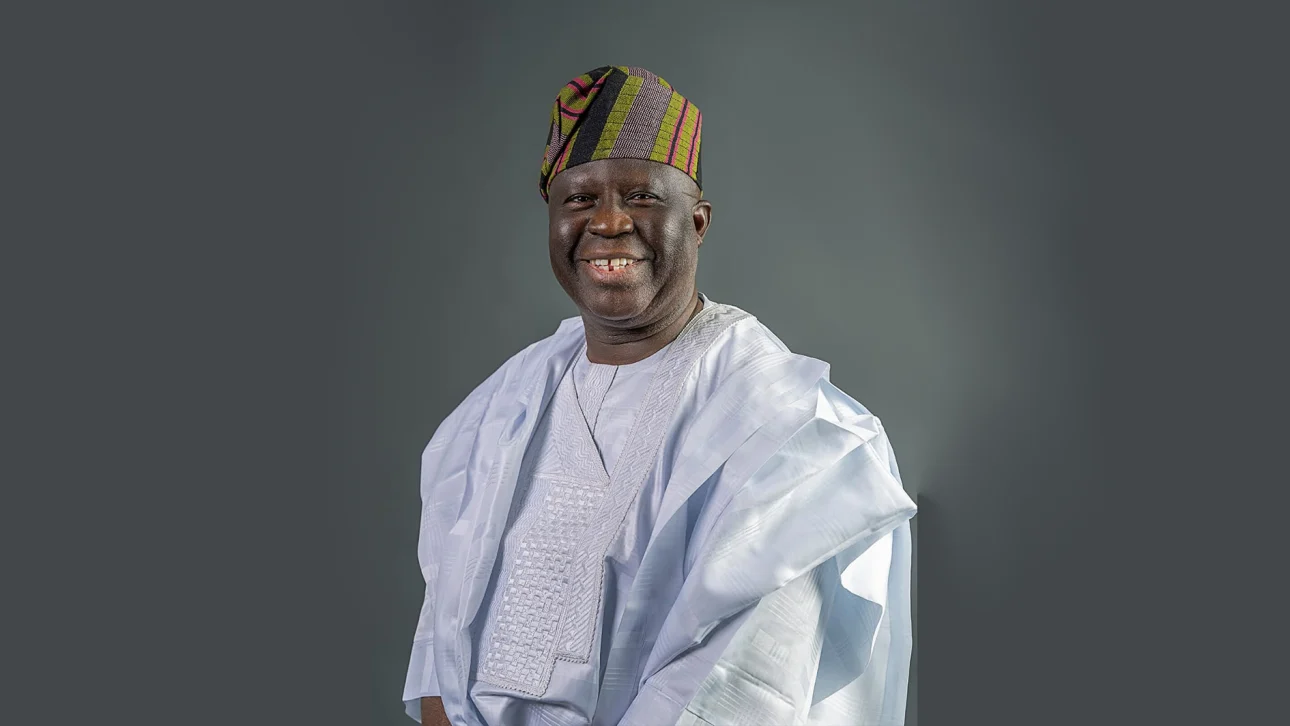
Amid protests on the floor on Thursday, the Senate confirmed the nomination of Professor Abayomi Sunday Fasina by President Bola Tinubu as a non-career ambassador-designate.
Fasina has been at the centre of a sexual harassment allegation. The allegation was that he sexually harassed and made repeated unwanted romantic advances towards a married senior staff member at the Federal University Oye-Ekiti (FUOYE), Engr. Folasade Adebayo.
She claimed that Fasina pressured her into a sexual relationship and that she rejected his advances. She also alleged that she was subsequently victimised through queries and workplace retaliation.
The nominee, a former Vice-Chancellor of FUOYE, was cleared and recommended for confirmation by the Senate Committee on Foreign Affairs, chaired by Senator Sani Bello.
However, it was former Plateau State Governor, Senator Simon Lalong, who presented the committee’s report to the Senate in Bello’s absence.
He stated: “That the Senate do receive and consider the report of the Committee on Foreign Affairs on the confirmation of the nomination of Professor Abayomi Sunday Fasina for appointment as Non-Career Ambassador/High Commissioner of the Federal Republic of Nigeria.”
The committee said it found the former vice-chancellor fit and credible for the appointment.
It noted in Finding 6.0 that “the accusation against Professor Fasina was investigated by competent authorities, including the University Governing Council and the Nigeria Police, which both found the allegation to be false.”
However, drama ensued on the floor immediately after the report was presented, as it divided senators. While some protested the recommendation, others argued that Fasina should be cleared.
The President of the Senate, Godswill Akpabio, Senator Abdul Ningi and several other senators supported the report, while Senators Adams Oshiomhole and Cyril Fasuyi strongly opposed the nomination.
Oshiomhole, for instance, objected to the nomination, reminding the Senate that two women had made sexual harassment allegations against Fasina.
Incidentally, Fasuyi, who represents Ekiti North and is a member of the committee that cleared Fasina, also opposed the nomination, urging the Senate not to confirm him.
However, Akpabio, while intervening to resolve the matter, advised senators against acting on hearsay, stressing that decisions should be based on evidence and proof.
He argued that the nominee had been investigated by the Nigeria Police, the Department of State Services (DSS) and the university’s Governing Council, all of which cleared him.
Akpabio also referred to a past incident in which a senator, Oshiomhole, was seen in a widely circulated video massaging a woman’s feet during a flight, adding: “But that person said it was AI.”
He noted that where evidence or proof was unavailable, senators would not be seen as taking their constitutional responsibilities seriously if they based their decisions on hearsay.
The Senate subsequently confirmed the nominee.
Ahead of the confirmation, some civil society groups had staged protests at the gate of the National Assembly, urging the Senate not to approve the nomination.
Apart from the sexual harassment allegation, the protesters also claimed that the nominee had pending cases before the National Industrial Court in Lagos and Abuja.
Commenting on the development, the Chairman of the Senate Committee on Media and Public Affairs, Senator Yemi Adaramodu, told Tribune online that the Senate does not “act on speculation or protests at the gate”.
He said: “There is no petition before the Senate. As a legislature, we don’t just make a decision because someone is on the street protesting.
“There is no matter about the protests before the Senate for consideration.”
WATCH TOP VIDEOS FROM NIGERIAN TRIBUNE TV