

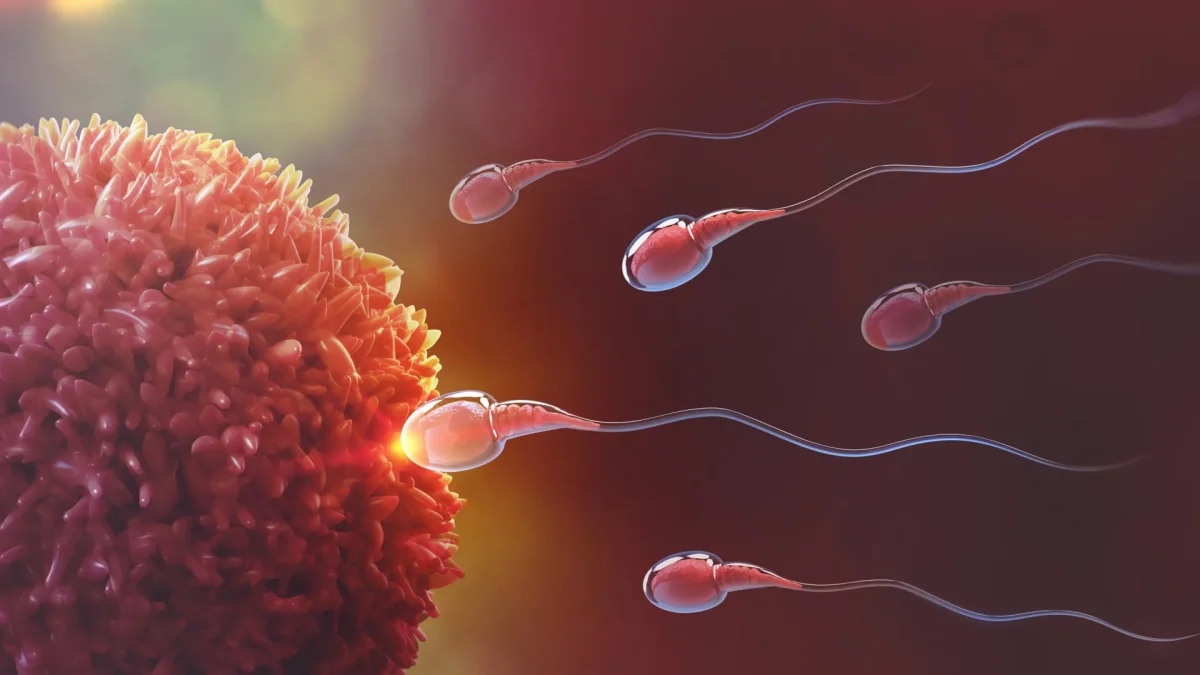
Scientists at Cornell University may be closing in on the long-sought “holy grail” of male contraception: a safe, reversible, non-hormonal method that completely stops sperm production.
In a breakthrough mouse study, researchers used a compound called JQ1 to temporarily shut down the critical process that produces sperm without causing lasting harm. After treatment stopped, sperm production bounced back, fertility returned and the animals produced healthy offspring.
In a proof-of-principle study conducted in mice over six years, Cornell University scientists showed that interrupting a key step in meiosis, the process that produces sex cells, can temporarily halt sperm production without causing lasting harm. The findings were published in the Proceedings of the National Academy of Sciences.
To achieve this, scientists used JQ1, a small-molecule inhibitor originally developed to study cancer and inflammatory diseases. While JQ1 is not suitable as a treatment due to its neurological side effects, it is known to interfere with a stage of meiosis called prophase I. This allowed researchers to demonstrate, for the first time, that targeting meiosis can safely and reversibly shut down sperm production.
Current male contraceptive options remain limited to condoms and vasectomies. While vasectomies are considered a long-term method, many men hesitate to undergo the procedure, even though reversal surgery is sometimes possible. At the same time, researchers have been cautious about developing hormonal approaches, partly due to safety concerns observed in women.
Paula Cohen, professor of genetics and director of the Cornell Reproductive Sciences Center, and her team focused on the process that produces sperm rather than other stages of sperm development to ensure that sperm production could be fully stopped while still allowing it to recover later. This approach also preserves overall reproductive health.
In the study, male mice received JQ1 for three weeks. During this time, sperm production stopped completely, and key features of meiosis, including chromosome behaviour during prophase I, were disrupted.
Once the treatment ended, recovery began. Within six weeks, most normal meiotic processes returned, along with healthy sperm production. The researchers then bred the mice and confirmed that they were fertile. Their offspring were also healthy and able to reproduce.
“It shows that we recover complete meiosis, the process that produces sperm, complete sperm function and, more importantly, that the offspring are completely normal,” Cohen said.
According to Cohen, if developed for human use, this type of male contraceptive could be delivered as an injection given every three months or possibly as a patch to maintain effectiveness.
WATCH TOP VIDEOS FROM NIGERIAN TRIBUNE TV