

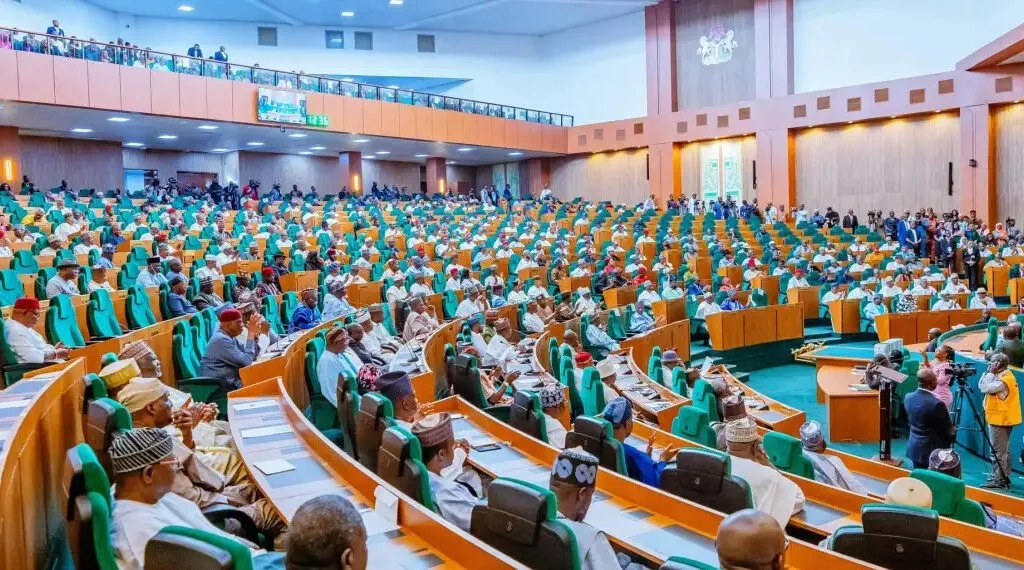
The House of Representatives on Wednesday adopted the report of the Committee on Health on a bill seeking to prohibit discrimination against persons affected by tuberculosis (TB), protect their fundamental human rights and dignity, and provide compensation for workers who contract the disease in the course of their employment.
The proposed legislation, titled ‘A Bill for an Act to Make Provision for the Prevention of TB-Based Discrimination and Protect the Fundamental Human Rights and Dignity of People Affected by TB’, seeks to establish a comprehensive legal framework for protecting people living with or affected by tuberculosis across Nigeria.
A major provision of the bill is the prohibition of all forms of discrimination against persons affected by TB, including in employment, education, healthcare, housing, marriage, access to public facilities, financial services and other areas of social and economic activity.
Under the proposed law, individuals, employers, institutions and organisations found guilty of discriminating against people on the basis of their actual or perceived TB status will be liable to sanctions, including fines, imprisonment and payment of compensation to victims.
Specifically, the bill recommends a minimum fine of N500,000 for individuals and N2 million for organisations found guilty of violating its provisions. Offenders may also face imprisonment for a term of not less than six months and not more than one year, as well as restitution and damages for emotional distress suffered by affected persons.
The legislation further provides that repeat offenders will face more severe penalties, while heads or representatives of the boards of organisations may be held responsible for violations committed by their institutions.
Another significant provision is the proposed inclusion of tuberculosis on the list of occupational diseases under the First Schedule of the Employees’ Compensation Act, 2010.
The bill provides that TB contracted through occupational exposure should be recognised as an occupational disease, making affected workers eligible for compensation and other benefits under the Employees’ Compensation Act.
The legislation also extends protection to employees who develop post-TB lung complications arising from occupational exposure, recognising the long-term consequences of the disease on their health, productivity and quality of life.
Under the proposed legislation, employers will be required to provide appropriate care, compensation and workplace accommodations for employees who contract TB through occupational exposure.
Employers will also be required to adopt workplace policies that minimise the risk of TB transmission, provide appropriate personal protective equipment, organise training and awareness programmes, and establish procedures for managing occupational exposure and processing compensation claims.
The bill further prohibits employers from making TB testing a condition for offering employment, except under narrowly defined circumstances involving a clear and present danger of transmission, established through the certification of two independent competent medical authorities to a court.
The proposed legislation also stipulates that TB screening must be voluntary, conducted within a professional healthcare setting and supported by informed consent and appropriate counselling.
Similarly, educational institutions will be prohibited from making TB testing a routine requirement for the admission or accreditation of learners.
The proposed law guarantees the right to privacy and confidentiality of people affected by TB, providing that their health information must not be disclosed without their consent, except under narrowly defined circumstances involving a serious threat to public health.
The bill further prohibits the unauthorised disclosure or misuse of personal health information, whether electronically or through other means, and requires the government to establish stringent protocols to protect patients’ medical records.
The bill also guarantees people affected by TB the rights to life, dignity, health, equality, access to justice, liberty, freedom of movement, informed consent, adequate food, work and social security.
Under its provisions, no person affected by TB should be subjected to humiliation, coercion, arbitrary detention or compulsory medical treatment.
The bill also prohibits involuntary isolation or hospitalisation except under a court order, supported by precise medical evidence, as a last resort where a person poses a risk of transmission, refuses appropriate treatment and other reasonable measures have failed.
The proposed legislation further provides that TB status must not be used as grounds for restricting an individual’s movement, choice of residence or entry into any territory or public space.
On access to healthcare, the bill mandates the provision of free TB drugs by the state, including medication for drug-sensitive and drug-resistant tuberculosis, as well as preventive treatment.
It also provides for free diagnostic services, prioritising rapid molecular testing, alongside community-based services, psychosocial support, nutritional assistance, transportation support and differentiated, people-centred treatment approaches.
The Minister of Health and Social Welfare is expected to review and update the National TB Elimination Plan every three to five years, while also developing national guidelines and a costed Human Rights and Gender Action Plan for TB care and prevention.
The legislation further mandates periodic training for healthcare workers on gender-sensitive, culturally appropriate and non-stigmatising TB service delivery.
The bill also requires the government to establish permanent, funded mechanisms to ensure the participation of civil society organisations and people affected by TB in decision-making processes relating to the prevention, treatment and control of the disease.
On enforcement, the House empowered the Minister of Justice to investigate allegations of violations, make recommendations to offending individuals or institutions and institute criminal proceedings before courts of competent jurisdiction.
The bill provides that affected individuals or organisations representing them may petition the Minister of Justice over violations, with the minister required to commence an inquiry within 14 days of receiving a petition.
Courts will also be empowered to award compensation and damages, order the reinstatement of affected employees, restore denied benefits, issue injunctions and direct systemic changes to institutions found to have engaged in widespread or recurring violations.
The proposed law further mandates the Ministry of Health and Social Welfare to organise and fund public education campaigns aimed at improving awareness about tuberculosis, promoting early diagnosis and treatment, and combating stigma and misinformation.
The bill also provides for the integration of TB education and anti-stigma materials into primary, secondary and tertiary school curricula, while medical and allied health institutions will be required to strengthen training on TB prevention, diagnosis, treatment, care and support.
The bill places responsibilities on persons affected by TB to seek timely diagnosis and treatment, adhere to prescribed medication, provide accurate health information to healthcare providers and take reasonable steps to prevent the spread of the disease.
Additionally, the Minister of Health and Social Welfare will be required to submit annual reports to the National Assembly detailing the implementation and impact of the proposed law, including progress and challenges in achieving Nigeria’s TB elimination objectives.
The funding required for the implementation of the legislation will be provided through the national budget, with allocations channelled through the Ministry of Health and Social Welfare and other relevant ministries.
WATCH TOP VIDEOS FROM NIGERIAN TRIBUNE TV