

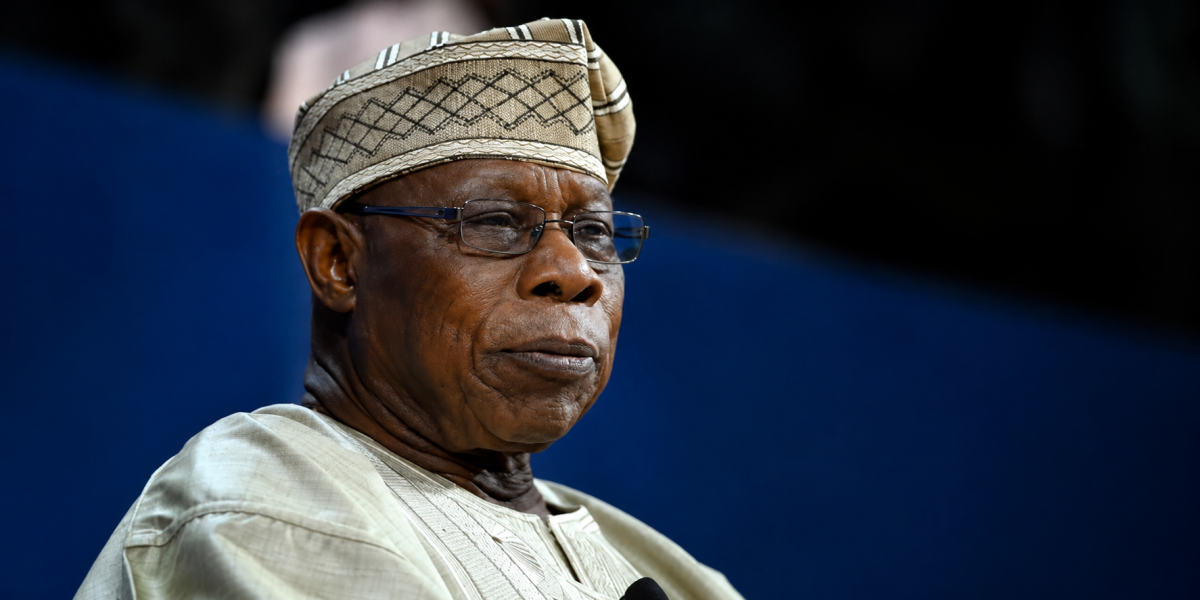
Former President Olusegun Obasanjo and former Prime Minister of St Vincent and the Grenadines, Dr Ralph Gonsalves, have renewed calls for reparations to African countries over the transatlantic slave trade and colonial exploitation.
They said reparations should go beyond apologies and acknowledgements of historical injustices to include concrete measures to address the economic and social consequences of slavery and exploitation.
The former leaders made the call at the Creative Africa Nexus Weekend (CANEX WKND) 2026 in Lagos during a panel discussion titled, ‘A Conversation Inspired by Lest I Forget’, based on a book by Professor Paulette Angela Ramsay, a professor of Afro-Hispanic Literatures and Cultures.
Obasanjo, who set the tone for the discussion, said the growing achievements of people of African descent in different parts of the world demonstrated their resilience and capacity to overcome the consequences of slavery.
ALSO READ: MDPCO to Tinubu: Take blame for fall in Naira value
He cited the recent midterm elections in the United States, saying he was encouraged by the increasing integration and participation of people of African descent in the country’s political and social systems.
“I’m happy with the outcome of the midterm elections in the USA for many reasons,” he said, adding that the development showed that descendants of former slaves could attain positions and privileges previously associated with the country’s original citizens.
He said: “Yes, we have come here, but we are now part and parcel of here. We were brought here involuntarily, but voluntarily we are achieving, and we will continue to achieve.”
However, the former president stressed that the achievements of Africans and their descendants should not lead to the erasure of the atrocities committed during the slave trade.
“Nobody would say there was no Holocaust. There was Holocaust. There was slave trade. Millions of Africans died. As a Christian, we will forgive them if they show remorse to us for the atrocities. But we must never forget,” he said.
Similarly, Gonsalves said the international community had witnessed renewed attention to the historical consequences of slavery, particularly following developments at the United Nations General Assembly on March 25, 2026.
He said the UN had acknowledged the transatlantic slave trade and the enslavement of Africans as a grave crime against humanity, describing the recognition as an important development in the international campaign for reparations.
According to him, the demand for reparations is not simply about revisiting historical grievances but addressing the present-day consequences of slavery, including underdevelopment and the destruction of African lives and communities.
“In essence, reparation is about repairing the contemporary legacies of underdevelopment and the genocide of the African bodies. No one can live in the past, but in this respect, we have to have this structured conversation for reparations for Africa,” Gonsalves said.
He maintained that a structured international conversation was necessary to determine how the historical injustices could be addressed through practical measures.
Supporting the call, Ramsay said discussions on reparations were inevitable if the wrongs of the past were to be properly acknowledged and addressed.
The discussions also highlighted the role of Africa’s creative economy in reclaiming the continent’s historical narrative, cultural identity and economic value.
The stakeholders argued that Africa’s creative industries, including literature, music, film and other cultural expressions, could serve as instruments for strengthening the continent’s global influence and ensuring that Africans derive greater economic benefits from their cultural heritage.
WATCH TOP VIDEOS FROM NIGERIAN TRIBUNE TV