

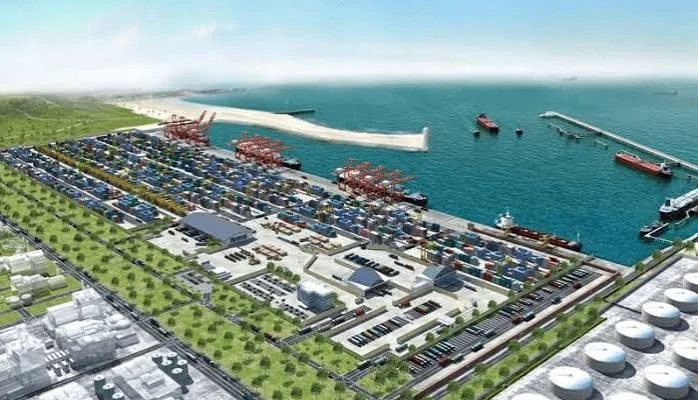
Akwa Ibom State is abundantly blessed with a vast maritime environment rich in oil and gas resources. At the heart of this maritime advantage lies the Ibaka Bay Natural Harbour in Oron Nation, a rare coastal asset with a naturally deep, non-dredged draft exceeding 13 metres and, according to several studies, among the most favourable locations in the Gulf of Guinea for the development of a world-class deep seaport.
A significant percentage of Nigeria’s offshore oil and gas production is derived from the coastal and maritime environment of the Oron Nation. This contribution has played a major role in making Akwa Ibom one of Nigeria’s leading oil-producing states. For decades, maritime experts and development planners have recognised the strategic advantages of Ibaka Bay.
Historical records indicate that when plans were being made for the Calabar Seaport in the 1970s, technical studies identified Ibaka Bay as the preferred location. However, the project was reportedly relocated approximately 84 kilometres inland along the shallow Calabar River. Today, the Calabar Port continues to struggle with the enormous and recurring cost of dredging, a situation many analysts cite as evidence of the consequences of abandoning sound engineering considerations.
In 2012, under the Port Development Programme of the administration of President Goodluck Jonathan, the Federal Government approved plans to establish Nigeria’s first deep seaport at Ibaka, leveraging the unique natural advantages of the harbour. The then Minister of Transport, Senator Idris Umar, constituted a Ministerial Steering Committee and Project Delivery Team to drive the development of the Ibaka Deep Seaport and Free Trade Zone Project.
Following extensive technical evaluations, a comprehensive due diligence report issued in January 2013, the Federal Government committee identified a location within Ibaka Bay as the preferred site for the project. Subsequently, an outline business case issued in April 2013 estimated the cost of constructing the deep seaport at approximately USD2bn, a remarkably competitive figure by global standards, largely due to the natural depth and favourable maritime characteristics of Ibaka Bay.
The National Assembly appropriated funds through the Nigerian Ports Authority as part of the Federal Government’s equity contribution. The Senate Committee on Marine Transport visited Oron Nation to engage stakeholders and sensitise host communities. A groundbreaking ceremony was eventually performed at the approved site under the administration of Governor Godswill Akpabio. At the time, few could have contemplated that anyone would seek to relocate the project from its duly studied and officially approved location.
In 2015, much to the consternation of stakeholders and key industry players, the administration of Governor Udom Emmanuel established an Implementation Committee headed by Barrister (Mrs) Mfon Usoro. Following the setting of the Barrister Mfon Usoro Committee, there were widespread allegations that the committee had fundamentally altered the original concept and framework of the project. Among the changes allegedly introduced were:
Changing the project name from “Ibaka Deep Seaport” to “Ibom Deep Seaport”;
Relocating the project from the protected natural harbour of Ibaka Bay;
Abandoning the Federal Government-driven development model with equity participation and investment guarantees.
Moving the proposed port to a coastal location exposed to significant ocean surge activity;
Transforming the concept from a conventional seaport built on a natural harbour into a dugout port requiring the excavation of a massive artificial basin from dry land.
These changes, critics argue, represented a complete departure from the original technical recommendations and economic rationale upon which the project was conceived.
Emem Benson, a legal practitioner, writes from Akwa Ibom