

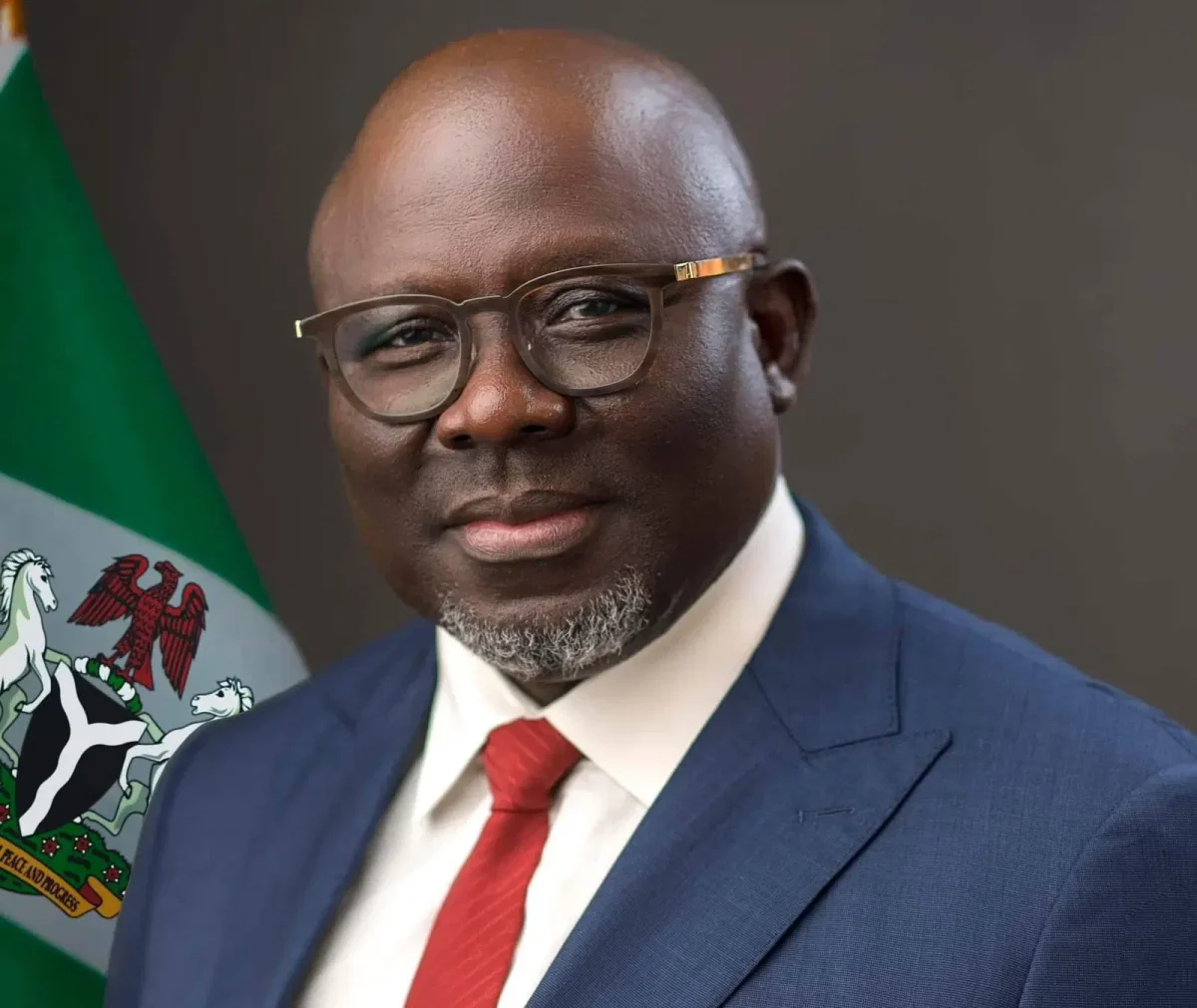
A budget proposal of N1.23 trillion for the services of the Delta State Government in 2027 was presented to the State House of Assembly on Monday by Governor Sheriff Oborevwori.
The amount comprises N430 billion, or 35% of the total budget, for recurrent expenditure and N806.8 billion, or 65%, for capital expenditure.
According to the governor, the budget proposal, tagged “Budget of Sustained Prosperity and Enhanced Growth,” represents a decrease of N493.01 billion, or 28.5%, compared with the 2026 approved budget of N1.729 trillion.
“The decrease is due to the fact that we have planned the 2027 budget around fiscal discipline, which means that the budget will be funded largely from within, and the state would spend only what it can earn within the period.
“The moderation is, therefore, deliberate and in alignment with our expenditure profile, realistic revenue expectations and exchange rate stability, while maintaining our 65% capital and 35% recurrent ratio,” Oborevwori explained.
He said the main sources of funding for the proposed budget would be internally generated revenue, statutory allocation, mineral derivation, value-added tax and other capital receipts.
The two ministries of works will take the largest share of the budget, as indicated in the sectoral highlights, gulping N320 billion.
Oborevwori told the lawmakers that, in the past 12 months, his administration had kept faith with the people by taking development to every nook and cranny of the state.
“We have endeavoured to ensure fair distribution of projects across the three senatorial districts.
“As a result, our urban centres are beginning to wear the look and trappings of modernity, while our rural dwellers and riverine communities are feeling the positive impact of our massive investments in infrastructural development.”
The governor said the choice of interventions in roads, bridges and flyovers was based on needs analyses of the people and communities, who had prioritised access roads as their number one requirement, and for good reasons too. He stressed that “we will be prioritising the completion of ongoing projects and initiating new ones”.
Giving a further breakdown of the proposed expenditure, the governor disclosed that the health sector would receive N50 billion, energy N12 billion, agriculture N5 billion, urban renewal N10 billion and social interventions N5 billion.
He further stated that the education sector had been allocated N74 billion, local government intervention N50 billion and Asaba Capital Territory N20 billion, while Warri, Uvwie and Environs would receive N20 billion.
On revenue generation, Governor Oborevwori recalled that his administration inherited an IGR base of N83 billion in 2023, expressing optimism that the state’s internally generated revenue would rise to N283 billion by December 31, 2026.
The governor also highlighted his administration’s efforts to reduce the state’s debt profile, disclosing that the debt had dropped from N463 billion to N63 billion.
On economic diversification, Oborevwori said his administration was attracting private investment into agriculture, industrialisation, entertainment and small and medium-sized enterprises.
He cited the $70 million Olam Agri feed mill project at Ogwashi-Uku as one of the outcomes of the 2026 Delta State Economic and Investment Summit.
The governor said the project would create employment opportunities and provide a ready market for locally produced agricultural commodities.
He further disclosed that Delta’s Gross Domestic Product rose from N14.5 trillion in 2024 to approximately N17.9 trillion in 2025, making it Nigeria’s fifth-largest state economy.
On electricity, he said the administration had executed 2,155 energy projects, including 90 transformers, 2,003 solar street-lighting projects and 23 power-grid extensions.
The governor also said he had assented to the 13th-month salary bill for public servants, which would commence in December 2026. He said the initiative was in recognition of workers’ contributions and an effort to ease their financial responsibilities during the festive season.
On security, Oborevwori said his administration was strengthening collaboration with security agencies to tackle kidnapping, cultism, pipeline vandalism and other criminal activities.
He disclosed that approval had been given for the construction of 25 police divisional headquarters for state police, alongside an application to recruit 1,000 forest guards.
The governor said the 2027 budget would prioritise infrastructure, economic diversification, human capital development, peace and security, while ensuring that ordinary Deltans benefited from economic growth.
He subsequently presented the Appropriation Bill to the lawmakers for consideration and approval. The motion was moved by the House Leader, Hon. Emeka Nwaobi, and seconded by Hon. Marilyn Okowa-Daramola.
Earlier, the Speaker of the House, Rt. Hon. Emomotimi Guwor, commended Oborevwori for his administration’s achievements in infrastructure, healthcare, education, social welfare and human capital development.
Guwor particularly praised the approval of the 13th-month salary, describing it as evidence of the governor’s concern for workers’ welfare.
WATCH TOP VIDEOS FROM NIGERIAN TRIBUNE TV