

The Nigeria Tobacco Control Alliance (NTCA) has warned that tobacco industry interference in government policies and regulatory processes threatens public health and contributes to nearly 30,000 preventable deaths recorded annually in Nigeria.
The alliance called on the Federal Government to strengthen enforcement of the National Tobacco Control Act, 2015, and its 2019 Regulations, while preventing tobacco companies from influencing public health policies through corporate partnerships, aggressive marketing and the exploitation of regulatory loopholes.
The NTCA Coordinator, Olawale Makanjuola, said the industry’s growing influence and efforts to weaken tobacco control measures required urgent collective action to protect Nigerians, particularly children and young people.
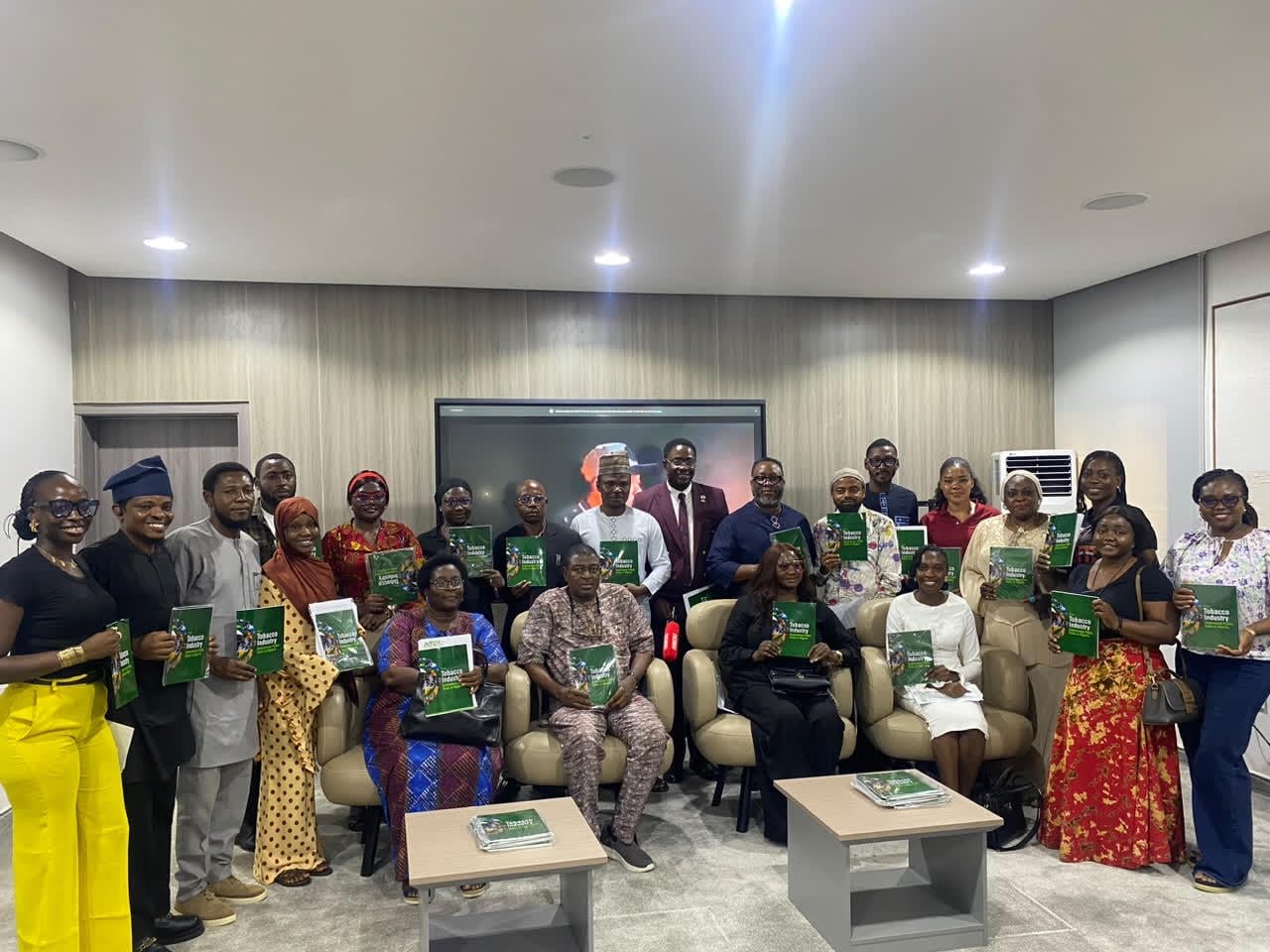
Speaking at the launch of a report on tobacco industry interference in Nigeria, Makanjuola described the document as both an early warning system and a blueprint for action.
“This report serves as both an early warning system and an action blueprint. It reminds us that enforcing the National Tobacco Control Act is not a bureaucratic checkbox. It is a matter of national survival and social justice,” he said.
He alleged that tobacco companies and their front groups were increasingly exploiting regulatory loopholes, using Corporate Social Responsibility initiatives to rehabilitate their public image and attempting to infiltrate policy spaces to influence government decisions.
According to him, the report exposes covert industry activities, aggressive marketing strategies and persistent policy interference capable of undermining efforts to protect public health.
Makanjuola recalled that the alliance had worked alongside public health advocates, civil society organisations and the media to establish legal frameworks, including the National Tobacco Control Act of 2015 and its accompanying Regulations of 2019.
He said the frameworks were designed to protect Nigerians, especially young people, from the dangers of tobacco consumption and emerging nicotine products.
Also speaking, the NTCA Board Chairman, Akinbode Oluwafemi, described the tobacco industry’s activities as a well-planned and well-funded attempt to undermine tobacco control efforts in Nigeria.
Oluwafemi raised concerns over a meeting reportedly taking place at the Federal Ministry of Trade to adopt a policy on new and emerging tobacco products, arguing that such matters should fall under the responsibility of the Federal Ministry of Health.
He accused the health ministry of failing to adequately protect Nigerians from tobacco industry interference, alleging that industry influence had weakened its capacity to safeguard public health.
“The world is under attack in Nigeria. And there is a serious attack; it is very well planned and well funded. It seems as if the Ministry of Health is infiltrated. It seems as if they’ve dropped the ball, but not only dropped the ball, but kicked it inside the ocean.
“We can no longer comfortably say the Ministry of Health is protecting the health of Nigerians where industries are concerned,” he said.
Oluwafemi urged the government to protect citizens from tobacco industry interference, alleging that companies were seeking to rewrite existing laws and remove safeguards designed to protect children.
He also called for an end to public-sector partnerships and endorsements involving tobacco companies, insisting that Corporate Social Responsibility initiatives could not compensate for the health, economic and environmental costs of tobacco and nicotine products.
He further urged the government to strengthen enforcement against tobacco advertising, promotion and sponsorship, particularly through retail outlets, digital platforms and cultural events.
Oluwafemi warned that proposed amendments to tobacco control laws could reopen loopholes for advertising, weaken provisions on 100 per cent smoke-free environments and expose children to tobacco-related imagery and digital marketing.
He cited the alleged use of cultural events, including the Ojude Oba festival, to promote electronic cigarettes, describing the development as a threat to efforts to prevent young people from taking up tobacco and nicotine products.
The NTCA chairman also appealed to media organisations to investigate alleged irregularities surrounding the Consolidated Amendment Bill, questioning how provisions reportedly not debated in Parliament or subjected to public hearings could have entered the legislative process.
“We want to plead with our media partners to, again, try to help us investigate a lot of what we’re talking about and expose them.
“What was presented as the consolidated one was never discussed in Parliament. Who, at the last minute, smuggled almost a complete set of laws that was never debated, was not presented at a public hearing, into what they are now asking our President to sign as law?” he queried.
In his remarks, the In-Country Coordinator of the Campaign for Tobacco-Free Kids, Barr. Michael Olaniyan, said tobacco control advocates faced an organised and well-resourced industry that actively worked to frustrate public health campaigns.
Olaniyan said tobacco companies deployed financial resources and sophisticated strategies to counter efforts aimed at reducing tobacco consumption, making sustained advocacy and public awareness necessary.
He identified the absence of a dedicated tobacco control resource centre in Nigeria as a major gap in the country’s advocacy efforts.
According to him, the proposed centre would provide campaign materials, research-based arguments, policy information, designs and other resources that advocates and civil society organisations could readily access and use.
“We need that kind of centre, that hub where people can just go and say, I want to run a campaign. Where can I get designs? Where can I get arguments? Where can I get one-pagers that I can print and share for the campaign that I want to do,” he said.
Olaniyan acknowledged the importance of the Tobacco Control Data Initiative (TCDI) in providing scientific and academic evidence for policy engagement but said advocates also needed accessible information and publicly available records to support their campaigns.
He explained that while scientific evidence remained essential in responding to government and industry arguments, a dedicated resource centre would help translate information into practical advocacy materials and make it easier for campaigners to expose tobacco industry activities.
WATCH TOP VIDEOS FROM NIGERIAN TRIBUNE TV